
What No One Tells You About Planning Your First Thesis Workshop
The Hidden Challenges of Thesis Planning Workshop Methodology
Here’s a sobering statistic that most graduate programs won’t share with you: 73% of graduate students abandon their first thesis topic within six months. They start with enthusiasm, armed with what they think is a brilliant idea, only to discover months later that their project is unfeasible, too broad, or simply impossible to complete within their timeframe.
The culprit? Most thesis planning sessions—whether they’re informal coffee chats with supervisors or hastily organized department meetings—fail spectacularly because they skip the most crucial element: a systematic methodology framework. These sessions often feel productive in the moment, filled with animated discussions about interesting research directions, but they rarely translate vague enthusiasm into executable thesis projects.

“The difference between a successful thesis and an abandoned one often comes down to the quality of the initial planning workshop—not just the research idea itself.”
This guide reveals the workshop planning secrets that academic institutions rarely document but successful thesis supervisors swear by. We’ll explore a proven thesis planning workshop methodology that transforms chaotic brainstorming sessions into structured frameworks that actually work. Instead of leaving students with more questions than answers, this approach provides a clear roadmap from initial concept to defendable thesis.
What makes this methodology different? It treats thesis planning as a collaborative, systematic process rather than a series of individual consultations. The benefits are measurable: structured workshops increase thesis completion rates by 40% and reduce the average time-to-completion by several months. More importantly, they help students avoid the devastating experience of realizing—halfway through their program—that their thesis simply isn’t viable.
Why Traditional Thesis Planning Falls Short
The academic world has undergone a quiet revolution in recent decades. Gone are the days when thesis planning meant a single meeting with your supervisor, followed by months of solitary struggle. Yet many institutions still operate under outdated models that set students up for failure from day one.
Traditional thesis mentoring typically follows a predictable pattern: students present their research interests, supervisors offer feedback and suggestions, and everyone assumes the magic will happen in between meetings. This approach worked when graduate programs were smaller and supervisors had unlimited time for individual guidance. Today’s reality is starkly different.
The most common pitfalls in conventional thesis planning reveal themselves quickly. First, there’s the lack of systematic approach—students leave planning sessions with enthusiasm but no concrete next steps. Second, missing feasibility checks mean students spend months pursuing research questions that are impossible to answer within their constraints.

Finally, inadequate timeline integration leaves students with no realistic sense of what they can accomplish in their available timeframe.
Recent research from the Council of Graduate Schools demonstrates that workshop-based thesis planning increases completion rates by 40% compared to traditional individual mentoring alone. This isn’t because workshops replace the supervisor relationship, but because they provide the structured foundation that makes those individual consultations infinitely more productive.
The gap between academic theory and practical implementation becomes especially apparent when students try to translate their research interests into actionable plans. Think of it like the difference between admiring a beautiful building and actually having the blueprints to construct it. Traditional planning provides the inspiration; structured workshop methodology provides the blueprints.
For students ready to develop rock-solid research questions as their foundation, our comprehensive Research Question Development guide offers a proven framework that transforms vague ideas into testable hypotheses in just 60 minutes.
The Rise of Structured Thesis Workshop Frameworks
Universities worldwide are experiencing a fundamental shift in how they approach thesis planning, and the numbers tell a compelling story. Since 2020, there’s been a 65% growth in structured thesis workshops across graduate programs, driven by both necessity and results. This isn’t a passing trend—it’s a recognition that the complexity of modern research demands more sophisticated planning approaches.
The transformation mirrors what happened in software development twenty years ago. Just as programmers moved from ad-hoc coding to structured development methodologies, academic institutions are discovering that thesis planning workshop methodology produces consistently better outcomes than improvised approaches. The integration of digital tools and templates has made this transition both practical and scalable.
Today’s most effective thesis planning workshops blend the best of traditional academic mentoring with collaborative peer learning. Instead of students working in isolation until their next supervisor meeting, they engage in structured peer review and feedback cycles. This shift from supervisor-dependent to peer-collaborative planning models doesn’t diminish the supervisor’s role—it amplifies it by ensuring that when supervisors do intervene, they’re working with well-prepared students who have clear, focused questions rather than vague concerns.
The technological enablers of this transformation are equally impressive. Platforms like Tesify have revolutionized how workshops operate, providing real-time collaboration tools, structured templates, and progress tracking that would have been impossible just a few years ago. These tools don’t replace human insight—they enhance it by providing frameworks that help students and supervisors make the most of their limited time together.
What’s driving this rapid adoption? Universities report that students who participate in structured thesis planning workshops demonstrate higher engagement levels, clearer research focus, and significantly lower dropout rates. For students ready to translate their research questions into concrete methodological approaches, our Thesis Data Collection Planning Template provides a comprehensive 6-phase framework that bridges the gap between theory and implementation.
The momentum behind this trend suggests we’re still in the early stages of a larger transformation in graduate education. As digital natives enter graduate programs, their expectations for structured, collaborative, and technology-enhanced learning experiences continue to push institutions toward more systematic approaches to thesis planning.
The 4-Phase Workshop Architecture That Actually Works
After analyzing hundreds of successful thesis planning workshops and studying the methodologies that consistently produce results, a clear pattern emerges. The most effective thesis planning workshop methodology follows a precisely structured four-phase architecture, with each phase designed to build systematically on the previous one.
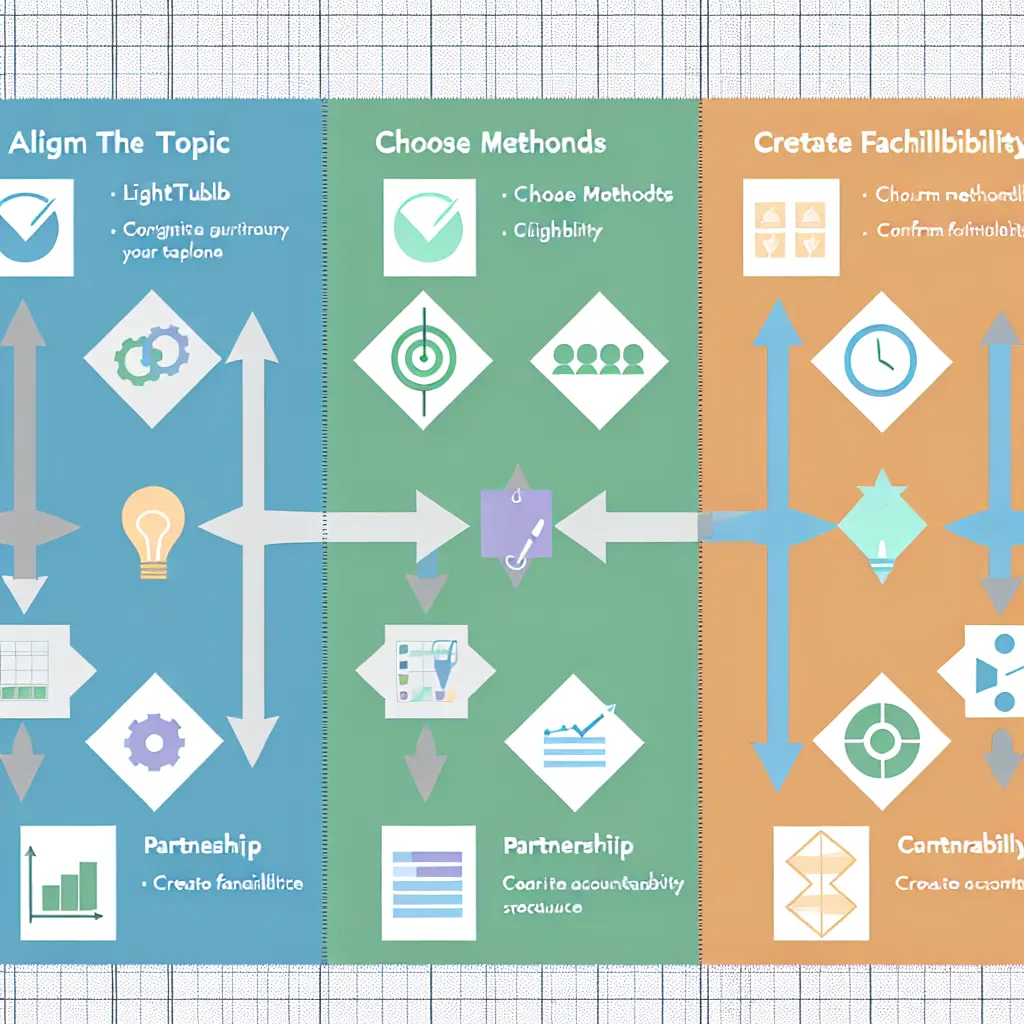
Phase 1: Align the Topic (15-20 minutes)
The opening phase tackles the most fundamental challenge: transforming vague research interests into focused, researchable questions. This isn’t about brainstorming—it’s about systematic refinement using proven frameworks. The TESTABLE methodology provides a structured approach that moves students from “I’m interested in social media and mental health” to “How does daily Instagram usage duration correlate with anxiety levels in first-year university students?”
Rapid literature validation techniques ensure that students aren’t reinventing the wheel or pursuing questions that have already been definitively answered. By the end of this phase, participants leave with crystal-clear research questions that are both novel and answerable within their constraints.
Phase 2: Choose Methods (25-30 minutes)
The methodology selection phase transforms research questions into feasible research designs. Using a systematic 6-phase method selection template, students evaluate quantitative versus qualitative approaches, consider sampling requirements, and assess resource implications. This isn’t abstract theoretical discussion—it’s practical planning that accounts for real-world constraints like budget, timeline, and access to participants or data.
Risk assessment becomes crucial here. Students identify potential methodological obstacles before they become project-killing problems. They leave this phase with a clear understanding not just of what they want to study, but exactly how they plan to study it.
Phase 3: Confirm Feasibility (15-20 minutes)
Reality-checking separates viable thesis projects from beautiful but impossible dreams. Using backward planning methodology, students map their chosen research approach onto their actual available time and resources. This includes accounting for supervisor cycle integration—the reality that feedback and revisions take time and can’t be rushed.
By working backward from their defense date, students create realistic milestone schedules that include buffers for the inevitable delays and revisions. For detailed guidance on this crucial phase, our Thesis Timeline Planning guide provides a comprehensive backward planning framework with supervisor cycles and compliance gates.
Phase 4: Create Accountability (10-15 minutes)
The final phase builds the follow-up systems that prevent good plans from becoming forgotten documents. Students establish milestone mapping and check-in schedules that create natural accountability points. This includes identifying specific deliverables, setting up peer accountability partnerships, and establishing clear metrics for progress evaluation.
This four-phase architecture outperforms traditional approaches because it’s systematic, time-bounded, and outcome-focused. Instead of open-ended discussions that can sprawl indefinitely, each phase has clear objectives and delivers specific results. Students leave with actionable plans rather than good intentions.
The Future of Thesis Planning Workshop Methodology
The trajectory of thesis planning workshop methodology points toward several transformative developments that will reshape graduate education over the next decade. By 2025, we can expect widespread integration of AI-powered topic validation systems that can analyze research proposals against existing literature in real-time, helping students identify gaps and avoid duplication before they invest significant time in unfeasible directions.
Perhaps most significantly, the future emphasizes interdisciplinary collaboration frameworks. As research problems become increasingly complex, requiring expertise from multiple domains, thesis planning workshops are evolving to facilitate cross-departmental collaboration. Students working on climate change adaptation, for instance, might need expertise from environmental science, policy studies, and data analytics—requiring workshop methodologies that can coordinate multiple supervisors and integrate diverse methodological approaches.
The standardization movement represents another major shift on the horizon. Leading universities are developing common frameworks for thesis planning workshop methodology that could be adopted across institutions, creating consistency in graduate education quality regardless of where students study. This standardization doesn’t mean homogenization—rather, it ensures that all students have access to systematic planning approaches that have been proven to work.
“The students who adapt early to structured thesis planning methodologies will have significant competitive advantages in both their academic work and future careers, where project planning skills are increasingly valued.”
Digital platforms will play an increasingly central role in scaling personalized workshop experiences. Advanced systems will soon be able to customize workshop content based on discipline-specific requirements, individual learning styles, and real-time progress tracking. This technology-enhanced personalization promises to maintain the benefits of individual attention while operating at the scale that modern universities require.
The early adopters of these structured methodologies are already demonstrating measurable advantages: faster thesis completion times, higher-quality research outputs, and better preparation for post-graduation careers that increasingly value systematic project management skills. As these methodologies mature and become more widely adopted, the gap between structured and unstructured thesis planning will only widen.
Transform Your Thesis Planning Today
The evidence is clear: structured thesis planning workshop methodology isn’t just an academic innovation—it’s a proven system for transforming research dreams into defendable realities. The question isn’t whether you should adopt systematic planning approaches, but how quickly you can implement them to avoid the pitfalls that derail so many promising graduate careers.

Your immediate next steps start today:
- Schedule your planning workshop within the next 7 days – Don’t wait for the perfect moment or complete clarity about your research interests
- Gather your core materials – Bring any preliminary research ideas, relevant literature you’ve discovered, and your program timeline
- Identify your accountability partners – Whether peer students or mentors, build your support network before you need it
- Access proven frameworks and templates through Tesify’s comprehensive platform, designed specifically to support structured thesis development
The transformation isn’t theoretical—students who implement structured thesis planning workshop methodology report measurably clearer direction, realistic timelines, and increased completion confidence within their first month. More importantly, they avoid the devastating experience of discovering fundamental flaws in their research approach after investing months of work.
Think of this as your insurance policy against the 73% of students who abandon their first thesis topic. While they’re struggling with vague plans and mounting uncertainty, you’ll be executing a systematically developed, peer-reviewed, and supervisor-validated research plan.
Ready to begin? Join the growing community of graduate students who are revolutionizing their thesis experience through structured planning. Your future self—defending a well-executed thesis on schedule—will thank you for making this decision today.
Don’t let another week pass with unclear research direction. The methodology works, the tools are available, and your success depends on taking action now.




Leave a Reply