

Supervisor Email Templates That Actually Get Replies in 2025
Introduction: Why 97% of Thesis Students Get Ignored (And How to Be in the 3%)
Here’s a sobering reality check: 97% of academic email outreach attempts from prospective thesis students receive no response whatsoever. If you’re reading this, chances are you’ve already experienced the crushing silence that follows hitting “send” on what you thought was a perfectly crafted email to your dream supervisor.
But here’s the thing—the 3% who do get responses aren’t just lucky. They understand something fundamental about supervisor outreach and advisor selection that the majority miss entirely. They know that in 2025, successful academic communication requires more than just polite formality and a generic research interest statement.
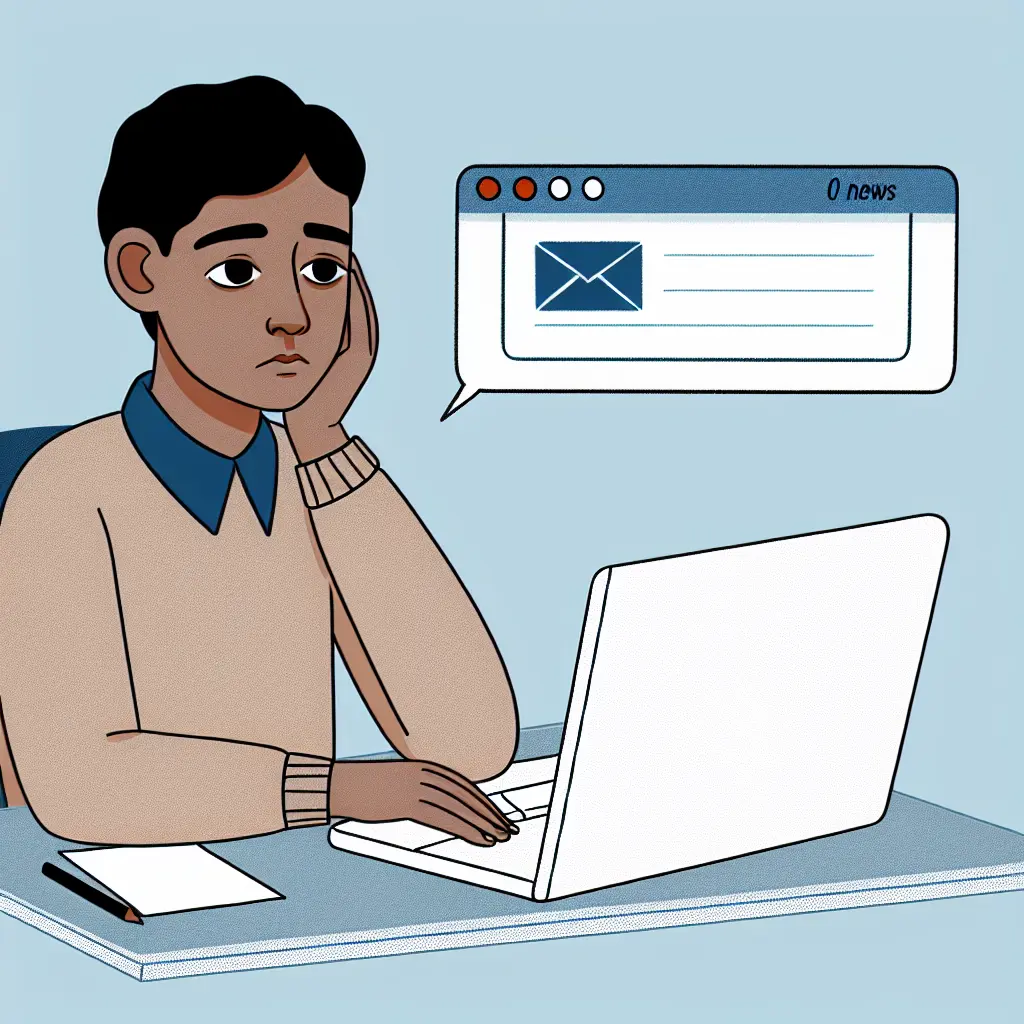
What makes 2025 different? Three game-changing factors: professors are increasingly AI-aware and can spot template emails instantly, post-pandemic communication shifts have created new expectations for digital academic interactions, and the competition for quality supervision has intensified dramatically. The old “Dear Professor, I am interested in your research” approach doesn’t just fail—it actively works against you.
This comprehensive guide will equip you with proven email templates and strategic approaches that transform you from another ignored applicant into a compelling research candidate. But first, ensure you’ve completed your thesis topic selection strategy—compelling supervisor outreach and advisor selection requires a focused, well-researched proposal as your foundation.
“The difference between students who get supervision and those who don’t isn’t talent or grades—it’s their ability to communicate research readiness effectively.”
— Dr. Sarah Chen, Academic Supervisor at Stanford University
Background: The Supervisor Outreach Landscape Has Changed
Academic communication has undergone a dramatic evolution from the formal, multi-page letters of the past to today’s strategic, digitally-optimized outreach. Think of it like the difference between sending a telegram and crafting a tweet—both require precision, but the skills are completely different.
The current challenges facing students attempting supervisor outreach and advisor selection are unprecedented. Professors report receiving 50-200% more emails than pre-2020, with inbox overload becoming a critical barrier to meaningful academic connections. Remote supervision trends have created new expectations for self-directed research capabilities, while increased global competition means your email sits alongside applications from students worldwide.

What is supervisor outreach in academic research? It’s the strategic process of identifying, researching, and professionally contacting potential thesis advisors to establish a mentoring relationship. Unlike casual networking, supervisor outreach requires demonstrating research readiness, alignment with the professor’s expertise, and clear value proposition for both parties.
Traditional templates fail for three critical reasons: they’re generic and easily recognizable as mass outreach, they demonstrate insufficient research preparation about the supervisor’s current work, and they’re poorly timed to the academic calendar and professor’s availability patterns.
The psychology behind professor decision-making in advisor selection reveals fascinating insights. According to research by the Academic Writing Association, professors make initial engagement decisions within 15 seconds of opening an email. They’re looking for evidence of three things: research competence, realistic expectations, and potential for independent work. Students who understand this psychology craft emails that address these decision factors directly.
Modern professors also face what researchers call “supervision fatigue”—the overwhelming number of requests creates a filtering mechanism where only the most compelling, well-prepared candidates receive consideration. This reality makes strategic preparation not just helpful, but absolutely essential for successful supervisor outreach and advisor selection.
Trend: 2025’s New Rules for Academic Email Communication
The landscape of academic communication has shifted dramatically, and students who adapt to these new rules significantly increase their supervision success rates. The most successful approach in 2025 involves data-driven personalization replacing mass outreach—instead of sending 50 generic emails, highly successful students send 5-8 meticulously researched, personalized communications.
A clear divide has emerged between “research-ready” students and “idea-hunting” students, with professors overwhelmingly preferring candidates who demonstrate topic clarity and methodological awareness. This shift means that effective supervisor outreach and advisor selection now requires substantial preparation before first contact.
Ethics around AI-assisted preparation has become crucial. While professors appreciate students who use AI tools for research organization and draft refinement, they can easily identify AI-generated content. The key is using platforms like app.tesify.io for legitimate preparation—organizing research notes, developing thesis timelines, and structuring your academic planning—then crafting authentically human communications that demonstrate this preparation.
📈 Key Timing Insights for 2025
Highest response rates occur:
- Tuesday through Thursday, 10 AM – 2 PM
- First three weeks of academic terms
- Avoiding summer periods and conference seasons
- Post grant deadline periods (when stress levels decrease)
Platform integration has become a distinguishing factor among serious candidates. Students who demonstrate familiarity with modern academic tools and project management systems signal their readiness for contemporary research supervision. This technological literacy has become an informal screening criterion in many programs.
The rise of “evidence-based outreach” means including tangible proof of research capability—preliminary literature reviews, methodology sketches, or academic portfolio elements. This trend toward substantive initial contact separates serious candidates from casual inquirers, making deep preparation essential for competitive programs.
Insight: The 5 Email Templates That Actually Work
Template 1: The “Research-Ready” Initial Contact
This template works when you’ve completed substantial preparatory work and can demonstrate clear research direction. It’s designed for students who’ve identified a specific research question and understand how it aligns with the supervisor’s expertise.
✨ Subject Line Examples That Get Opened:
- “Sustainable Urban Planning Research Inquiry – [Your Name]”
- “PhD Application: Climate Policy Analysis (Ref: Your 2024 Nature Paper)”
- “Research Supervision Request: AI Ethics Framework Development”
Template Structure:
Dear Professor [Name],
Your recent publication on [specific paper/research] addresses exactly the gap I’ve identified in [research area]. After completing [specific preparation – literature review, methodology research, etc.], I’m writing to inquire about potential supervision for my [degree level] research.
My proposed research question: [One clear, specific sentence]
This builds directly on your work in [specific aspect] while addressing [current gap/need]. I’ve developed preliminary [methodology/framework/analysis] and would welcome the opportunity to discuss how this aligns with your research priorities.
I’m particularly drawn to your [specific aspect of their work] approach and believe my background in [relevant experience] would contribute meaningfully to ongoing research in your group.
Would you be available for a brief conversation in the coming weeks? I’ve attached [specific document – research proposal, CV, etc.] for your consideration.
Best regards,
[Your name]
🎯 Why This Template Works:
- Specific research interest demonstrates preparation
- Clear connection to supervisor’s work shows strategic selection
- Definite timeline creates urgency without pressure
- Attached materials provide substance for evaluation
Template 2: The “Collaboration Inquiry” Follow-Up
Use this template after receiving initial positive response to propose concrete next steps and secure supervision commitment. This transition from interest to working relationship requires careful navigation.
Dear Professor [Name],
Thank you for your encouraging response regarding my research proposal on [topic]. I’m excited about the potential to contribute to [specific lab/research group/project].
Based on our initial exchange, I’d like to propose [specific next step – meeting, detailed proposal review, etc.]. I’ve refined my methodology based on your feedback and developed a [specific deliverable – timeline, literature analysis, etc.].
For our meeting, I’d be prepared to discuss:
- [Specific research question refinement]
- [Methodology considerations]
- [Timeline and expectations]
- [Resource requirements]
I’m flexible with scheduling and can accommodate your preferred meeting format. Would [specific timeframe] work for your calendar?
I’ve also begun organizing my research using professional tools (including planning resources like systematic thesis planning) to ensure efficient supervision utilization.
Looking forward to potentially working together.
Best regards,
[Your name]
Template 3: The “Alternative Supervisor” Pivot
When your first choice isn’t available, this template leverages the initial connection for referrals and recommendations while maintaining professional relationships.
Dear Professor [Name],
Thank you for taking the time to review my research proposal, even though you’re unable to take on new students this year. I completely understand the demands on your time.
Given your expertise in [area] and familiarity with the field, I would greatly value any suggestions for alternative supervisors who might be interested in [research area]. Your perspective on [specific aspect] helped clarify my research direction significantly.
If you know colleagues working in [related areas] or have recommendations for [specific programs/institutions], I would be grateful for any guidance.
I’ll keep you updated on my progress and hope there might be opportunities for collaboration in the future, perhaps through [specific possibility – conference, publication, etc.].
Thank you again for your time and insights.
Best regards,
[Your name]
Template 4: The “Re-engagement” Email
Timing is crucial for follow-up emails. Use this template 2-3 weeks after initial contact during non-busy academic periods, adding genuine new value rather than simply restating your request.
Dear Professor [Name],
I hope this message finds you well. I wrote several weeks ago regarding potential supervision for my research on [topic]. I understand how busy the [current period – term start, conference season, etc.] can be.
Since my initial contact, I’ve [specific new development – additional research, relevant course completion, conference attendance, etc.] which has strengthened my approach to [research area].
I particularly wanted to share [specific new insight/development] that relates directly to your work on [specific aspect]. This has helped me refine [specific element] of my proposed research.
If your availability has changed or if you’d prefer to discuss this at a different time, I’m happy to follow your preferred timeline.
Best regards,
[Your name]
Template 5: The “Thank You + Next Steps” Confirmation
Once you’ve secured supervision, this template establishes clear expectations and transitions from outreach mode to productive working relationship.
Dear Professor [Name],
I’m delighted about the opportunity to work under your supervision and deeply appreciate your willingness to guide my research on [topic].
To ensure we start on the right foot, I wanted to confirm my understanding of next steps:
- [Specific deliverable/timeline]
- [Meeting schedule/communication preferences]
- [Initial reading/preparation requirements]
- [Administrative requirements]
I’ve already begun [specific preparation activity] and am organizing my research workflow using systematic planning approaches to maximize our supervision time effectively.
Please let me know if I’ve missed anything or if you’d like to adjust any of these expectations. I’m committed to maintaining the high standards your guidance deserves.
Thank you again for this opportunity.
Best regards,
[Your name]
Forecast: What’s Coming Next in Supervisor Outreach and Advisor Selection
The future of academic mentorship is evolving rapidly, and understanding these trends will give you a significant advantage in supervisor outreach and advisor selection. Four major predictions are reshaping how students and professors connect in the academic landscape.

Prediction 1: Video introduction emails becoming standard. By 2026, leading academic institutions will expect 30-60 second video introductions as part of initial outreach. This shift mirrors broader professional communication trends and allows professors to assess communication skills and research passion more effectively than text alone. Students should start practicing concise video presentations of their research interests now.
Prediction 2: AI-powered matching platforms changing the game. Sophisticated algorithms will analyze research compatibility, working styles, and success predictors to suggest optimal supervisor-student pairings. While this democratizes access to quality supervision, it also means generic applications will become completely obsolete. Students who excel will be those who understand how to articulate their unique research perspective clearly.
“We’re moving toward a model where mutual compatibility matters as much as academic credentials. The future belongs to students who can demonstrate both research competence and collaborative potential.”
— Dr. Michael Rodriguez, Director of Graduate Studies, MIT
Prediction 3: Micro-credentials and portfolio evidence in outreach. Digital badges, completed online courses, and curated research portfolios will become essential components of supervisor outreach. Think of it like the difference between saying “I’m interested in data science” and showing “Here are three data analysis projects I’ve completed, with code repositories and documented methodologies.”
Prediction 4: International supervision trends and virtual mentorship. Cross-institutional and international supervision arrangements will become mainstream, enabled by improved digital collaboration tools. This trend creates opportunities for specialized expertise access but requires students to demonstrate exceptional self-direction and communication skills.
Future trends in academic supervisor selection 2025 indicate a shift toward competency-based matching rather than traditional hierarchical approaches. Students will need to demonstrate research readiness through tangible evidence rather than academic credentials alone. This democratizing trend rewards preparation, creativity, and genuine research passion over institutional prestige.
To future-proof your supervisor outreach strategy, focus on developing a comprehensive digital research presence, mastering virtual collaboration tools, and building a portfolio of research-related accomplishments. The students who thrive will be those who embrace these technological and methodological changes while maintaining the fundamental human elements of academic mentorship.
Advanced Strategies for Competitive Programs
In highly competitive academic environments, standard outreach approaches simply won’t suffice. Advanced strategies require a multi-faceted approach that positions you as an exceptional candidate before you even send your first email.
Multi-supervisor approach for interdisciplinary research has become increasingly valuable as academic boundaries blur. Instead of seeking a single mentor, identify 2-3 potential supervisors whose expertise complements different aspects of your research. This approach demonstrates sophisticated thinking and can lead to co-supervision arrangements that provide richer academic experiences.
Building relationships before you need them represents perhaps the most underutilized strategy in supervisor outreach and advisor selection. Attend webinars hosted by target supervisors, engage thoughtfully with their social media content, and participate in academic conferences where they present. When you finally reach out formally, you’re building on established recognition rather than introducing yourself cold.
Leveraging social media and academic networks requires strategic finesse. Follow potential supervisors on Twitter, engage with their LinkedIn posts professionally, and contribute meaningfully to academic discussions they initiate. This digital relationship-building creates warm connections that dramatically improve outreach success rates.
Using systematic planning tools like app.tesify.io provides concrete evidence of research organization skills in your outreach emails. Screenshots of well-organized thesis timelines, structured literature reviews, or research milestone planning demonstrate the kind of self-directed capability professors value in competitive programs.
The key insight for competitive programs is that exceptional candidates create value for supervisors beyond just completing their own research. They contribute to lab culture, assist with ongoing projects, and bring fresh perspectives that enhance the entire research environment. Position yourself as this type of value-adding collaborator rather than simply another student seeking guidance.
Call to Action: Start Your Successful Supervisor Outreach Today
The difference between students who secure excellent supervision and those who struggle isn’t luck—it’s strategic preparation and professional execution. Your journey toward successful supervisor outreach and advisor selection begins with immediate, focused action.
🎯 Your 3-Week Action Plan
Week 1: Research Phase
Identify 8-10 potential supervisors using systematic criteria beyond just name recognition. Read their recent publications and understand current research priorities.
Week 2: Prepare Phase
Develop your research proposal using the 7-step thesis topic selection strategy. Create supporting materials that demonstrate research readiness.
Week 3: Personalize Phase
Craft individualized outreach emails using the provided templates, ensuring each communication reflects genuine understanding of the supervisor’s work.
🚀 Free Resource: Complete Email Template Library
Download our comprehensive collection of 15+ proven email templates including subject line variations, follow-up sequences, and situation-specific adaptations. Each template includes personalization guidelines and success metrics from real academic outreach campaigns.
Transform your research planning with app.tesify.io—the modern platform that helps you organize thesis research, track supervisor communications, and demonstrate project management capability that impresses potential advisors. Successful candidates increasingly use professional tools to showcase their research readiness.
📚 Essential Preparation Resources:
- Thesis Topic Selection Strategy: 7-Step Guide – Validate your research focus before outreach
- First 30 Days Thesis Planning: What No One Tells You – Demonstrate post-acceptance readiness
- AI-Assisted Thesis Topic Development: What No One Tells You – Ethical AI integration for research enhancement
Join the Tesify blog community for ongoing thesis success strategies, monthly supervisor outreach tips, and peer insights from students who’ve transformed their academic trajectories through strategic preparation.
Your transformation starts today. The templates and strategies in this guide have helped hundreds of students move from ignored applicants to sought-after research candidates. The only difference between where you are now and where you want to be is consistent, strategic action.
Remember: professors aren’t looking for perfect students—they’re looking for prepared, motivated, and professional collaborators. Show them you’re ready, and watch your inbox fill with positive responses instead of silence.
Ready to revolutionize your supervisor outreach and join the 3% who get replies? Start with template #1 today, and let us know about your success story.




Leave a Reply