
Your First Steps in Cambridge PhD Thesis Writing
Picture this: You’ve just received your acceptance letter from Cambridge. The elation settles, and then it hits you—what comes next? Unlike other doctoral programs where you might coast through coursework before facing the thesis monster, Cambridge throws you straight into the deep end. From day one, you’re navigating the collegiate system, building a relationship with your supervisor, and racing toward that crucial first-year registration report.
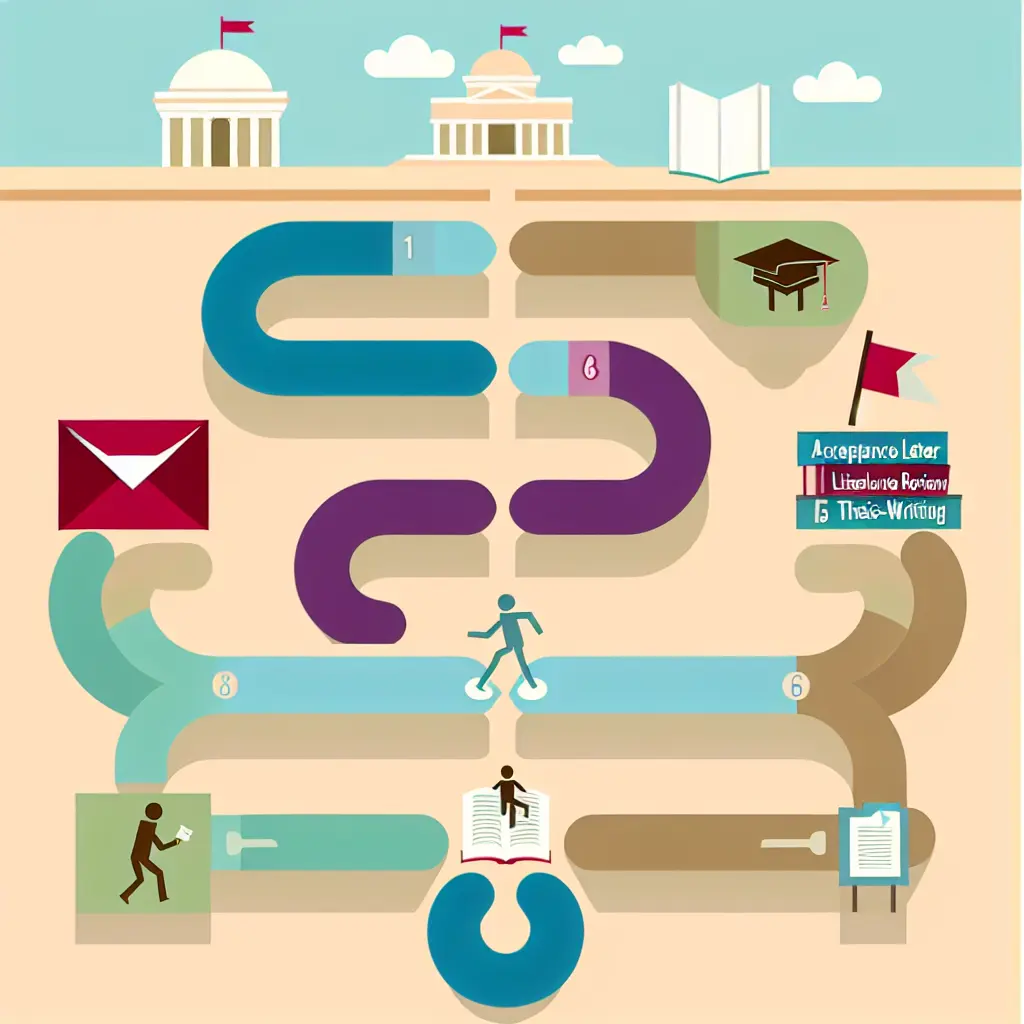
Here’s the truth most people don’t tell you: the students who thrive at Cambridge aren’t necessarily the smartest—they’re the ones who understand the system early and plan strategically.
This guide offers a concrete roadmap for PhD thesis writing and planning at Cambridge, from your acceptance letter to your first-year milestone. We’ll walk through Cambridge’s distinctive approach—the 3-4 year timeline that feels simultaneously generous and impossibly tight, the registration report that separates casual researchers from serious scholars, and the thesis word limits that force you to choose your battles wisely.
“At Cambridge, you’re not just writing a thesis. You’re entering a centuries-old tradition of intellectual rigor while navigating a system that assumes you already know how it works.”
Whether you’re headed to the Sciences, Humanities, or Social Sciences, this roadmap will help you decode Cambridge’s expectations and start your PhD thesis writing and planning at Cambridge with confidence rather than confusion.
Understanding Cambridge’s PhD Structure and Requirements
What Makes Cambridge PhD Thesis Writing Unique?
Cambridge operates on a model that’s deceptively simple on paper but complex in practice. The standard timeline runs 3-4 years, with minimum residence requirements that mean you can’t just disappear to write from a beach in Bali (tempting as that might be during February in England).
The journey breaks down into clear milestones: your registration report at the end of Year 1, your thesis submission, and the infamous viva voce examination where you defend your work face-to-face with examiners. According to Cambridge’s Graduate Studies documentation, most faculties expect a maximum of 80,000 words for Arts and Humanities theses, while STEM disciplines typically cap at 60,000 words—though quality always trumps quantity.
What sets Cambridge apart is the supervisor-student dyad model. Your supervisor isn’t just an advisor you meet occasionally; they’re the linchpin of your entire PhD experience. This is further complicated by Cambridge’s dual structure—you belong both to a college (for social and pastoral support) and a department or faculty (for academic resources). Think of it like having two families with different expectations, and somehow you need to show up for both Sunday dinners.
Faculty-Specific Reality Check:
- Sciences: Lab-based work, data collection focus, shorter thesis, higher emphasis on publications
- Humanities: Archive work, longer thesis, original interpretation of primary sources
- Social Sciences: Mixed methods, fieldwork considerations, balance between theory and empirical data
The PhD thesis writing and planning at Cambridge requires understanding these nuances from day one—because the expectations aren’t always explicitly stated, and asking “stupid questions” early beats stumbling in the dark for months.
Cambridge’s First-Year Expectations for PhD Planning
Your first year at Cambridge is officially probationary—a trial period where both you and the university figure out if this relationship will work. The centerpiece is your plan-of-research document, which evolves throughout the year into your formal registration report.
Beyond research, Cambridge expects you to develop transferable skills. You’ll take graduate training courses covering everything from research ethics to public engagement. These aren’t optional extras—they’re part of your doctoral training requirements and, frankly, more useful than you might think when you’re drowning in literature reviews at 2 AM.
Early assessment points vary by faculty, but expect progress reviews every term. Your supervisory team typically includes a primary supervisor, an advisor, and sometimes a committee—each playing different roles in your development. Setting up this team properly in your first few months matters more than you realize.
The registration requirements aren’t designed to stress you out (though they will). They’re structured checkpoints ensuring you’re on track before you’re too far down a research rabbit hole to climb back out. Students who view these as helpful guardrails rather than bureaucratic hurdles tend to finish on time and with their sanity mostly intact.
How Cambridge PhD Students Are Approaching Thesis Planning in 2024-2025
The Shift Toward Structured Planning and Early Writing
Something’s changing in Cambridge’s graduate community, and it’s worth paying attention to. Walk through the UL (University Library) today, and you’ll notice PhD students hunched over laptops in months 3-6 of their programs—not Year 3, when panic traditionally sets in.
The “wait until Year 3 to write” approach is dying, and good riddance. Today’s successful Cambridge PhDs are embracing iterative drafting—writing, revising, and refining from the earliest stages of research. This isn’t about perfectionism; it’s about treating your thesis as a living document that grows alongside your understanding.

We’re also seeing a rise in thesis-by-publication options across faculties. Instead of the traditional monograph, some students are submitting collections of related papers with a substantial introduction and conclusion tying them together. The advantage? You’re building your publication record while completing your PhD—killing two birds with one very well-researched stone.
Digital tools have replaced the romance of paper notebooks (sorry, traditionalists). Reference managers like Zotero and Mendeley are standard issue, but increasingly we’re seeing platforms like tesify.io that integrate project management, writing support, and thesis planning into one ecosystem. It’s not about technology replacing thinking—it’s about freeing up mental bandwidth for the actual intellectual work.
“I started writing my methods chapter in Month 5. My supervisor thought I was crazy, but by Year 2, that early draft had evolved into something publication-ready. Starting early gave me permission to write badly and improve gradually.”
—Anonymous, History PhD candidate
The 2024-2025 cohort is also more focused on research impact from day one. Public engagement isn’t an afterthought—it’s woven into research design, with students maintaining blogs, podcasts, or social media presence alongside traditional academic outputs. Cambridge is encouraging this shift, recognizing that scholarship doesn’t just live in library stacks anymore.
Cambridge Students Are Front-Loading Literature Reviews
Here’s where smart PhD students are gaining ground: they’re mapping their field in the first term, not the third year. The competitive advantage of rapid field-mapping is enormous—you identify gaps faster, refine questions earlier, and avoid those soul-crushing moments when you discover someone published your “original” idea six months ago.
The traditional approach—read everything, then write—is giving way to strategic scoping. Cambridge students are using techniques like the 10-hour scoping sprint to build comprehensive literature maps without getting lost in endless reading.
This front-loading serves another purpose: your reading lists directly feed your registration report requirements. By Month 4, you should have a working bibliography of 50-100 sources spanning key debates, theoretical frameworks, and methodological precedents. This isn’t comprehensive—it’s strategic, giving you enough grounding to defend your research direction while leaving room to discover new sources as you progress.
The students who nail this early literature work share a common trait: they treat the review as detective work, not homework. They’re hunting for contradictions, unanswered questions, and methodological gaps—the intellectual spaces where their thesis can make an original contribution. This mindset transforms what feels like drudgery into something genuinely exciting.
The Cambridge PhD Thesis Writing Roadmap (Step-by-Step)
Step 1 – Arrive and Orient (Weeks 1-4)
Your first month at Cambridge will feel like drinking from a firehose while someone shouts Latin at you. Matriculation, induction, college integration—it’s overwhelming by design. But beneath the ceremony and tradition, you’re accomplishing something crucial: building the infrastructure for your next three years.
Start practical. Set up your workspace. Get library access sorted (you’ll practically live in those stacks). Explore college study spaces—some colleges have hidden reading rooms that become sanctuaries during deadline seasons. Secure your department desk if offered; having a physical base matters more than you think for mental separation between “research mode” and “life mode.”
Join faculty-specific training programs early. These sessions aren’t just box-ticking exercises—they’re where you meet your cohort, learn unwritten rules, and figure out which seminars are actually worth attending (versus which ones exist purely for administrative reasons).
Then comes the big one: meeting your supervisor for the first time as a PhD student. This isn’t a casual coffee chat—it’s the foundation-laying conversation that sets the tone for years of collaboration. Come prepared with questions: How often should we meet? What’s your preferred feedback method—tracked changes, margin comments, face-to-face discussion? What’s your typical turnaround time on draft chapters?
The first meeting is also when you tackle potentially awkward topics like authorship and publication expectations. If you’re in a lab science, who gets first authorship on papers? If you’re in humanities, can you publish chapter excerpts before thesis submission? These conversations feel premature, but having clarity early prevents conflict later. For a detailed approach to navigating this crucial first month, check out our guide on early supervisor-student relationship management.
Step 2 – Define Your Research Focus (Months 1-3)
You arrived at Cambridge with a research proposal. Now here’s the uncomfortable truth: it’s probably too broad, too ambitious, or secretly three different projects wearing a trench coat.
These first three months are about refining that proposal into something actually doable in 3-4 years. This means moving from broad intellectual interest (“I want to study climate change communication”) to specific, answerable research questions (“How do UK farmers frame climate adaptation in online communities, and what does this reveal about rural attitudes toward environmental policy?”).
The key is alignment—with your supervisor’s expertise, with available resources, and with realistic timelines. If your research requires three years of fieldwork in remote locations, you’re setting yourself up for extensions and funding panic. If it needs access to archives that only open by appointment six months in advance, plan accordingly.
This is where many students get stuck, spinning between ideas without committing. The solution? Draft preliminary research questions specifically for your registration document. Having that concrete deadline (end of Year 1) forces clarity. You can always refine questions as research progresses, but you need something defensible on paper.
Struggling to transform vague interests into sharp, testable questions? Our guide to research question development walks through the exact process Cambridge PhD students use to move from “I’m interested in…” to “This thesis will demonstrate that…”
Remember: defining your focus isn’t about limiting yourself—it’s about being strategically narrow enough to make a meaningful contribution while retaining flexibility to follow unexpected findings. The best PhDs often end up investigating something slightly different from their Year 1 plan, but they started with clear direction that allowed productive pivoting.
Step 3 – Map the Field Quickly (Months 2-4)
Let’s bust a myth: you don’t need to read everything ever written in your field. That way lies madness, abandoned PhDs, and a concerning caffeine dependency.
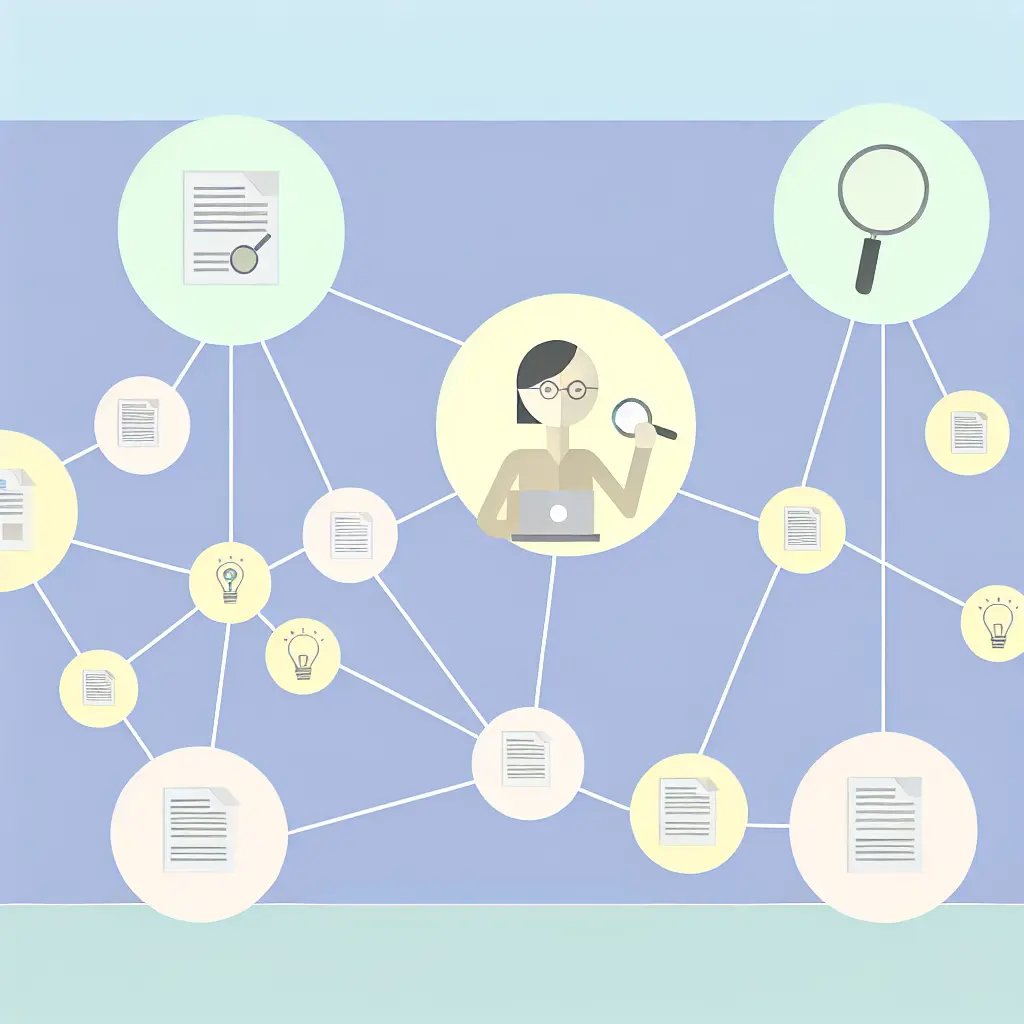
Instead, conduct a strategic literature review—targeted reading that identifies key debates, theoretical frameworks, and methodological precedents without attempting encyclopedic coverage. Think of it like reconnaissance: you’re surveying the battlefield, identifying major players and understanding the terrain, not memorizing every tree.
Start by building a reference library using Zotero, Mendeley, or EndNote (pick one and commit—switching systems later is painful). As you read, tag sources by theme, methodology, and theoretical approach. This organizational work feels tedious but pays dividends when you’re writing your literature review at 11 PM and need to quickly find “that article about participatory action research in community development.”
Your goal by Month 4: a gap statement that justifies your thesis contribution. This isn’t just “no one has studied X”—it’s identifying where existing scholarship contradicts itself, where methodologies haven’t been applied to specific contexts, or where theoretical frameworks need updating based on new evidence.
This literature review section becomes the backbone of your registration report. You’re demonstrating to assessors that you understand the scholarly conversation you’re entering and can articulate where your voice adds value. It’s the difference between “here’s my interesting idea” and “here’s why this idea matters to the field.”
Need a time-efficient approach? The 10-hour scoping sprint methodology is designed exactly for this phase—giving you a systematic way to map your field without getting lost in reading for six months.
Step 4 – Establish Working Practices with Your Supervisor (Months 1-4)
Here’s what nobody tells you about PhD supervision: the relationship quality matters more than the supervisor’s reputation. A less famous supervisor who responds to emails within 48 hours and gives clear, constructive feedback beats a celebrity academic who’s perpetually “too busy” every single time.

These first months are when you establish working practices that will sustain you through the inevitable rough patches ahead. Set a clear meeting cadence—weekly, fortnightly, or monthly, depending on your field and supervisor’s style. Some students thrive with weekly check-ins; others prefer monthly deep dives. There’s no universal right answer, but there is your right answer, and finding it early matters.
Agree on draft submission and feedback timelines. How much lead time does your supervisor need? Two weeks? One month? And crucially—how many drafts of each chapter will they review? Some supervisors expect one polished submission; others prefer to see rough early drafts. Mismatched expectations here cause unnecessary stress on both sides.
Clarify roles explicitly: What does your supervisor provide versus what should you self-direct? They’re not your therapist, your writing coach, or your grant application ghostwriter. They provide intellectual guidance, methodological advice, and constructive criticism. You bring organization, initiative, and ownership of your project.
If you’re planning publications during your PhD (increasingly common), discuss co-authorship conventions early. In lab sciences, this is standard protocol. In humanities, it’s murkier. Getting clear agreement up front—preferably in writing via email confirmation—prevents awkward conflicts later.
Finally, build accountability structures beyond supervision meetings. Shared task lists, milestone trackers, or regular progress emails create gentle pressure to keep moving forward. Some students use tools like tesify.io to maintain visible timelines that both they and their supervisors can reference. The point isn’t surveillance—it’s creating external structure when internal motivation inevitably wavers.
Step 5 – Draft Your Registration Report (Months 6-12)
The registration report is Cambridge’s way of saying, “Prove you’re not wasting our time.” It sounds harsh, but it’s actually a gift—a structured checkpoint that prevents you from wandering down research dead-ends for years before realizing you’re lost.
Each faculty has specific requirements (check yours carefully), but the general structure follows a predictable pattern: Background/context, refined research questions, methodology, preliminary findings, realistic timeline, and comprehensive bibliography. Think of it as a mini-thesis proposal informed by your first year of actual research.
Typical length runs 5,000-10,000 words, depending on your faculty. Sciences tend toward the shorter end (data speaks loudly); humanities toward the longer (context requires more explanation). But length matters less than clarity—assessors want to see focused research questions, defensible methodology, and realistic scope.
Here’s the non-obvious truth: this document will go through multiple drafts. Don’t wait until Month 11 to show your supervisor a complete report. Start sharing sections from Month 6 onward—methodology first (often the easiest to write), then research questions, then background. Incorporate feedback iteratively rather than hoping one heroic revision will magically produce a perfect document.
Submit before your faculty’s end-of-Year-1 deadline (typically September/October for students who started in October). Then prepare for your registration interview or viva—a less formal version of your final thesis defense where you discuss your report with assessors, defend your choices, and demonstrate readiness to continue. Most students pass with minor corrections, but the experience offers valuable practice for articulating your research under pressure.
Step 6 – Create a Thesis Chapter Plan (Months 8-12)
By Month 8, you should have enough research clarity to reverse-engineer your final thesis structure. Standard Cambridge theses follow a recognizable pattern: Introduction, Literature Review, Methodology, three to four Results/Analysis chapters, Discussion, and Conclusion. But this is framework, not straitjacket—your specific thesis might demand variations.
The magic happens when you map which chapters draw on which data, arguments, or case studies. This prevents redundancy and helps you see gaps in your research plan. If Chapter 4 needs quantitative survey data but you haven’t designed the survey yet, that’s a Month 10 priority. If Chapter 6 analyzes three case studies but you’ve only identified two so far, you know what to focus on.
Set internal deadlines for first drafts of each chapter. These deadlines will slip (they always do), but having targets creates momentum. More importantly, it transforms “write a thesis” (overwhelming, abstract) into “draft methodology chapter by March” (concrete, achievable).
Look for opportunities to publish standalone pieces from your thesis chapters. A strong analysis chapter might work as a journal article with minimal adaptation. Your literature review might become a review essay. These publications don’t just pad your CV—they force you to refine arguments early and get external feedback before thesis submission.
Document this plan visually. A simple spreadsheet or timeline showing chapter relationships, deadlines, and dependencies works wonders for maintaining overview when you’re deep in the weeds of a single section. Some students pin this to their wall; others maintain digital versions they update quarterly. The format matters less than having the plan externalized somewhere you regularly consult.
Step 7 – Start Writing (Don’t Wait for “Perfect” Data)
Here’s the secret Cambridge PhD students learn too late: you don’t need complete data to start writing. Waiting for “perfect” conditions is procrastination in a lab coat.
Begin drafting your methods chapter in Year 1—you already know what you’re planning to do. Even if specifics change (they will), writing forces clarity about your approach. Articulating why you chose ethnographic interviews over surveys, or qualitative analysis over quantitative modeling, helps you understand your own methodological commitments.
Write your literature review incrementally as you read. Don’t wait until you’ve “finished” the literature (you never will) to start drafting. Each major source you engage with can become a paragraph or section. Over months, these accumulate into a comprehensive review that you refine rather than write from scratch in a panicked week.
Draft your introduction iteratively as your argument crystallizes. The introduction you write in Month 8 will be different from the one you submit in Year 3, and that’s fine. Each version helps clarify your thinking and gives your supervisor something concrete to respond to.
Embrace what Anne Lamott famously called “shitty first drafts.” Give yourself permission to write badly. Your first pass at explaining a complex theoretical concept will be clunky, verbose, and probably confusing. That’s not a problem—that’s the process. Revision is where quality emerges, but you can’t revise what doesn’t exist.
Set weekly word count targets, even if they’re modest. Five hundred words per week compounds to 26,000 words per year—nearly half of a science PhD thesis or a third of a humanities thesis. Consistency beats occasional heroic writing binges every time.
Step 8 – Build Your Support Infrastructure
PhD writing is lonely work. Without deliberate effort to build support structures, you’ll find yourself isolated, stuck, and increasingly convinced that everyone else has figured this out except you (they haven’t—they’re just better at hiding the struggle).
Join writing groups. Your college probably runs one; your faculty definitely does; and if you can’t find one that fits, start your own with three cohort peers. The format is simple: meet weekly or fortnightly, everyone shares current challenges, you write together in companionable silence, then debrief. The accountability and commiseration are equally valuable.
Attend Cambridge writing workshops offered by the Graduate Union, CARET (Centre for Applied Research in Educational Technologies), and faculty-specific programs. These sessions teach practical skills—from managing large writing projects to overcoming perfectionism—that supervision doesn’t always cover.
Find accountability partners among your peers. These don’t need to be in your field (sometimes better if they’re not—fresh perspectives help). Regular check-ins where you report progress and set next goals create gentle external pressure that carries you through motivational slumps.
Use digital tools strategically:
- Reference management: Zotero, Mendeley, EndNote (pick one, master it)
- Writing environments: Scrivener for long-form organization, Overleaf for LaTeX users, Google Docs for collaboration
- Project management: Notion for flexible organization, Trello for visual task tracking, tesify.io for integrated thesis planning and progress monitoring
Most importantly, schedule regular writing time in your calendar and treat it as non-negotiable. Not “I’ll write when I have time” (you never will), but “Tuesday and Thursday mornings are writing blocks, period.” Protect these hours fiercely. Turn off email. Silence your phone. Give yourself permission to focus without guilt.
Cambridge-Specific Insider Tips for PhD Thesis Planning
Let’s talk about the unwritten wisdom that circulates in college bars and department corridors but rarely makes it into official guidance:
Use college libraries strategically. Yes, the UL is comprehensive, but college libraries offer quiet writing spaces, rare book collections, and crucially—shorter walking distances. On days when motivation is low, proximity matters.
Attend departmental seminars religiously (well, most of them). These aren’t just about content—they’re where you test ideas in low-stakes environments, build your academic network, and figure out how to present research compellingly before your own thesis defense looms.
Submit work-in-progress to graduate conferences. The feedback is developmental rather than make-or-break, and practicing thesis presentations before examiners are involved is invaluable. Plus, conference CVs look good on job applications.
Leverage Cambridge’s short terms for sprint-based milestones. Eight-week terms create natural cycles. Set term-specific goals—”finish methods chapter by end of Michaelmas,” “complete case study 2 by end of Lent”—and use vacation periods for deep writing work when campus is quieter.
Don’t underestimate vacation time for writing. When everyone else has left Cambridge, the libraries are peaceful, distractions are minimal, and you can actually think. Some of the best thesis work happens in August when campus feels like a ghost town.
Build relationships with college tutors and graduate tutors. These folks provide pastoral and academic support distinct from your supervisor. When you need extension requests, pastoral emergency support, or just someone to sanity-check a decision, these relationships matter.
Understand your funding timeline and thesis submission deadlines. Most funding runs 3-4 years. If you’re approaching the end of funded time without finished thesis, you face writing while job-hunting or self-funding. Plan submissions accordingly—better to submit at 3.5 years than scramble unfunded in Year 5.
The Future of PhD Thesis Writing at Cambridge
What’s Changing in Cambridge PhD Programs (2025-2030 Outlook)
Cambridge doesn’t change quickly—centuries-old institutions rarely do—but shift is happening, and it’s worth positioning yourself for what’s coming rather than what was.
Prediction 1: Greater flexibility in thesis formats. The traditional monograph isn’t disappearing, but it’s no longer the only option. Thesis-by-publication is becoming more accepted across disciplines, and we’re seeing experimental formats—integrated creative practice with critical commentary in arts, computational notebooks with embedded code in data science. By 2030, expect multiple acceptable thesis formats within most faculties.
Prediction 2: Increased integration of digital humanities tools and computational methods. Even non-STEM fields are incorporating digital analysis—text mining historical archives, network analysis of social movements, geographic information systems for spatial humanities. You don’t need to become a programmer, but basic computational literacy is shifting from optional to expected.
Prediction 3: Stronger emphasis on open access and research data management. Funders increasingly require open access publication and FAIR data principles (Findable, Accessible, Interoperable, Reusable). Cambridge PhD students are learning these practices from day one, not retroactively applying them pre-submission. Your thesis will likely include a data management plan as standard.
Prediction 4: More structured Doctoral Training Partnerships with cohort-based milestones. The individualized PhD journey is giving way—especially in sciences and social sciences—to cohort-based programs with shared coursework, collective milestones, and built-in peer support. This reduces isolation and creates more equitable experiences across students.
Prediction 5: AI writing assistants becoming standard tools (while maintaining academic integrity). The moral panic about AI and academic work will settle into pragmatic adoption. Tools that help with literature mapping, draft structuring, and revision suggestions will be unremarkable parts of the writing process—just as spell-checkers once seemed threatening but now are invisible infrastructure. The key differentiator will remain original thinking and rigorous argumentation, which AI can support but not replace.
How to Future-Proof Your Cambridge PhD Thesis Process
Given these shifts, how do you set yourself up for success not just in 2025 but in the academic landscape you’ll inhabit post-PhD?
Adopt modular writing practices where chapters function as standalone units. This makes thesis-by-publication possible, but also creates flexibility to repurpose sections for different audiences—policy briefs, public articles, grant applications. Your thesis isn’t just a one-time document; it’s the foundation for multiple future outputs.
Build a digital research portfolio alongside your thesis. Maintain a professional website or academic profile showcasing your work-in-progress, publications, presentations, and public engagement. By submission time, you’ll have established online presence that complements your thesis and makes you more visible to potential employers or collaborators.
Develop transferable project management skills. Running a PhD is essentially managing a 3-4 year project with ambiguous goals, limited resources, and no clear playbook. The organizational skills you develop—breaking large projects into manageable tasks, tracking progress, adjusting timelines—are valuable in any career, academic or otherwise.
Maintain rigorous version control and backup systems. Use cloud storage with automatic backup, consider GitHub for version control (even for non-code documents), and keep multiple copies of everything. The horror story of the lost thesis draft is cliché because it keeps happening. Don’t let it happen to you.




Leave a Reply