

Picture this: you’re sitting in the Bodleian Library, surrounded by centuries-old manuscripts, yet the document open on your laptop is being shaped by AI algorithms that didn’t exist when you started your degree. This isn’t science fiction—it’s the new reality of dissertation writing at Oxford in 2025. The dreaming spires remain unchanged, but the methods beneath them? They’ve evolved dramatically.
Oxford dissertations now occupy a fascinating intersection where 200-year-old academic traditions meet cutting-edge AI-powered dissertation writing tools and methods for UK students. And here’s the thing that keeps most students awake at night: the stakes have never been higher. Your dissertation isn’t just a requirement—it’s often worth 30-60% of your final degree classification, scrutinized through increasingly sophisticated digital submission systems and assessed against rubrics that now explicitly address AI tool use.
This guide cuts through the noise. You’ll discover how to navigate Oxford’s rigorous dissertation framework while leveraging modern AI methods responsibly—not to replace your thinking, but to amplify it. Whether you’re in Week 1 of planning or Week 10 of panic-editing, you’re about to learn exactly how successful Oxford students are structuring their dissertations in 2025.
Quick Answer: The standard Oxford dissertation structure in 2025 includes: title page, abstract, table of contents, introduction (10%), literature review (20%), methodology (15%), findings/analysis (30%), discussion (20%), conclusion (5%), references, and appendices. Total word counts typically range from 8,000-15,000 words depending on your programme, with digital submission via WebLearn or Canvas now mandatory across most departments.
Understanding Oxford’s Dissertation Framework: What You’re Actually Required to Deliver
Let’s start with the non-negotiables. Oxford examiners expect your dissertation to follow a specific architectural blueprint—and getting this wrong can cost you marks before they’ve even read your arguments.
Core Components Every Oxford Dissertation Must Include
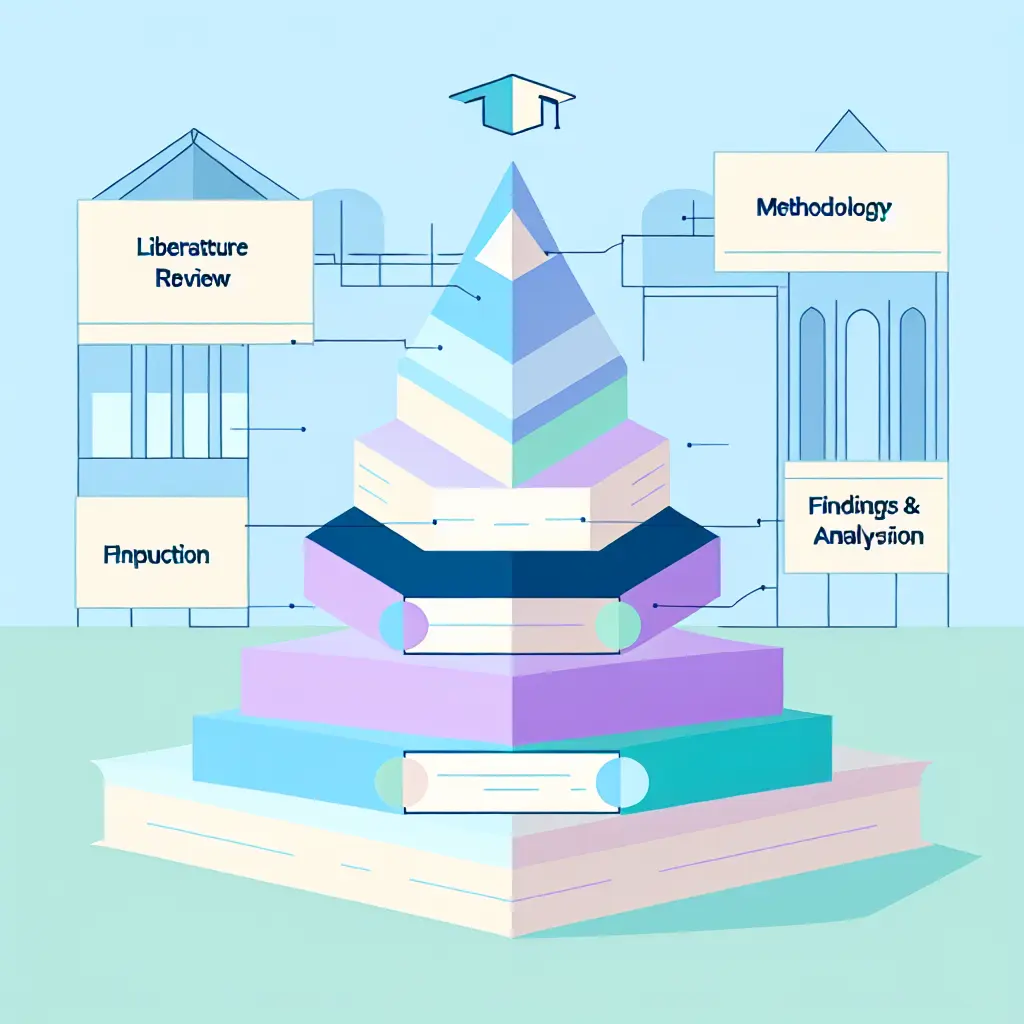
Your dissertation isn’t a single document—it’s a carefully orchestrated collection of mandatory elements. The title page needs your name, degree programme, word count, and submission date formatted according to your faculty guidelines (yes, Social Sciences and STEM faculties have different requirements—I know, frustrating). Then comes your abstract, typically 250-300 words summarizing your entire research journey in a way that could stand alone if someone only read that single page.
The acknowledgements section seems ceremonial until you realize it’s where you’ll need to transparently declare any AI tool usage—more on that shortly. Your table of contents must be auto-generated (manually typed ones are a dead giveaway of inexperience) with accurate page numbers linking to every heading and subheading.
Here’s where the real intellectual work begins: your introduction establishes your research question and its significance; the literature review positions your work within existing scholarship; your methodology chapter justifies your research design; findings or results present your data or textual analysis; the discussion interprets what it all means; and your conclusion delivers the “so what?” answer every examiner is hunting for.
Finally, your reference list (not “bibliography”—Oxford is particular about terminology) and appendices complete the package. Word count variations are significant: PPE students might write 10,000 words, while DPhil candidates in History could submit 15,000. Always check your specific programme handbook—assumptions here can be catastrophic.
For deeper insights into how departmental cultures shape these structural expectations, check out Writing a university dissertation at Oxford: Untold Truths, which breaks down the unwritten rules separating first-class from upper-second dissertations.
How Oxford’s Supervision Culture Shapes Your Structure
Oxford’s tutorial system isn’t just a teaching method—it’s a structuring philosophy. Unlike universities where you submit chapters to a distant supervisor via email, Oxford’s face-to-face tutorial culture means your dissertation structure evolves through conversation. Your supervisor expects to see iterative drafts: maybe your introduction and methodology first, then individual results chapters, never the whole manuscript at once until it’s nearly finished.
This creates a unique structural rhythm. You’re not building a dissertation in linear fashion from page one to page 100. Instead, you’re constructing it in chunks, refining each section through supervisor feedback before moving forward. STEM students might complete their methodology chapter before collecting any data, while Humanities candidates often write their introduction last, once they fully understand their argument.
Faculty-specific guidelines add another layer of complexity. Social Science dissertations at Oxford typically follow APA formatting with clear delineation between theory and empirical chapters. Humanities students work with footnote systems (Oxford or Chicago styles), embedding citations within the narrative flow. STEM candidates might include substantial appendices with raw data, code repositories, or experimental protocols—elements that don’t count toward word limits but are still assessed.
Timeline milestones matter enormously. You’ll typically submit a proposal in Trinity Term of your penultimate year, obtain ethics approval (if required) by Week 2 of your final year, deliver chapter drafts throughout Michaelmas and Hilary terms, and face final submission in Trinity Term. Miss any of these internal deadlines, and you’re not just behind—you’re potentially heading for an extension request or incomplete submission.
2025 Submission Requirements and Digital Workflows
Oxford’s shift to digital-first submission has transformed dissertation structuring in subtle but significant ways. Most departments now require submission via WebLearn or Canvas, with specific file naming conventions (StudentID_Surname_DissertationTitle.pdf), formatting requirements embedded in automated checklists, and instant Turnitin plagiarism screening.
Formatting standards remain department-specific torture devices. Are your footnotes included in your word count? (Humanities: usually yes. Social Sciences: often no. STEM: probably doesn’t matter because you’re barely using footnotes.) Does your department require Harvard referencing, Oxford referencing, or some hybrid abomination? Is your line spacing 1.5 or 2.0? Are your margins 2.5cm or 3cm? These details aren’t pedantic fussiness—they’re literally marked in your assessment rubric.
Turnitin thresholds are the new anxiety generator. Most Oxford departments accept 15-20% similarity scores if properly referenced, but some supervisors panic at anything above 10%. The key is understanding that Turnitin detects matching text, not plagiarism—your bibliography and commonly-used phrases will always show matches.
And here’s the 2025 twist: AI detection tools. Oxford examiners are increasingly running submissions through tools like GPTZero or Turnitin’s AI detector, but—and this is crucial—they’re not using them as definitive proof of misconduct. Instead, they’re conversation starters. If your discussion chapter suddenly shifts from your established writing voice to suspiciously fluent, generic academic prose, expect questions. The solution? Consistent voice throughout, transparent acknowledgement of AI assistance, and deep personal understanding of every sentence you submit.
The AI Revolution: How AI-Powered Dissertation Writing Tools Are Transforming UK Academia
Let’s address the elephant in the Bodleian: AI-powered dissertation writing tools and methods for UK students are no longer controversial—they’re mainstream. A 2024 survey by the Higher Education Policy Institute found that approximately 68% of UK postgraduate students now use AI tools at some stage of their dissertation process. That’s not a fringe minority; that’s your tutorial group.
The Rise of AI-Powered Dissertation Writing Tools and Methods

The AI dissertation toolkit has exploded into distinct categories. AI research assistants like Elicit and Semantic Scholar help you discover relevant papers by mapping citation networks. Structure generators (we’ll get to specifics shortly) transform your research question into provisional chapter outlines. Editing platforms analyze your academic tone, coherence, and argument flow. Reference managers have integrated AI to auto-extract citations from PDFs and suggest related sources.
Oxford’s official stance? Pragmatic permission with clear boundaries. The university’s Academic Integrity Guidelines updated in 2024 explicitly permit AI use for “brainstorming, structuring arguments, improving clarity, and checking grammar”—but prohibit AI from “generating core analysis, conducting research, or producing substantive content without attribution.”
Translation: You can use AI to organize your thoughts and polish your expression, but not to manufacture your thinking. It’s the difference between using a calculator (allowed) and having someone else solve the math problem (academic misconduct).
Real Oxford student workflows in 2025 typically look like this: AI tools help synthesize 50+ literature sources into thematic clusters, generate skeleton outlines with provisional subheadings, identify gaps in argument flow, and suggest transition sentences. The student then writes the actual analysis, develops original interpretations, and critically engages with sources—the intellectual work AI fundamentally cannot replicate.
Which AI Tools Oxford Students Are Actually Using in 2025
Walk into any Oxford library during dissertation season, and you’ll spot the same tools open on laptop screens. Tesify.io has become particularly popular among UK students because it’s purpose-built for dissertation workflows—it helps you map literature themes to chapter headings, manage citations in multiple academic styles, and generate structured outlines that align with UK university assessment criteria. Unlike general AI tools, Tesify understands that UK dissertations have specific structural conventions Oxford examiners expect.
ChatGPT and Claude serve different roles: quick brainstorming for argument development, clarifying complex theoretical concepts, and generating example paragraph structures you then rewrite in your own voice. Students report using them most during the “stuck” moments—when you know what you want to say but can’t find the words.
Grammarly and ProWritingAid have moved beyond spell-checking into stylistic territory. They’ll flag passive voice overuse, highlight unclear antecedents, and suggest stronger vocabulary—all while learning your writing patterns to avoid over-correcting your intentional stylistic choices.
Notion AI and Obsidian dominate knowledge management. These tools help you connect ideas across sources, visualize relationships between concepts, and maintain research coherence over 6-12 months of dissertation work. They’re particularly valuable for interdisciplinary projects where you’re synthesizing literature from multiple fields.
Zotero, Mendeley, and EndNote remain essential for reference management, now supercharged with AI features that suggest related papers based on your library content and auto-format citations in any required style.
For a comprehensive toolkit comparison with setup guides specifically calibrated for UK academic requirements, explore Thesis Writing Tools for UK Master’s Students (2025).
How AI Assists with Structuring (Without Writing for You)

This distinction is everything. AI doesn’t write your dissertation—it helps you architect it. Think of AI as a structural engineer, not a ghostwriter.
Here’s what that looks like in practice. You feed your research question into an AI tool along with your key sources. The AI analyzes thematic patterns and suggests a skeleton outline: “Your literature clusters around three debates—regulatory frameworks, market dynamics, and social impacts. Consider structuring your literature review around these themes, then building methodology and findings chapters that address each systematically.”
You’re not accepting this outline wholesale. You’re using it as a thinking tool—confirming some suggestions align with your supervisor’s guidance, rejecting others because they miss disciplinary nuances, and refining the structure through iterations. The AI jumpstarts your structural thinking; you provide the academic judgment.
AI excels at mapping literature themes to chapter headings. If you’ve gathered 60 sources but can’t see the patterns, AI can cluster them by methodology, theoretical framework, or chronology—providing structural options you then evaluate. It’s particularly valuable for identifying gaps in argument flow: “Your chapter 3 discusses policy implications, but chapter 4 jumps to case studies without connecting how those policies actually function in practice. Consider adding a bridging section.”
Generating transition sentences and signposting language is another sweet spot. Academic writing requires constant reader guidance—”Having established X in the previous section, this chapter now explores Y”—and AI can draft these connective tissues, which you then refine to match your voice.
What AI categorically cannot do: conduct original critical analysis requiring disciplinary expertise, make ethical judgments about research design, or synthesize contradictory sources into a novel theoretical position. Those remain human territories—and Oxford examiners are extraordinarily skilled at detecting when they’re missing.
For concrete prompts and responsible-use workflows that maintain academic integrity, visit AI assistants for thesis structure and editing: What to Know, which provides step-by-step guardrails for each dissertation phase.
Step-by-Step Method: Structuring Your Oxford Dissertation with AI Support
Theory is lovely; application is where dissertations get written. Here’s the exact method successful Oxford students are using to structure their dissertations in 2025, phase by phase.
Phase 1 – Define Your Research Question and Scope (Weeks 1-2)
Traditional approach: You’d spend weeks reading broadly, meeting with your supervisor to narrow your focus, and manually mapping relevant literature until a research question crystallized. This still happens—but it’s now turbocharged.
AI enhancement: Tools like Tesify.io can rapidly synthesize 50+ papers, identifying thematic clusters and research gaps in hours rather than weeks. You upload your initial reading list, and the AI maps connections, highlights frequently-cited foundational works, and suggests underexplored angles. You’re not trusting this blindly—you’re using it as a literature landscape map, then verifying insights through careful reading.
Your deliverable at phase end: an approved proposal with a clear research question, justified scope, and provisional chapter titles. Your supervisor signs off, and you’ve got your structural north star. Everything you write subsequently should connect back to answering this question—if it doesn’t, it’s probably going in an appendix or getting cut.
Phase 2 – Build a Chapter-by-Chapter Blueprint (Weeks 3-4)
The Oxford standard allocates word count strategically: Introduction (10%) establishes context and research question; Literature Review (20%) surveys existing scholarship; Methodology (15%) justifies your research design; Results/Analysis (30%) presents your findings; Discussion (20%) interprets implications; Conclusion (5%) synthesizes contributions.
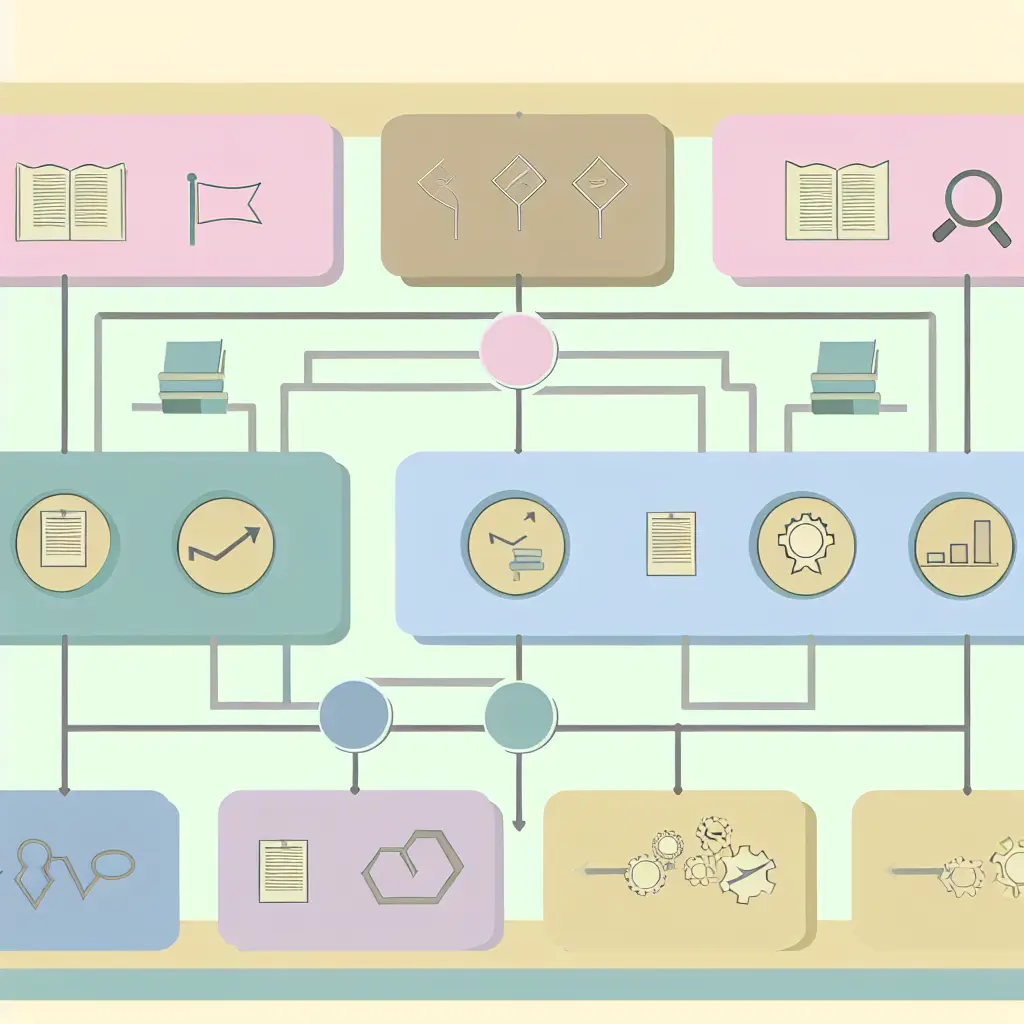
These percentages aren’t arbitrary—they reflect assessment rubric weightings. Your examiners spend the most time evaluating your results/analysis and discussion chapters because that’s where original contribution lives.
How should I structure each chapter of my Oxford dissertation?
- Introduction: Research context, question, objectives, dissertation roadmap
- Literature Review: Thematic synthesis (not chronological summary), identification of gaps, theoretical framework
- Methodology: Research design justification, data collection methods, analytical approach, ethical considerations, limitations
- Findings/Results: Systematic presentation organized by research sub-questions or themes
- Discussion: Interpretation linking findings to literature, theoretical implications, practical applications
- Conclusion: Research question answered, contribution summary, future research directions
AI-powered method: Generate 3-5 bullet points per chapter using carefully crafted AI prompts. For example: “Based on my research question about climate policy effectiveness, suggest 5 key points my methodology chapter should address.” The AI might suggest: justifying case study selection, explaining policy analysis framework, describing data sources, addressing generalizability limitations, and outlining comparative analytical approach.
You don’t blindly accept these. You refine with supervisor feedback—maybe they push back on case study selection, suggesting a different analytical lens. You iterate the blueprint until every chapter serves your central argument.
Pro tip: Align your structure explicitly with assessment rubric criteria. If your department’s rubric awards 30% for “methodological rigor,” your methodology chapter needs substantial justification, not a cursory two-page description. If “originality of contribution” is weighted heavily, ensure your discussion chapter clearly articulates what’s novel about your work.
Phase 3 – Draft and Iterate with AI-Assisted Editing (Weeks 5-10)
Here’s a counter-intuitive strategy successful Oxford students swear by: write your introduction and conclusion early, even knowing you’ll substantially revise them. Why? Because they force you to articulate your core argument before diving into granular analysis. If you can’t write a coherent conclusion in Week 5, your argument probably isn’t clear enough yet—better to discover that now than in Week 11.
Use AI strategically during drafting:
- Checking argument consistency across chapters: Does your methodology chapter promise analysis you then don’t deliver? AI can spot these disconnects by analyzing chapter summaries.
- Improving academic tone and clarity: Your first draft probably contains colloquialisms, vague language, or repetitive phrasing. AI editing tools flag these, suggesting more precise academic alternatives.
- Identifying over-reliance on single sources: If you’ve cited Smith (2020) seventeen times in one section, you’re probably not engaging sufficiently with competing perspectives.
- Suggesting stronger topic sentences: Each paragraph should begin with a clear claim. AI can review your topic sentences and suggest sharper versions.
What AI categorically cannot do: conduct original critical analysis (that requires your disciplinary expertise), provide ethical reasoning about research design, or synthesize contradictory sources into novel theoretical positions. When you read AI-generated content, it feels generic because it lacks the depth that comes from genuinely grappling with difficult questions. Your examiners will spot that absence instantly.
Phase 4 – Final Structure Review and Submission Prep (Weeks 11-12)
The final phase is where structural discipline separates first-class dissertations from the rest. Run this structural checklist: Does each chapter answer a specific sub-question that builds toward your main research question? Is there a clear “golden thread” connecting every section? Could someone read just your introduction and conclusion and understand your complete argument?
AI tools excel at final polish tasks: citation formatting (catching inconsistent reference styles), consistency checks (have you capitalized “state” in chapter 2 but “State” in chapter 4?), and readability scoring (flagging overly complex sentences that obscure rather than clarify).
Oxford-specific checks require human judgment: Does your formatting match your department’s style guide precisely? Is your word count correct, including or excluding footnotes as specified? Are figures and tables numbered consistently and referenced in-text?
The final supervisor sign-off isn’t a formality—it’s your safety net. Don’t submit without it. Then, you face the Turnitin submission: upload your PDF, watch the similarity percentage generate, potentially panic if it’s higher than expected, then breathe when you realize it’s flagging your bibliography and properly-cited quotes. If your similarity score exceeds 20%, schedule an immediate meeting with your supervisor to review—better to address concerns proactively than reactively.
The Future of Dissertation Structuring at Oxford and Beyond
Oxford isn’t static—it evolves, usually glacially, but 2025 marks genuine acceleration in how dissertations are conceived and assessed.
What’s Changing in 2025-2026 for Oxford Dissertations
Alternative formats are creeping into previously traditional departments. Some STEM programmes now accept digital portfolios—interactive websites showcasing code, data visualizations, and documented research processes—supplemented by a reflective essay. Social Science departments are experimenting with published article + critical commentary formats, where you submit a journal article (potentially co-authored with your supervisor) alongside an essay positioning it within broader debates.
AI literacy expectations are hardening into requirements. Several Oxford departments now mandate a “Research Tools and Methods” paragraph in your methodology chapter, where you transparently document any AI, statistical software, or analytical tools used. This isn’t confession—it’s scholarly rigor. Future academic readers should be able to understand and replicate your process.
Collaborative dissertations are rising in interdisciplinary programmes like Internet Studies or Global Health Science. Two students might tackle complementary research questions, co-authoring methodology and literature reviews while writing separate findings/discussion chapters. This mirrors real-world research practices but requires exceptionally clear delineation of individual contributions.
Looking ahead, we’ll likely see real-time AI co-pilot tools embedded directly in university platforms. Imagine writing in a WebLearn-integrated editor that suggests structural improvements as you draft, checks your citations against Oxford’s style requirements, and flags potential argument gaps—all while ensuring your data never leaves university servers for privacy protection.
Skills Oxford Students Need Beyond Traditional Structuring
The skill set for dissertation success is expanding. Prompt engineering—the art of crafting AI queries that generate useful responses—is becoming as fundamental as literature searching. You need to know how to ask AI for a “critical synthesis of institutional theory approaches in organizational behavior” rather than a generic “summary of organizational behavior theories.”
Critical evaluation of AI-generated suggestions is non-negotiable. AI might recommend structuring your literature review chronologically, but if your discipline values thematic synthesis over historical narrative, you need the judgment to reject that suggestion. Blindly following AI advice is as problematic as blindly trusting a single source.
Data visualization and multimodal argumentation are increasingly expected, especially in Social Sciences and STEM. Your dissertation isn’t just text—it’s graphs, tables, concept maps, and potentially embedded multimedia elements (if permitted). These must be designed for clarity and integrated meaningfully, not dropped in as decorative afterthoughts.
Transparent research workflows and reproducibility practices matter more than ever. Can someone else follow your methods and reach similar conclusions? This is where AI tool documentation in your methodology chapter becomes crucial—future researchers need to know you used GPT-4 for initial literature clustering but conducted all subsequent analysis manually.
How UK Universities Are Adapting Assessment Criteria
Assessment rubrics are shifting from evaluating “original contribution” to valuing “original synthesis and critical application.” Oxford examiners increasingly recognize that genuine originality is rare at master’s level—but original synthesis (combining existing ideas in novel configurations) and critical application (deploying theoretical frameworks in new contexts) are absolutely achievable and valuable.
Penalties for undisclosed AI use are becoming standardized. Most universities distinguish between “minor misconduct” (using AI for editing without acknowledgement) and “major misconduct” (submitting AI-generated analysis as your own work). The former might result in mark deductions; the latter can trigger investigations and potential degree revocation.
Conversely, there’s emerging recognition that thoughtful AI integration deserves credit. Some departments are experimenting with rubric criteria like “effective use of research technologies” or “transparent methodology documentation,” explicitly rewarding students who leverage AI responsibly and document their process clearly.
Case study: Oxford’s Saïd Business School updated dissertation guidelines in 2024-2025 to require a “Tools and Technology” section in methodology chapters, with exemplar dissertations showcasing best practices. Students who documented using AI for initial literature mapping, then explained their human-led synthesis process, received examiner commendations for methodological transparency.
Prediction: By 2027, AI-assisted structuring will be standard practice with university-provided best-practice frameworks. Oxford will likely release official AI integration guidelines with discipline-specific examples, eliminating current ambiguity. Students will submit dissertations alongside “research process logs” documenting their tool use—not for policing, but for scholarly reproducibility.
Structure Smarter: Your Next Steps
Right. You’ve absorbed the framework, understood the AI integration possibilities, and glimpsed the future. Now what?
Week 1 action: Download your faculty’s official dissertation handbook—not the generic university guide, but your specific department’s version with precise formatting requirements, word count specifications, and assessment criteria. Read it cover to cover, then compare it with the structure framework in this guide. Note any discrepancies and clarify with your supervisor immediately.
Start with Tesify.io: If you’re serious about structuring efficiently, sign up at tesify.io to map your literature, generate chapter outlines aligned with UK dissertation standards, and manage citations in any required academic style. It’s purpose-built for UK dissertation workflows, understanding the structural nuances Oxford examiners expect—unlike general AI tools that might suggest American dissertation formats or misunderstand your departmental requirements.
Bookmark these essential resources:
- Writing a university dissertation at Oxford: Untold Truths for insider perspectives on supervision culture, departmental expectations, and the unwritten rules that separate distinction-level dissertations from the rest
- AI assistants for thesis structure and editing: What to Know for concrete prompts, responsible-use workflows, and ethical guardrails at every dissertation phase
- Thesis Writing Tools for UK Master’s Students (2025) for a complete toolkit setup guide with UK-specific compliance considerations
Join the conversation: What’s your biggest structuring challenge right now? Are you stuck choosing between thematic or chronological literature review organization? Struggling to balance word counts across chapters? Uncertain how to document AI tool use in your methodology? Drop your questions in the comments below—and if you’ve successfully navigated Oxford’s dissertation structure, share your hard-won insights to help fellow students.
Here’s what hasn’t changed: Oxford’s examiners still expect rigorous argumentation, comprehensive literature engagement, methodological soundness, and original critical thinking. Your dissertation must demonstrate intellectual independence and scholarly maturity. Those standards are non-negotiable and, frankly, what makes an Oxford degree meaningful.
What has changed: the tools available to meet those standards more efficiently. AI-powered dissertation writing tools and methods for UK students don’t lower the bar—they remove structural obstacles so you can focus energy on the intellectual work that truly matters. You’re not cheating by using AI for outlining any more than you’re cheating by using a library database instead of manually reviewing card catalogs.
Use AI as a structuring and editing partner, not a thinking replacement. Document your process transparently. Maintain consistent academic voice throughout. And above all, ensure that every argument, interpretation, and critical insight comes from your genuine intellectual engagement with your research question.
The dreaming spires remain. You’re just building your dissertation more intelligently beneath them.
Ready to structure your Oxford dissertation with confidence?




Leave a Reply