
What No One Tells You About AI Assistants for Thesis Editing
Picture this: It’s 2 AM, you’re staring at your thesis draft, and that little notification pops up—”AI can help improve your writing.” Tempting, right?
The promise of AI assistants for thesis structure and editing sounds like a lifeline when you’re drowning in citations, paragraphs that don’t flow, and arguments that seem to loop back on themselves. But here’s what the shiny marketing materials won’t tell you: AI thesis editors are brilliant at some things and spectacularly terrible at others.
Traditional editing advice—”read it aloud,” “take a break then revise,” “hire a professional editor”—hasn’t caught up with the reality that most students are already using AI tools. Yet nobody’s having the honest conversation about what happens when you hit “improve this section” and the AI rewrites your carefully constructed argument into generic academic soup.
The Truth About AI Thesis Editing
AI assistants excel at identifying structural inconsistencies, grammar issues, and flow problems, but they cannot understand your unique research contribution, may violate your university’s academic integrity policies, and can inadvertently weaken disciplinary-specific arguments. The key is using AI as a diagnostic tool—not a replacement for critical thinking.
This article pulls back the curtain on what actually happens when students rely on AI for thesis editing. You’ll discover the hidden limitations that affect your work, the policy landmines you might be stepping on, and—most importantly—how to harness these tools without losing what makes your thesis uniquely yours.
The Reality Behind AI Assistants for Thesis Structure and Editing
Let’s start with what’s actually happening when you paste your chapter into an AI editing tool. Most platforms use Natural Language Processing (NLP) combined with large language models trained on billions of text samples. According to research published by Stanford’s Human-Centered AI Institute, these systems identify patterns in syntax, detect coherence breaks, and flag structural inconsistencies with impressive accuracy—sometimes catching issues human editors miss.
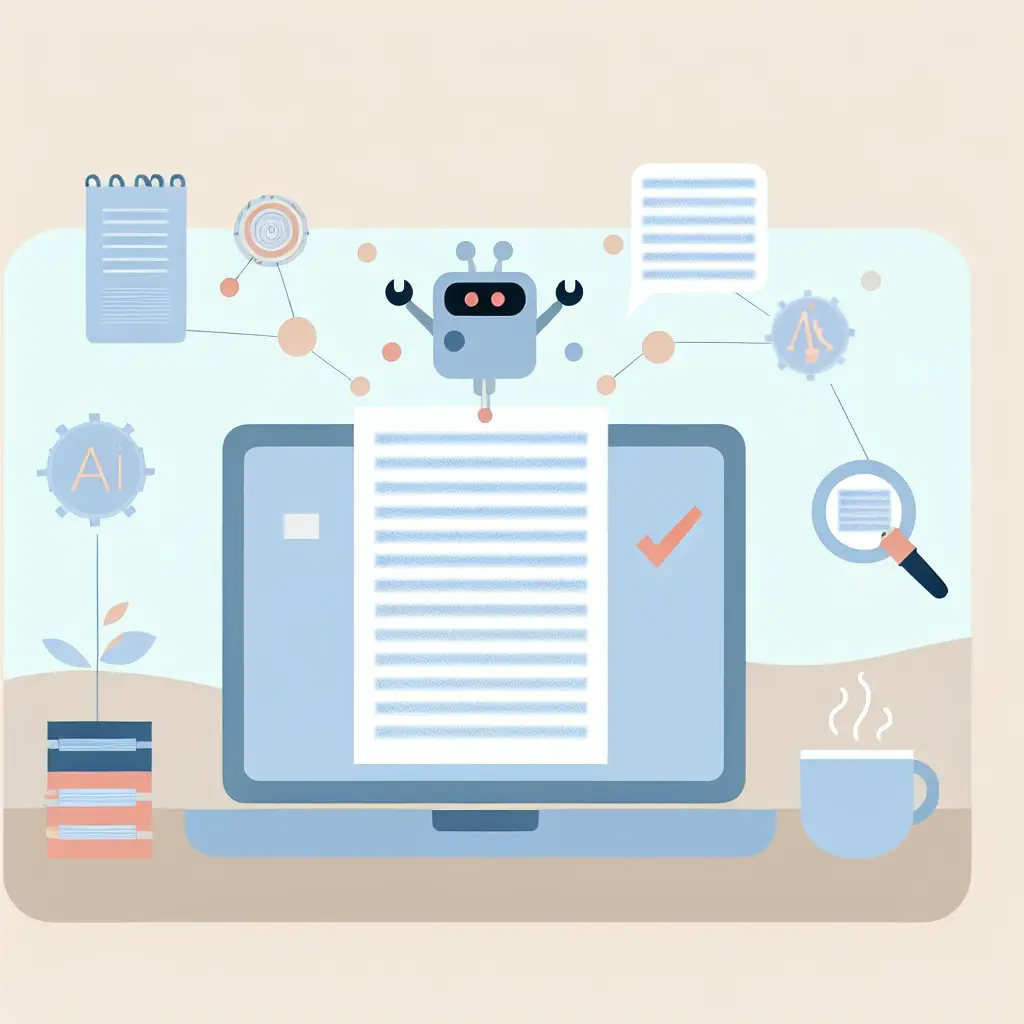
But here’s where things get interesting. Not all AI editing tools are the same beast. Your basic grammar checker (think early Grammarly) operates like a sophisticated spellchecker—it catches surface-level errors. Style editors go deeper, analyzing sentence variety and tone consistency. But AI assistants for thesis structure and editing? These claim to understand argumentation, chapter flow, and how your introduction connects to your conclusion.
“The challenge with AI editing isn’t what it can detect—it’s what it thinks it understands but actually doesn’t.” — Dr. Sarah Chen, Academic Writing Research Lab, MIT
AI can absolutely spot when your methodology section jumps topics without transitions. It’ll flag repetitive phrasing and suggest varied vocabulary. It can even map your thesis structure and highlight where arguments feel underdeveloped.
What AI cannot do—and this is critical—is grasp the subtle disciplinary conventions that make a sociology thesis different from an engineering one, or understand why you deliberately chose a complex sentence structure to mirror your theoretical framework.
The biggest misconception? Students think AI editors “get” their research. They don’t. These tools process text patterns, not meaning. When an AI suggests simplifying your carefully constructed critique of post-structuralist methodology, it’s not because the argument is weak—it’s because the algorithm is trained to favor clarity over complexity, even when complexity is academically necessary.
For a deeper look at which specific tools handle different editing tasks best, check out our comprehensive guide on Best AI Tools for Thesis Research and Writing 2025.
Why Students Are Turning to AI for Thesis Editing (And Where It’s Going Wrong)
The numbers tell a compelling story. A 2024 survey by the Academic Writing Association found that 68% of graduate students had used some form of AI assistance for their thesis work—up from just 23% in 2022. That’s not a trend; it’s a revolution happening in real-time.
But why the sudden rush to AI? Three factors keep coming up:
Time pressure: Most students are juggling coursework, teaching positions, or jobs while writing their thesis. AI promises instant feedback instead of waiting days for supervisor comments.
Language barriers: International students writing in their second or third language find AI assistants invaluable for catching grammatical errors they might miss.
Cost concerns: Professional academic editors charge $50-150 per hour. AI costs $10-30 monthly for unlimited use.
And honestly? AI editing can be genuinely transformative when used right. Take Maria, a biochemistry PhD candidate I spoke with—she used AI to identify that her results chapter kept switching between active and passive voice, creating an unintentional tone shift that made her findings seem less confident. That’s the kind of consistency check that AI does brilliantly.
But then there’s the flip side. Consider James, whose literature review got the full AI treatment. The tool “improved” his writing by removing discipline-specific terminology and replacing nuanced critiques with generic praise. His supervisor’s feedback? “This doesn’t sound like you, and more importantly, it doesn’t engage with the theoretical debates at all.”
⚠️ The “Polish Without Substance” Problem: AI assistants can make mediocre writing sound better without making it think better. Smooth, flowing prose that says nothing original is still nothing original—just packaged prettier.
The gap between marketing promises and actual performance is widest when it comes to structural editing. AI tools claim they’ll help you “optimize your thesis structure” and “strengthen your arguments,” but what they’re really doing is applying generic academic writing patterns. They can’t know that in your field, conclusions typically circle back to methodological limitations, or that your discipline values provocative questions over neat resolutions.
Five Critical Truths About AI Assistants for Thesis Editing
Truth #1: AI Doesn’t Understand Your Research Contribution
This might be the hardest pill to swallow, but it’s also the most important. Your thesis isn’t just a collection of well-structured sentences—it’s an original contribution to knowledge. That messy, complicated argument in Chapter 3 that took you three months to develop? AI sees it as a structural problem to be “fixed.”
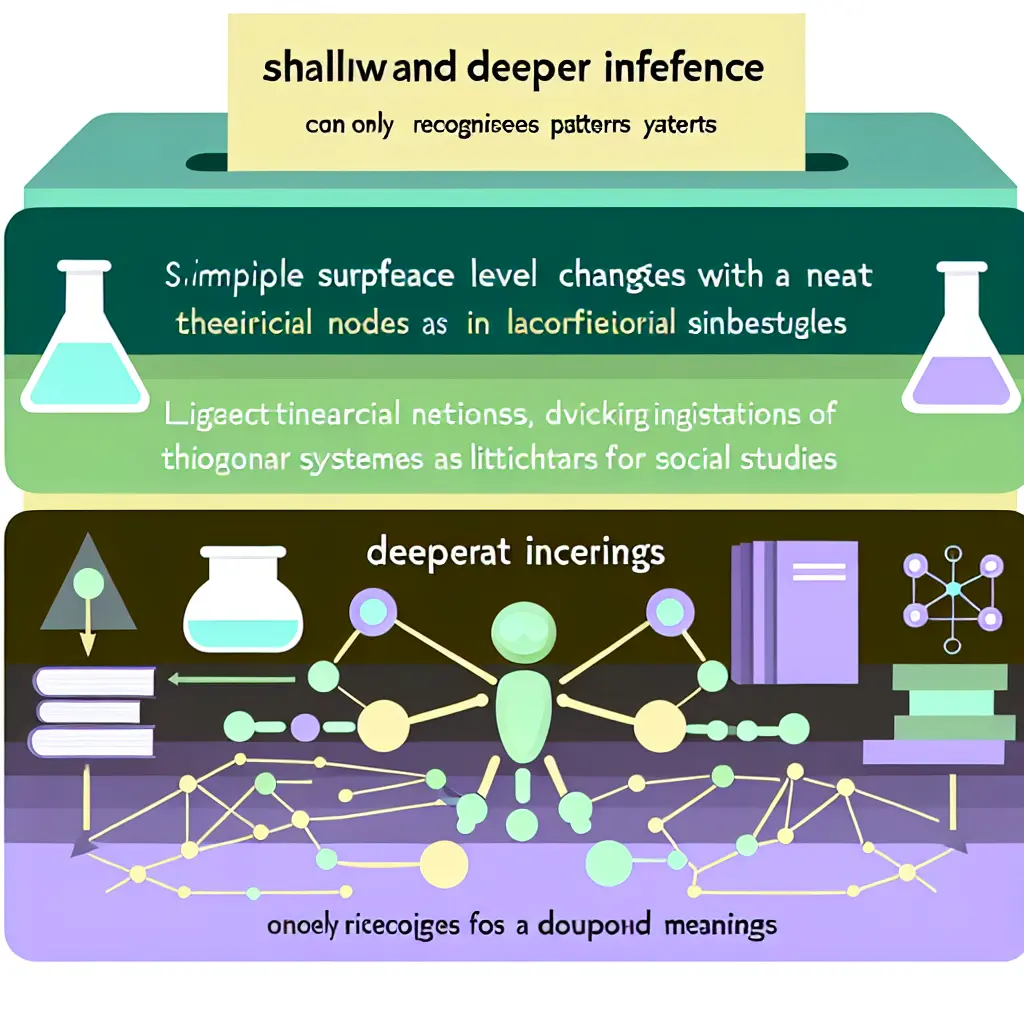
Here’s a real example: An anthropology student used AI to streamline her theoretical framework section. The AI suggested removing “redundant” references to contradictory theories and presenting a single, unified approach. Sounds reasonable, right? Except her entire thesis was about those contradictions—how competing theoretical frameworks each captured different aspects of her fieldwork data.
The AI didn’t understand that academic complexity isn’t a bug; sometimes it’s the entire point. When you’re arguing that existing models are insufficient and proposing a hybrid approach, messiness might be methodologically necessary.
Truth #2: Your University Probably Has Stricter Boundaries Than You Think
Here’s where things get legally and academically murky. Most universities have policies about “unauthorized assistance,” but these were written before AI editing tools existed. The line between acceptable editing (fixing grammar, suggesting restructuring) and unauthorized assistance (rewriting arguments, generating content) isn’t just blurry—it’s being redrawn in real-time.
Some institutions now explicitly prohibit AI-generated paraphrasing. Others allow AI editing but require disclosure. A few have banned AI tools entirely for thesis work. The problem? Many students don’t find out their university’s position until it’s too late.
Questions to Ask Your Supervisor Before Using AI Editors:
→ Does our department have specific policies about AI assistance for thesis writing?
→ What level of AI editing is acceptable—grammar only, or structural suggestions too?
→ Do I need to document or disclose AI tool usage?
→ How will AI assistance affect my thesis assessment or defense?
For a thorough breakdown of how different universities are handling this new territory, our article on AI-assisted thesis writing and university grading policies provides institution-specific guidelines and policy examples.
Truth #3: AI Can Create Academic Integrity Nightmares
This is the one that keeps academic integrity officers up at night. AI paraphrasing tools can inadvertently create plagiarism by rephrasing source material in ways that are too similar to the original—but different enough that students don’t recognize the problem.
Even more concerning: AI tools sometimes generate citations that don’t exist, format references incorrectly, or miss crucial citation elements. A literature review that looks perfectly polished might be citing sources that don’t say what the AI claims they say, or using citation styles that mix APA with MLA with Chicago in a Frankenstein’s monster of formatting.
The risk isn’t just getting caught—it’s genuinely not knowing you’ve crossed ethical lines. When AI “improves” your paraphrase of a key source, you might not realize it’s actually created a derivative work that requires attribution, not just a citation.
To navigate these treacherous waters safely, read our guide on AI citation and plagiarism prevention in thesis writing 2025, which covers detection tools and ethical frameworks.
Truth #4: The Feedback Loop Problem Prevents Real Learning
Think of learning to write like learning to cook. If you only ever eat restaurant food, you never develop your own culinary intuition. AI editing creates the same dynamic—when you accept suggestions without understanding why they improve your writing, you don’t develop as a writer.
The feedback loop problem works like this: AI suggests a change → you accept it → AI suggests another change to the newly changed text → you accept that too → eventually, you’re not writing anymore, you’re just approving rewrites. Your own voice and your analytical skills atrophy from disuse.
Smart students use AI editing as a diagnostic tool. When the AI flags a section as “unclear,” they don’t just click “improve this”—they ask themselves why it’s unclear and rewrite it themselves. The AI becomes a mirror showing you problems, not a ghost writer solving them.
Truth #5: AI Quality Varies Wildly Based on Your Discipline and Needs
Not all AI assistants are created equal, and this matters enormously for thesis work. General-purpose editing tools trained primarily on blog posts, news articles, and fiction don’t understand academic conventions. They’ll flag perfectly acceptable uses of passive voice in scientific writing, or suggest removing hedging language that’s actually methodologically appropriate.
The context window—how much text an AI can process at once—makes a massive difference too. Many tools can only analyze a few hundred words at a time, meaning they miss chapter-level structural issues or recurring argument problems. For a thesis that might be 80,000 words, those limitations add up.
Discipline-specific training matters. An AI trained on STEM papers will butcher a qualitative humanities thesis, and vice versa. The best AI assistants for thesis structure and editing are those that understand your field’s conventions—or at least don’t actively fight against them.
The Future of AI Assistants for Thesis Structure and Editing
So where is this all heading? If current trends continue—and they will—we’re looking at some fascinating developments by 2026-2027.
Discipline-specific AI models are already in development. Imagine an AI trained exclusively on published dissertations in your field, understanding not just grammar but the theoretical debates, methodological norms, and argumentation styles specific to sociology or quantum physics or art history. That’s coming, and soon.
We’ll also see integration with institutional review processes. Universities are beginning to develop their own approved AI tools that work within their academic integrity frameworks—think of it as “sanctioned AI assistance” that automatically logs what suggestions you accepted and generates disclosure statements for your final submission.
The really exciting shift is toward “AI as collaborator” rather than “AI as editor.” Future tools won’t just suggest fixes; they’ll ask questions. “I notice you haven’t addressed this counterargument—is that intentional?” “Your methodology section doesn’t explain why you chose this approach over alternatives.” It’s the difference between a spell-checker and a thoughtful peer reviewer.
Think of it like the evolution from calculators to graphing calculators. The first just computed answers; the second helped you visualize problems and understand mathematical relationships. Future AI editing will help you think about your thesis, not just polish it.
But here’s the crucial point: even as AI gets smarter, certain skills remain irreplaceable. You’ll still need to understand your field’s theoretical frameworks deeply enough to construct original arguments, evaluate source credibility and synthesize contradictory evidence, recognize when AI suggestions misunderstand your disciplinary context, develop your authentic academic voice through practice and iteration, and navigate ethical boundaries with informed decision-making.
Universities are already adapting their training programs. Expect to see more courses on “AI-augmented academic writing” that teach not just writing skills, but critical AI literacy—how to evaluate AI suggestions, when to trust them, and when to ignore them.
How to Use AI Assistants for Thesis Editing Responsibly
Alright, enough warnings and predictions. Let’s talk practical strategy. If you’re going to use AI assistants for thesis structure and editing—and let’s be honest, you probably will—here’s how to do it without compromising your work or integrity.
The Three-Stage Approach That Actually Works
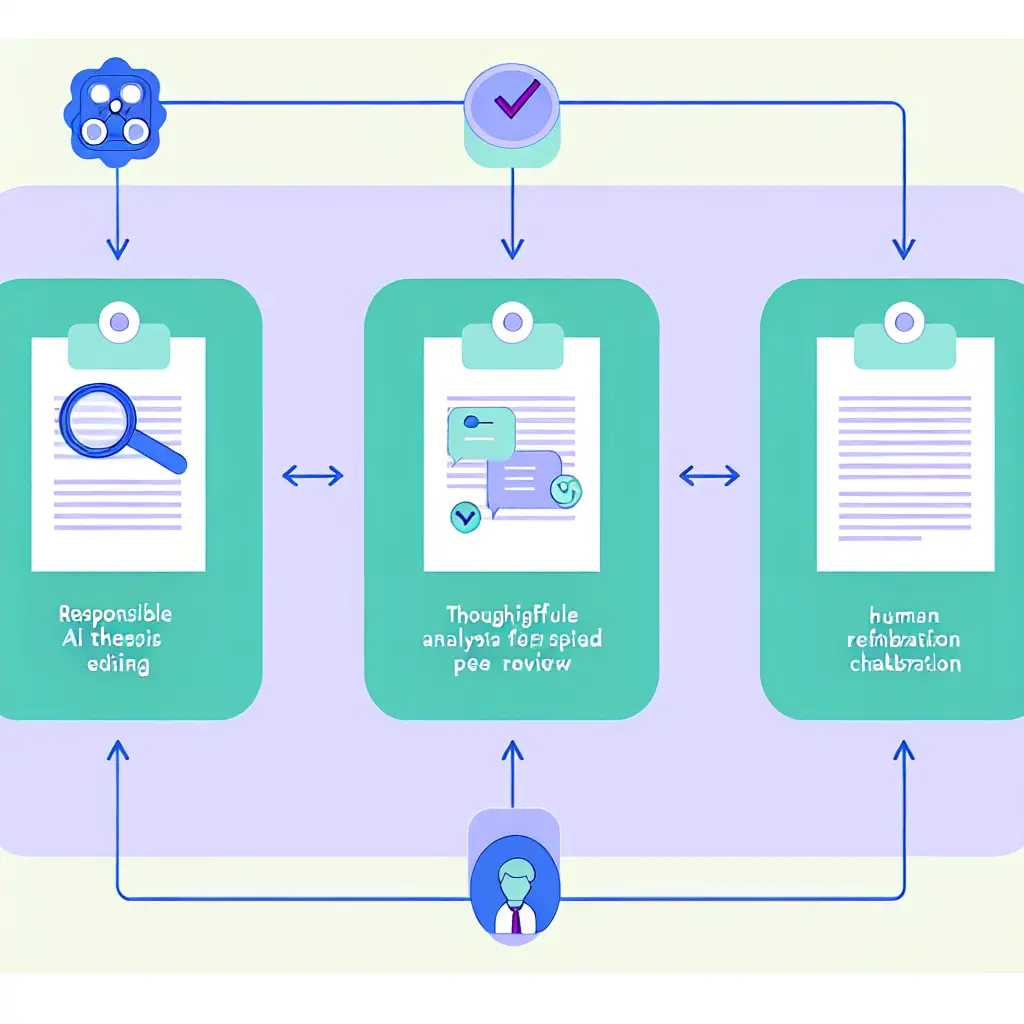
Stage 1: AI Draft Review
Use AI to identify patterns and potential issues across your entire draft. Don’t accept suggestions yet; just map where problems exist.
Stage 2: Critical Evaluation
For each flagged issue, ask yourself: Does this AI suggestion understand my argument? Is this change aligned with my disciplinary norms? Am I losing something important if I accept this?
Stage 3: Human Refinement
Rewrite flagged sections yourself, incorporating AI insights but maintaining your voice and argument integrity. Then get human feedback from peers or advisors.
This approach treats AI like a diagnostic tool—similar to how doctors use MRI scans. The scan shows where problems might be, but the doctor’s expertise determines what those problems mean and how to treat them.
When to Use AI vs. When to Use Human Editors
Use AI editing for: early drafts where you need quick structural feedback, grammar and consistency checks across long documents, identifying repetitive phrasing or overused terms, and spotting flow breaks and transition issues.
Use human editors for: final review before submission, discipline-specific feedback on argumentation, evaluating whether your contribution is significant and original, and checking that AI suggestions haven’t inadvertently weakened your thesis.
Critical Questions Before Accepting AI Suggestions
Train yourself to pause before clicking “accept” and ask:
“Does this change preserve my argument?” If the AI’s version says something slightly different, that’s a red flag.
“Would an expert in my field make this same suggestion?” Generic clarity isn’t always appropriate for specialized academic writing.
“Can I explain why this is better?” If you can’t articulate why the AI version is an improvement, you’re not learning—you’re just delegating.
“Have I lost my voice?” Read the edited section aloud. Does it still sound like you?
Documentation Practices That Protect You
Keep a log of your AI use. Sounds tedious, but it’s crucial. Note which tools you used, for which sections, and what types of suggestions you accepted (grammar only, structural changes, rephrasing).
This documentation protects you if questions arise during your defense, helps you disclose AI use appropriately per your university’s requirements, allows you to reflect on patterns in your writing that need improvement, and demonstrates responsible, transparent AI use.
Maintaining Your Authentic Academic Voice
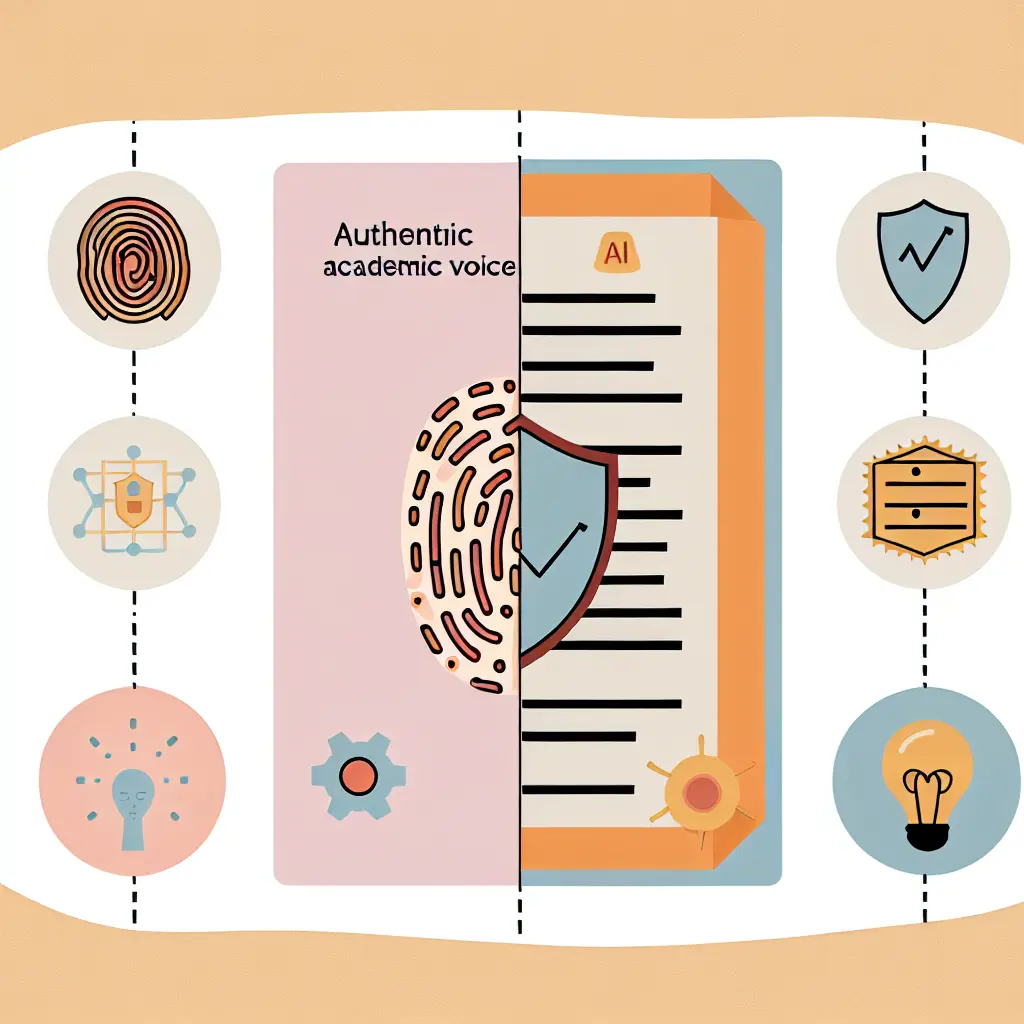
Here’s a practical exercise: Take a paragraph AI has edited and compare it to your original. Identify what changed beyond grammar—did sentence structures shift? Did complexity get smoothed out? Did field-specific language disappear?
Your academic voice is like a fingerprint—it reflects your thinking style, your theoretical influences, your personality. AI editing should enhance that voice, not replace it with generic academic prose. If every paragraph sounds like it could have been written by anyone, something’s wrong.
This is where platforms like Tesify.io offer something different from generic AI editors. Rather than simply rewriting your work, Tesify provides intelligent guidance that helps you structure and refine your thesis while keeping your authentic voice intact. The platform’s thesis-specific approach means suggestions align with academic conventions without steamrolling your unique contribution.
Edit Smarter, Not Just Faster
Let’s bring this full circle. AI assistants for thesis structure and editing are neither the miracle solution they’re marketed as nor the academic integrity disaster critics fear. They’re tools—powerful ones—that require informed, critical use.
The students who succeed with AI editing are those who understand its limitations as clearly as its capabilities. They use AI to identify problems, not solve them automatically. They treat AI suggestions as hypotheses to test, not commandments to follow. And most importantly, they stay in the driver’s seat of their own intellectual work.
The truth nobody mentions in those glossy AI tool advertisements? The best AI editing experience isn’t about the AI at all—it’s about you becoming a more thoughtful, intentional writer. When you critically evaluate every suggestion, question whether changes strengthen your argument, and consciously preserve your academic voice, you’re not just producing a better thesis. You’re developing skills that’ll serve you throughout your academic and professional career.
Ready to Experience Intelligent, Responsible Thesis Editing?
Tesify.io combines AI assistance with thesis-specific expertise, helping you structure your chapters, refine your arguments, and maintain academic integrity—all while keeping your authentic voice at the center.
Unlike generic editing tools, Tesify understands the unique demands of thesis writing: proper formatting, citation management, plagiarism prevention, and discipline-aware suggestions that enhance rather than replace your intellectual work.
Remember: The best thesis editors—whether human or AI—don’t just make your document better. They help you become a better writer, a more critical thinker, and a more confident scholar. That’s not something any algorithm can do alone, but with the right approach, it’s something AI can genuinely help you achieve.


Leave a Reply