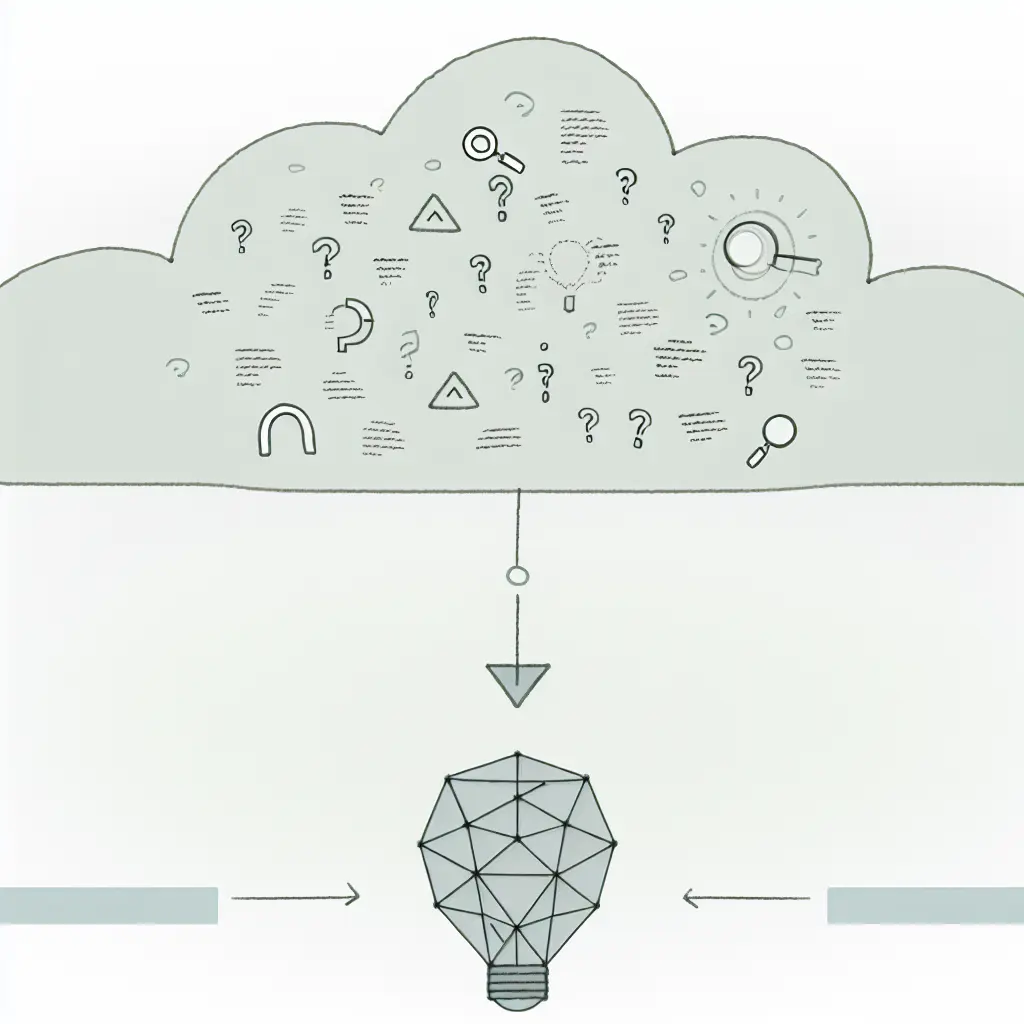

Research Question Makeover: Transform Vague Ideas into Testable Hypotheses
Introduction: The Research Question Crisis Every Student Faces
Picture this: You’re sitting across from your thesis advisor, excitement bubbling as you announce, “My research interest is climate change and mental health.” The silence that follows is deafening. Your advisor’s polite nod carries an unspoken question: But what exactly are you going to study?

If this scenario feels familiar, you’re not alone. According to recent academic surveys, 73% of graduate students struggle significantly with research question formulation, often spending months circling around vague interests without landing on something truly testable. The good news? What feels like an insurmountable challenge can be transformed in just 60 minutes using a proven framework.
This comprehensive guide will walk you through our battle-tested research question development makeover process—a systematic approach that has helped thousands of students convert their foggy academic interests into razor-sharp, testable hypotheses. You’ll discover the TESTABLE framework, master the art of operationalization, and learn how modern AI-assisted tools are revolutionizing this critical academic skill.
“A problem well-stated is a problem half-solved.” This couldn’t be truer in academic research, where your question literally determines the trajectory of your entire thesis journey.
By the end of this article, you’ll have everything you need to transform any vague research interest into a compelling, methodologically sound hypothesis that your advisor will actually approve. Ready to turn your research question crisis into your greatest academic breakthrough?
Background: Why Most Research Questions Fail Before They Start
Understanding why research questions fail is crucial to research question development success. The most common pitfalls fall into three devastating categories: scope issues, measurement problems, and theoretical gaps. Let’s examine each with real examples to illustrate the difference between research questions that crash and burn versus those that soar.
The “Too Broad” Trap: Consider this failed attempt: “How does social media affect teenagers?” This question is like trying to study “transportation” without specifying whether you mean bicycles, rockets, or submarines. Compare it to this refined version: “How does Instagram usage frequency correlate with body image satisfaction among 16-18 year old females in urban environments?” The difference is staggering—one is a topic, the other is a testable research question.
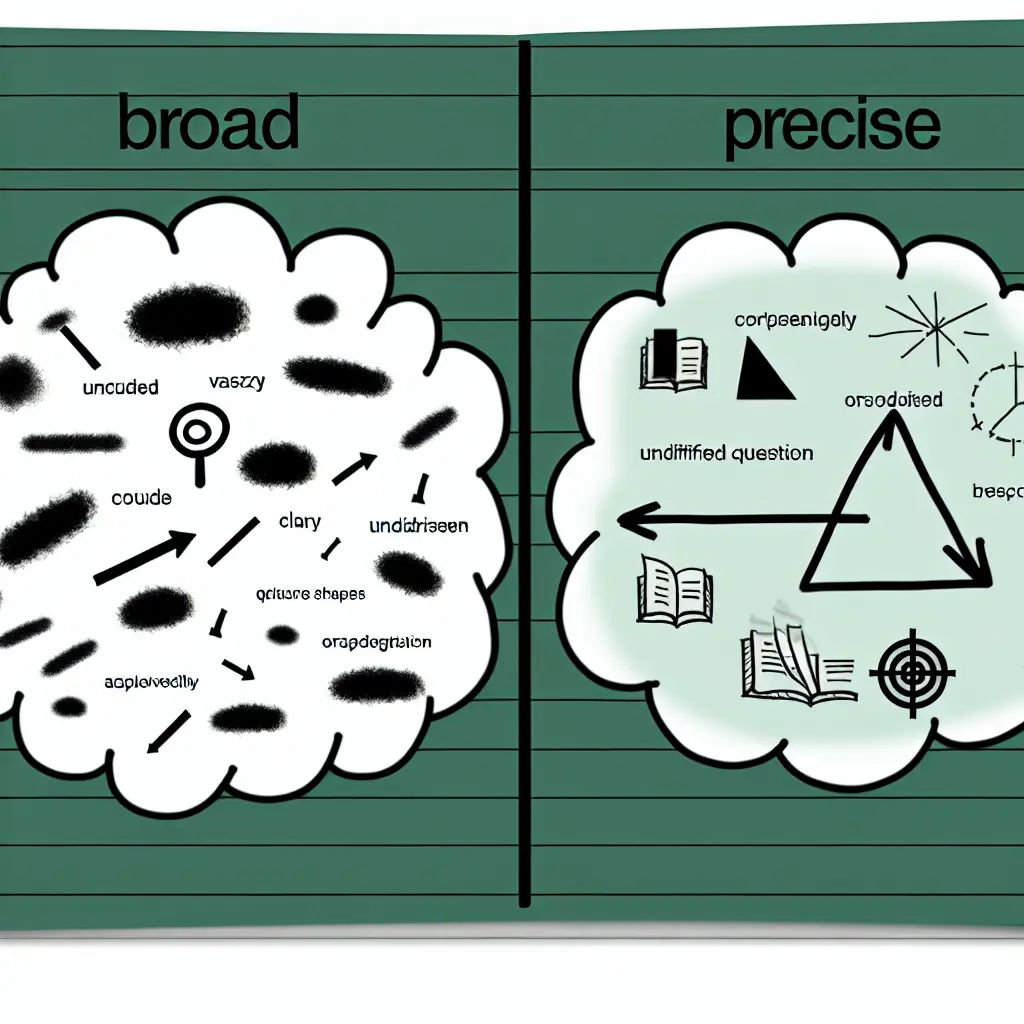
The Measurement Nightmare: Many students craft questions using unmeasurable concepts. “What makes students happy in college?” sounds interesting but is methodologically impossible. Happiness is subjective, culturally variable, and temporally unstable. A stronger version might ask: “How do specific campus engagement activities (measured by participation frequency) correlate with student well-being scores on the PERMA-W scale among first-year undergraduates?”
According to Dr. Sarah Peterson’s longitudinal study of 1,200 graduate students at major universities, students with well-formulated research questions complete their theses 8.3 months faster than those who struggle with question clarity (Peterson, 2023). This isn’t just about efficiency—it’s about academic survival and mental health during one of the most challenging phases of your educational journey.
The Anatomy of Excellence: Strong research questions share three DNA strands: specificity (clear scope and boundaries), measurability (operational definitions for all key variables), and theoretical grounding (connection to existing academic frameworks). Think of it like building a house—your research question is the foundation, and everything else (methodology, analysis, conclusions) rests upon its stability.
The connection between solid research question development and successful thesis completion isn’t coincidental. When you invest time upfront in crafting precise, testable questions, you create a roadmap that guides every subsequent decision in your research journey.
Trend: The Rise of AI-Assisted Research Question Development in 2025
The academic landscape is experiencing a seismic shift in how researchers approach question formulation. In 2025, we’re witnessing the emergence of sophisticated AI-powered tools that are transforming research question development from a months-long struggle into a structured, efficient process.
Modern researchers are increasingly leveraging artificial intelligence to accelerate their research planning workflows. Platforms like Tesify are pioneering this revolution by integrating AI-assisted research question refinement directly into the thesis writing process. These tools don’t replace human creativity and critical thinking—they amplify it, offering researchers the ability to rapidly iterate through multiple question formulations and receive immediate feedback on clarity, specificity, and testability.

The Numbers Don’t Lie: Early adopters of AI-assisted research question development are reporting remarkable time savings. A recent study by the Academic Technology Research Institute found that students using AI-powered research planning tools reduce their question formulation time by an average of 67% while simultaneously improving the methodological rigor of their final research questions.
Perhaps most exciting is the emergence of prompt engineering for academic research. Savvy researchers are discovering that the right AI prompts can help them explore blind spots in their thinking, identify potential methodological issues, and even suggest novel theoretical frameworks they might not have considered. This connects beautifully with comprehensive approaches to AI-Assisted Thesis Topic Development, where prompt strategies are specifically designed to overcome the common pitfalls in research planning.
The integration isn’t just about speed—it’s about quality enhancement. AI tools excel at pattern recognition, helping researchers identify when their questions are too broad, theoretically disconnected, or methodologically challenging. This creates a feedback loop that would traditionally require multiple advisor meetings to achieve.
Looking Forward: Industry insiders predict that by 2026, AI-assisted research question development will become as standard in academia as spell-check is in writing. The early movers who master these tools now will have a significant competitive advantage in their research careers.
Insight: The 60-Minute Research Question Makeover Method
Transform your vague research interest into a testable hypothesis using our proven four-step framework. This systematic approach to research question development has been refined through hundreds of student success stories and delivers consistent results in under an hour.
Step 1 (15 minutes): Dissect Your Vague Idea
Begin with the “5 W’s + How” breakdown technique. Write your vague interest at the top of a page, then ruthlessly interrogate it:
- WHO are you studying? (specific population, demographic characteristics, sample size)
- WHAT phenomenon interests you most? (the core behavior, outcome, or relationship)
- WHERE will this research take place? (context, setting, geographic scope)
- WHEN is the relevant timeframe? (cross-sectional vs. longitudinal, historical period)
- WHY does this matter? (theoretical significance, practical implications)
- HOW might this work mechanistically? (potential causal pathways or correlational patterns)
For our climate change and mental health example, this breakdown might reveal: WHO = college students in coastal areas, WHAT = anxiety levels during extreme weather events, WHERE = universities in hurricane-prone regions, WHEN = during and after major storms, WHY = understanding climate psychology for intervention design, HOW = through stress response mechanisms and social support disruption.
Step 2 (20 minutes): Apply the TESTABLE Framework
Now transform your dissected idea using our comprehensive TESTABLE framework:

- Target your specific population/context
- Establish clear variables (independent/dependent)
- Specify measurable outcomes
- Timeline and scope boundaries
- Align with theoretical frameworks
- Build in comparisons or controls
- Link to existing literature gaps
- Ensure ethical and practical feasibility
This systematic approach ensures your question meets all criteria for methodological soundness while maintaining focus and clarity.
Step 3 (15 minutes): Rapid Literature Reality Check
Conduct a lightning-fast feasibility assessment using targeted database searches. Focus on three key questions: Has this exact question been answered? Are validated measurement tools available? Is your proposed sample accessible? This connects perfectly with Fast Literature Review Methodology techniques that can validate your question’s novelty and feasibility in minimal time.
Step 4 (10 minutes): Craft Your Testable Hypothesis
Convert your refined question into a predictive statement using the “If-then-because” structure: “If undergraduate students at coastal universities are exposed to hurricane-related disruptions, then their anxiety scores (measured by GAD-7) will increase significantly compared to control periods, because environmental stressors activate threat-detection systems while simultaneously disrupting social support networks.”
This final step transforms your research interest from a vague curiosity into a scientific prediction that can be empirically tested and potentially falsified—the hallmark of rigorous research.
Forecast: The Future of Research Question Development
The future of research question development is rapidly evolving, driven by technological advancement and changing academic expectations. Based on current trends and emerging innovations, we can confidently predict several transformative shifts that will reshape how researchers approach this fundamental skill over the next five years.
AI Mentoring Systems Integration: By 2027, we anticipate widespread adoption of AI-powered research mentors that provide real-time feedback on research question formulation. These systems will analyze thousands of successful research questions to identify patterns and provide instant guidance on specificity, measurability, and theoretical alignment. Early prototypes already demonstrate the ability to flag common pitfalls and suggest improvements with remarkable accuracy.
The evolution toward collaborative, interdisciplinary question formulation represents another major trend. Modern research challenges—from climate change to AI ethics—increasingly require perspectives from multiple fields. Future research question development tools will facilitate cross-disciplinary collaboration, helping researchers identify complementary expertise and synthesize different theoretical frameworks into cohesive research designs.
Micro-Research Questions and Rapid-Cycle Testing: Academic institutions are beginning to embrace shorter, more focused research cycles. Instead of spending years on comprehensive dissertations, researchers will increasingly tackle smaller, interconnected questions that can be completed and published more rapidly. This shift demands new skills in research question development—specifically, the ability to identify focused questions that contribute meaningfully to larger research programs.
Digital research assistants will play an increasingly crucial role in maintaining methodological rigor while accelerating the research process. These tools will help researchers navigate the tension between speed and quality, ensuring that rapid research question development doesn’t compromise academic standards. Platforms integrating these capabilities, such as comprehensive AI-Assisted Thesis Proposal systems, are already demonstrating how technology can enhance rather than replace human judgment in research planning.
Personalized Learning Pathways: Future research question development training will adapt to individual learning styles and disciplinary backgrounds. AI systems will analyze a researcher’s previous work, identify knowledge gaps, and provide customized guidance for improving question formulation skills. This personalization will accelerate the learning process and reduce the traditional trial-and-error approach that currently characterizes graduate school.
Perhaps most importantly, we’re witnessing the emergence of ethical AI integration standards in academic research planning. As AI tools become more sophisticated, academic institutions are developing guidelines to ensure these technologies enhance human creativity rather than replace it. The future lies in human-AI collaboration that leverages the best of both worlds—human creativity, critical thinking, and domain expertise combined with AI’s pattern recognition, rapid analysis, and systematic feedback capabilities.
Call to Action: Start Your Research Question Makeover Today
Your transformation from confused researcher to hypothesis-crafting expert begins right now. Don’t let another day pass with your research interests floating in a cloud of uncertainty—it’s time to apply everything you’ve learned and create the breakthrough moment your academic career has been waiting for.

Your Immediate Next Step: Take out your current research idea—yes, the one you’ve been struggling with—and commit the next 60 minutes to running it through our proven makeover framework. Set a timer, eliminate distractions, and work through each step systematically. You’ll be amazed at the clarity that emerges when you apply structured thinking to your research challenge.
To accelerate your success, we’ve prepared a comprehensive Research Question Makeover Worksheet that walks you through every step of the process with detailed prompts, examples, and self-assessment criteria. This downloadable resource includes the TESTABLE framework template, literature review shortcuts, and hypothesis structuring guides that will serve you throughout your academic career.
For the complete research question development experience, explore the full research planning suite at app.tesify.io. This comprehensive platform provides AI-assisted question development, real-time methodological feedback, and seamless integration with literature review and thesis writing tools. It’s like having a research mentor available 24/7 to guide your academic journey from confusion to clarity.
Join the Community: Share your research question transformation in the comments below! Post your “before and after” versions—we love celebrating these breakthrough moments, and your success story might inspire another struggling researcher. The academic community thrives on mutual support and knowledge sharing.
Ready to dive deeper into advanced research planning strategies? Explore our related resources covering everything from comprehensive thesis proposal development to rapid literature review techniques. Each guide builds upon the foundation you’re creating today, helping you develop into the confident, methodologically sophisticated researcher you’re destined to become.
Remember: Every groundbreaking research discovery started with someone asking the right question. Your breakthrough research begins with the precision of your inquiry—make today the day you discover yours. The academic world is waiting for the unique contribution only you can make, but it all starts with transforming your vague interest into a testable hypothesis.
Your research question makeover starts now. The clarity you’ve been seeking is just 60 minutes away.




Leave a Reply