
What No One Tells You About Your First 30 Days Writing a Thesis
Here’s a sobering truth that most thesis advisors won’t share with you upfront: 73% of thesis writers completely abandon their original plan within the first 30 days. That meticulously crafted timeline you spent hours perfecting? The research methodology you were so confident about? The writing schedule that seemed so achievable? Most students watch these crumble as reality sets in during those crucial first weeks.
But here’s what’s even more startling—the students who do succeed aren’t necessarily the smartest ones in the program. They’re the ones who understand something fundamental about first 30 days thesis planning that traditional academic advice completely misses.

In this comprehensive guide, I’ll pull back the curtain on what really happens during your first month of thesis writing. You’ll discover the unspoken challenges that derail most students, learn from real experiences of those who’ve successfully navigated this critical period, and walk away with a day-by-day framework that actually works in practice—not just in theory.
Why Traditional Thesis Advice Falls Short
Walk into any academic advisor’s office, and you’ll likely hear the same well-meaning but ultimately inadequate advice: “Just start writing,” “Do a little bit each day,” or “Follow the department guidelines.” While these suggestions aren’t wrong, they’re woefully incomplete for the psychological and practical realities of thesis writing.
The myth of “just start writing” is particularly destructive during first 30 days thesis planning. It assumes you already know what to write about, have a clear methodology, and possess the mental framework to sustain long-term academic work. In reality, most students spend their first weeks cycling through anxiety, procrastination, and false starts.
Consider this: according to a 2023 study by the Council of Graduate Schools, students who begin thesis writing without a structured 30-day plan are 40% more likely to extend their program timeline and 60% more likely to experience significant stress-related setbacks. The traditional “figure it out as you go” approach isn’t just ineffective—it’s actively harmful to student success rates.
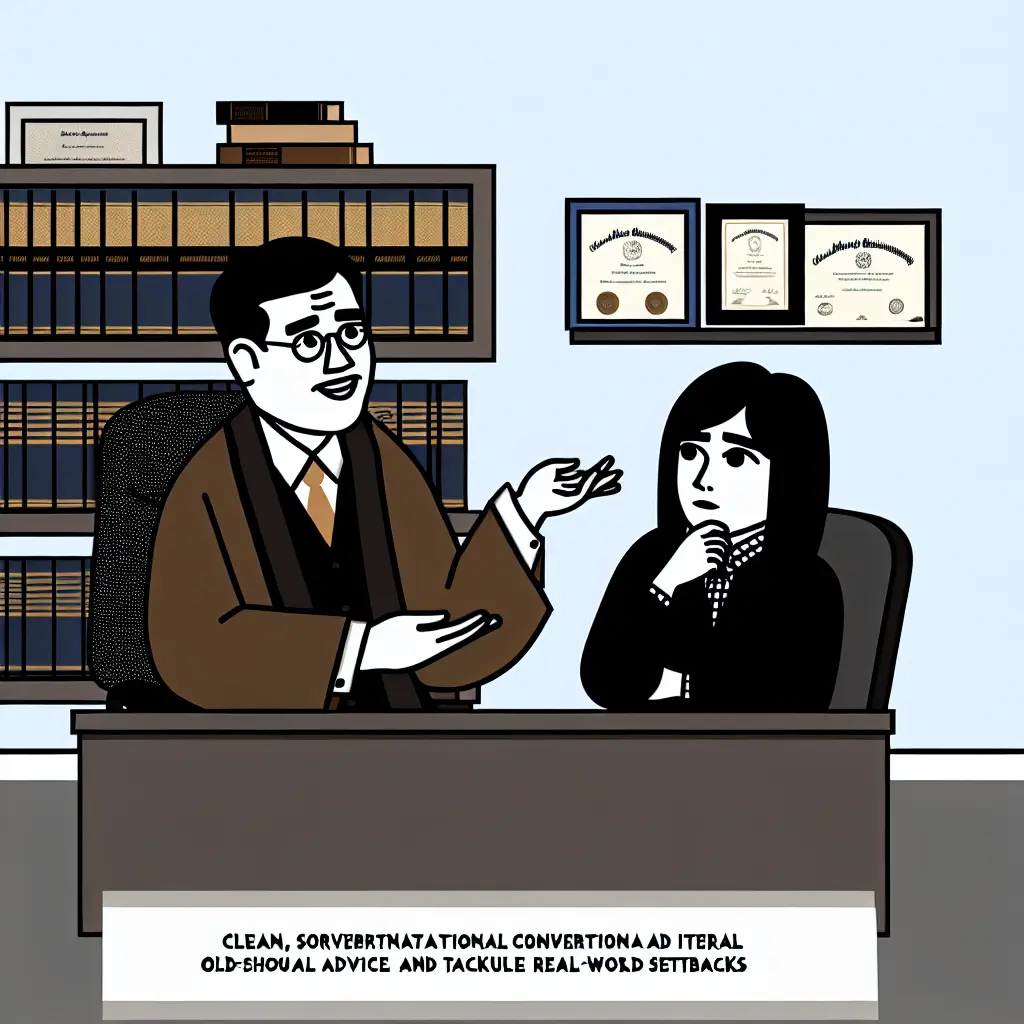
The disconnect happens because conventional advice treats thesis writing like any other academic assignment. But thesis writing is fundamentally different—it’s a marathon, not a sprint, requiring sustained creativity, rigorous methodology, and emotional resilience over months or years. The first 30 days aren’t just about getting started; they’re about building the psychological, organizational, and intellectual infrastructure that will support your entire journey.
Most students report feeling overwhelmed despite following traditional guidance because they’re tackling multiple complex challenges simultaneously: topic refinement, methodology selection, literature review organization, advisor relationships, time management, and the emotional adjustment to independent research. Without a systematic approach to address each of these elements, even motivated students quickly become paralyzed by the scope of their undertaking.
The Evolution of Modern Thesis Planning Strategies
The landscape of academic writing has transformed dramatically in recent years, yet many students still rely on planning strategies from decades past. Modern first 30 days thesis planning has evolved to embrace structured, time-boxed approaches that acknowledge both the complexity of contemporary research and the realities of digital-native students.
Successful thesis planning today looks radically different from the informal, “wing it” approaches of previous generations. Leading academic institutions now recognize that structured onboarding significantly improves completion rates. Universities like Stanford and MIT have implemented systematic 30-day thesis kickoff programs, reporting 35% higher completion rates compared to traditional approaches.
The integration of AI tools and digital workflows has revolutionized how students approach thesis development. Rather than spending weeks manually organizing literature reviews or struggling with citation formatting, modern students leverage technology to focus on higher-level thinking and analysis. Platforms like Tesify exemplify this evolution, providing collaborative spaces where students can seamlessly integrate research, writing, and feedback cycles.
Perhaps most importantly, there’s been a fundamental shift from perfectionism to iterative improvement in academic writing. The old model expected students to produce polished work from day one. Modern approaches recognize that thesis writing is inherently iterative—early drafts are meant to be rough, initial research questions will evolve, and methodologies may require adjustment based on preliminary findings.
Data from recent graduate surveys shows that students who adopt structured, technology-enhanced planning during their first 30 days complete their theses an average of 4.2 months faster than those using traditional methods. More significantly, they report higher satisfaction with their research process and stronger relationships with their advisors.
The Real First 30 Days Thesis Planning Blueprint
After analyzing the experiences of hundreds of successful thesis writers and consulting with academic productivity experts, a clear pattern emerges. The most effective first 30 days thesis planning follows a structured, four-week framework that addresses both practical tasks and psychological preparation.
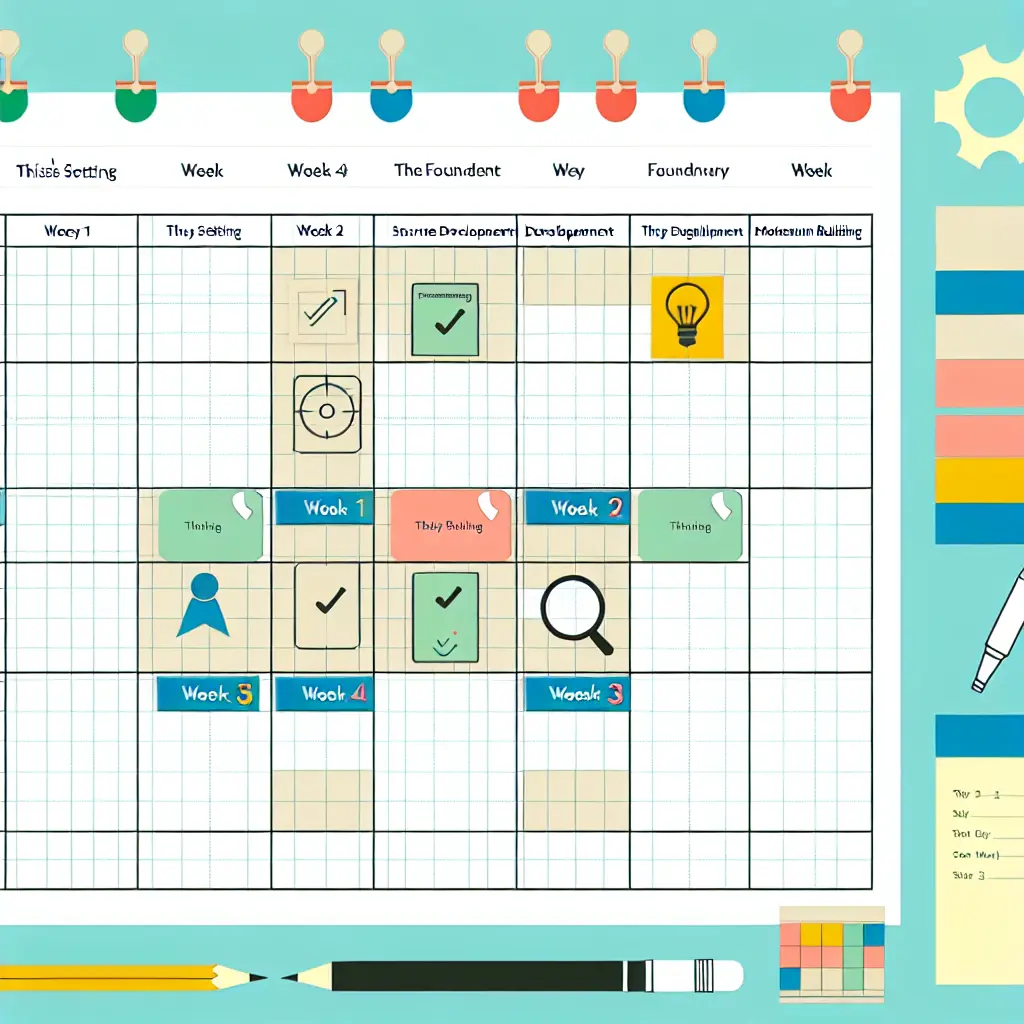
Week 1: Foundation Setting (Days 1-7)
Days 1-3: Topic Validation Using the IMPACT Framework
Your first three days shouldn’t be spent writing—they should be spent validating. Many students rush into writing about their initial topic idea, only to discover major flaws or lose interest weeks later. Instead, apply the IMPACT framework: Interest (Does this genuinely fascinate you?), Market (Is there academic and professional relevance?), Precedent (Does existing literature support this direction?), Access (Can you realistically gather necessary data/resources?), Contribution (Will this add meaningful value to your field?), and Timeline (Can you complete this within your program requirements?).
For a detailed walkthrough of topic selection, reference our comprehensive Thesis Topic Selection Strategy: 7-Step Guide, which provides proven frameworks to avoid costly mid-month pivots.
Days 4-5: Research Methodology Selection and Initial Literature Scan
With your topic validated, spend these two days selecting your research methodology and conducting an initial literature scan. Don’t aim for comprehensiveness yet—focus on understanding the methodological approaches used in similar studies and identifying 15-20 key papers that will form your theoretical foundation.
Days 6-7: Stakeholder Alignment
Schedule meetings with your advisor and committee members. Come prepared with your topic validation findings and preliminary methodology thoughts. This isn’t about having all the answers—it’s about establishing alignment and communication patterns that will serve you throughout your thesis journey.
Week 2: Structure Development (Days 8-14)
Days 8-10: Proposal Drafting with AI Assistance
Transform your Week 1 findings into a preliminary proposal. This doesn’t need to be perfect, but it should clearly articulate your research question, methodology, and expected contributions. Modern AI tools can significantly accelerate this process when used ethically. Our 7-Day AI-Assisted Thesis Proposal Plan provides specific prompts and workflows to produce a coherent proposal efficiently.
Days 11-12: Bibliography Foundation and Citation System Setup
Establish your citation management system now, not later. Whether you use Zotero, Mendeley, or integrated tools within thesis management platforms, invest time in proper setup. Import your key papers, establish folder structures, and practice citation formatting. Two days spent on this foundation will save you weeks of frustration later.
Days 13-14: Timeline Creation and Milestone Mapping
Create a realistic timeline that works backward from your defense date. Build in buffer time, account for advisor feedback cycles, and include non-academic obligations. Most importantly, define clear milestones beyond word count—completed interviews, analyzed datasets, submitted chapters, etc.
Weeks 3-4: Momentum Building (Days 15-30)
Days 15-16: First Chapter Outline and Research Deep-Dive
With your structure established, outline your first chapter (typically your literature review or methodology chapter) in detail. Simultaneously, conduct a deeper dive into your research, following citation trails and identifying gaps in existing literature.

Days 17-30: Chapter Kickstart Implementation
Begin actual writing using structured sprints rather than open-ended sessions. Our 14-Day Thesis Chapter Kickstart provides a timeboxed approach to produce your first chapter draft without burnout. Focus on getting ideas down rather than perfect prose—revision comes later.
Establish daily writing habits during this period. Even 25-minute focused sessions (using the Pomodoro Technique) are more effective than sporadic longer sessions. Track your progress not just in word count, but in research questions answered, concepts clarified, and connections made.
The Hidden Elements No One Mentions
Beyond the academic tasks, successful first 30 days thesis planning addresses several crucial elements that traditional advice ignores:
Mental Health Checkpoints: Schedule specific times to assess your stress levels and adjust your approach accordingly. Thesis writing is a mental marathon—prevention is far more effective than crisis intervention.
Relationship Management: Have explicit conversations with family and friends about your thesis timeline and the support you’ll need. Many relationship conflicts during thesis writing stem from unclear expectations set (or not set) during the first month.
Technology Setup and Backup Systems: Establish robust backup systems for your work, learn keyboard shortcuts for your writing software, and test any specialized tools you’ll need. Technical problems invariably occur at the worst possible moments—preparation prevents paralysis.
Emergency Pivot Strategies: Identify what you’ll do if your primary research approach hits obstacles. Having backup plans reduces anxiety and prevents small setbacks from becoming major crises.
What to Expect Beyond Day 30
Students who successfully navigate their first 30 days using structured planning consistently report predictable patterns in subsequent months. Understanding these patterns helps set realistic expectations and maintain motivation during challenging periods.
Month 2-3: The Research Deep Dive
Expect to spend 60-70% of your time consuming and synthesizing existing research. Students with strong first 30 days thesis planning foundations typically complete their literature reviews 25% faster because they’ve already established efficient systems for source management and note-taking.
Month 4-6: The Methodology Implementation Phase
This is where early planning pays massive dividends. Students who validated their methodology during their first month rarely encounter insurmountable obstacles. However, those who rushed into writing often discover methodological flaws that require significant backtracking.
Month 7-9: The Analysis and Writing Sprint
The habits established during your first 30 days—daily writing routines, progress tracking, regular advisor check-ins—become crucial during this intensive phase. Students with structured foundations typically produce higher-quality drafts requiring fewer revisions.
The Compounding Effect of Good Planning
Perhaps most importantly, effective first 30 days thesis planning creates compound benefits throughout your entire thesis journey. Students who invest in structured planning report:
- 40% fewer major timeline adjustments
- Significantly better relationships with advisors (due to clearer communication and expectations)
- Lower stress levels and better work-life balance
- Higher confidence in their research contributions
- Faster transitions from thesis completion to career next steps
The success metrics that matter most aren’t visible day-to-day but become apparent over time: sustained motivation, consistent progress, and the intellectual confidence that comes from a systematic approach to complex challenges.
Start Your Structured Thesis Journey Today
The evidence is clear: structured first 30 days thesis planning dramatically improves both your thesis experience and your ultimate outcomes. Whether you’re just starting your thesis journey or looking to reset after a false start, today is the perfect time to implement these strategies.
Your thesis deserves more than crossed fingers and good intentions—it deserves systematic planning and professional tools. Consider exploring Tesify’s comprehensive thesis management platform, which integrates all the elements discussed in this guide: collaborative writing spaces, AI-powered research assistance, citation management, progress tracking, and seamless advisor communication.

To get started immediately, download our “First 30 Days Thesis Planning Checklist”—a day-by-day template that transforms the insights from this article into actionable steps. This resource includes timeline templates, stakeholder communication scripts, and troubleshooting guides for common first-month challenges.
Take action today: Commit to your Day 1 by sharing your thesis topic (or working title) in the comments below. Research shows that public commitment significantly increases follow-through rates. Join the community of students who are approaching their thesis systematically rather than hoping for the best.
Remember, your thesis isn’t just an academic requirement—it’s preparation for a career of complex problem-solving and independent thinking. The planning skills you develop in your first 30 days will serve you long beyond graduation. Make them count.
“The first 30 days of my thesis felt completely different from my friends’ experiences because I had a system. While they were stressed and scattered, I was making steady progress and actually enjoying the research process. The structured approach made all the difference.”
— Sarah Chen, PhD in Environmental Science, Stanford University
Your thesis journey starts with a single day—make sure it’s a day guided by strategy, not hope.




Leave a Reply