
How PhD Students Use 14-Day Sprints to Draft Chapters without Burnout
A research-backed, AI-assisted, and human-friendly system to plan, draft, and polish a full thesis chapter in 14 focused days—without sacrificing your mental health.
Introduction: Why the 14-Day Thesis Chapter Kickstart Works
The 14-day thesis chapter kickstart is a simple, repeatable sprint that helps you move from a rough concept to a complete, submission-ready chapter in two weeks. It blends timeboxing, minimal daily milestones, and light-touch AI support to keep you focused and motivated. Think of it like training for a half marathon: you don’t run 21 kilometers on day one—you follow a plan, build endurance, and finish strong.

Why do PhD students struggle to draft chapters on schedule? The usual culprits are sprawling scopes, perfectionism, and unbounded work sessions. Without a plan, writing time expands, stress spikes, and momentum fades. Evidence from graduate education has repeatedly highlighted the strain: in one large study, graduate students reported significantly higher rates of anxiety and depression than the general population, underscoring the need for sustainable writing systems that protect well-being (Evans et al., Nature Biotechnology, 2018).
The 14-day thesis chapter kickstart solves this by doing less, better. Each day has one clear goal and a finite timebox. You’ll alternate between short drafting sprints, brief breaks, and reward cycles—because sustained, focused work beats heroic all-nighters. And when you add the right AI assistance (for example, Tesify’s Copilot for brainstorming and structure, bibliography research, plagiarism validation, and spell fix), you accelerate the slowest parts—without sacrificing your voice or ethics.
- Clear scope and milestones keep perfectionism in check.
- Daily, bounded sprints reduce decision fatigue and preserve energy.
- Smart tools handle tedious tasks, so your cognitive bandwidth stays on the argument.
If you’ve been stuck for weeks, this method is your reset button. Over the next sections, you’ll learn the science behind timeboxed academic writing, a day-by-day plan, and practical tips to avoid burnout while boosting output. Consider it your thesis productivity strategy for getting unstuck—fast.
Background: The Science Behind Timeboxed Academic Writing
Timeboxing is the practice of assigning fixed time blocks to specific tasks, prioritizing depth and completion over open-ended sessions. Academic writers who timebox tend to protect their attention, generate consistent output, and maintain healthier work rhythms. The underlying logic is straightforward: attention is limited, interruptions are costly, and bounded effort beats vague goals.
Research in cognitive psychology shows that switching tasks has measurable costs. Even brief context shifts degrade performance and prolong completion time (American Psychological Association—“Multitasking: Switching costs”). By carving out protected, short blocks—say, 2–3 writing sprints per day—your brain can enter flow and stay there long enough to get meaningful work done. In parallel, structured writing environments (like retreats and sprints) have been shown to raise productivity and confidence for academic authors by making time visible and goals concrete (Murray & Newton, Higher Education Research & Development).
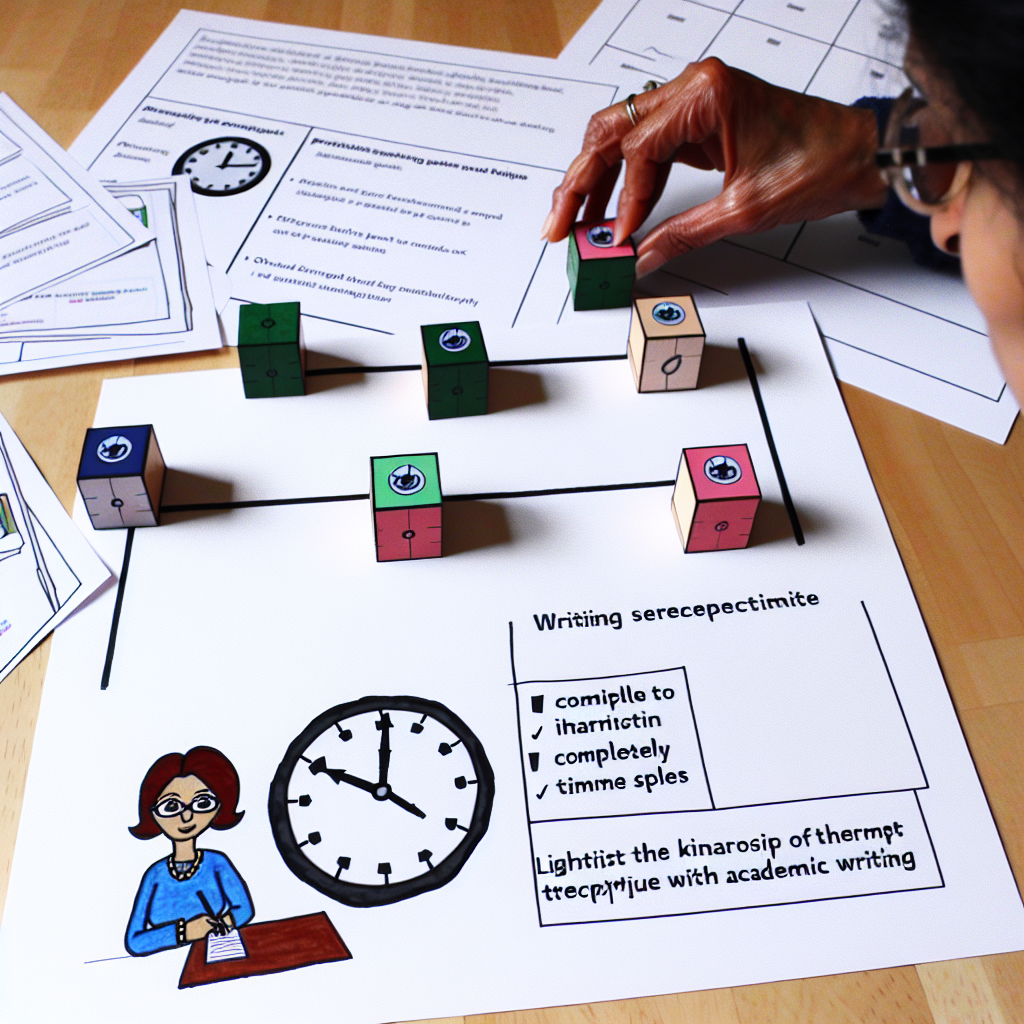
Traditional thesis chapter writing often fails because it conflates research, outlining, drafting, and formatting into one amorphous session. The 14-day thesis chapter kickstart unbundles these phases. Instead of “write the chapter,” you complete smaller, testable tasks in sequence—define your research question, map the literature, build a chapter skeleton, draft sections, add citations, then revise and format. Each step feeds the next, and each day ends with a tangible win.
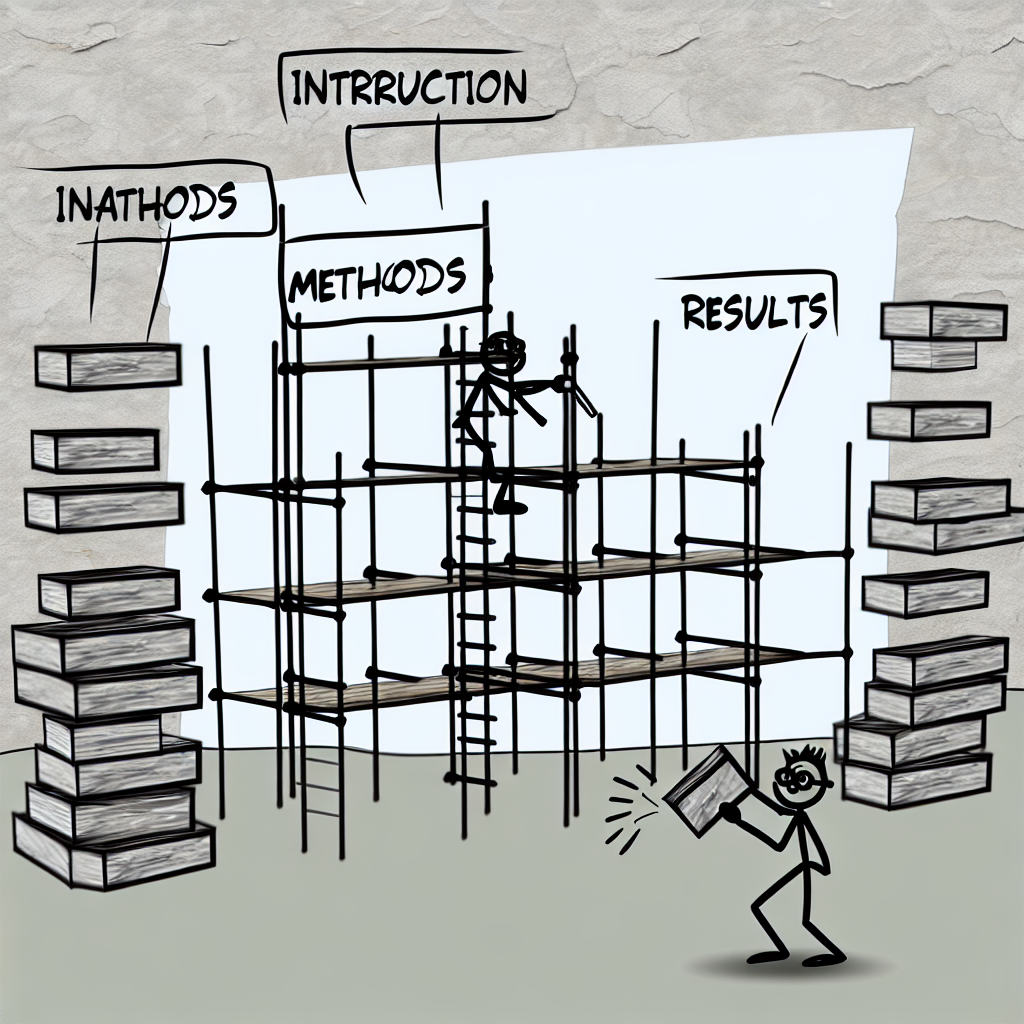
From a thesis productivity strategies perspective, this approach respects how deep work actually happens: in short, deliberate bursts followed by recovery. It also bakes in decision hygiene. Checklists and micro-deadlines reduce cognitive load, so you spend more time arguing your case and less time negotiating with yourself. If you’ve ever watched an architect construct scaffolding before pouring concrete, you’ve seen the principle in action—structure first, then substance. The 14-day format is that scaffolding for your chapter.
Finally, the method is tool-agnostic but tool-aware. With an AI-assisted writing companion like Tesify’s Copilot, you can quickly interrogate your research question, prototype outlines, validate sources, and keep your citations clean and compliant. The result is a balanced system: human judgment for argument and voice; automation for grunt work; and timeboxing to protect your attention from start to submit.
Citations:
Evans, T.M., et al. (2018). Evidence for a mental health crisis in graduate education. Nature Biotechnology.
American Psychological Association. Multitasking: Switching costs.
Murray, R., & Newton, M. (2009). Writing retreat as structured intervention to enhance academic writing. Higher Education Research & Development.
Trend: Rise of 14-Day Sprints and AI Tools in Thesis Writing
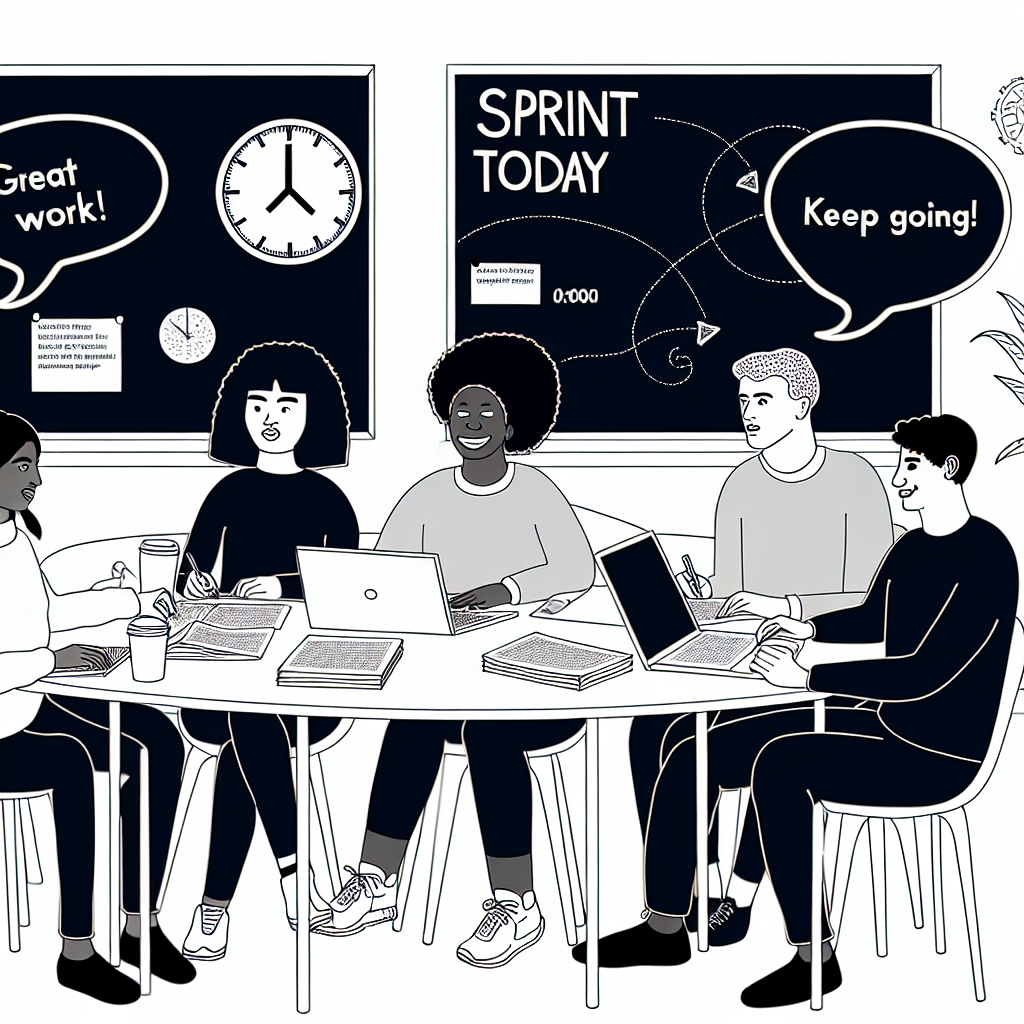
Over the past two years, structured sprints have quietly become a mainstay of graduate writing groups. Departments run 1–2 week bootcamps, supervisors set micro-deadlines, and students flock to co-writing sessions with cameras on and timers ticking. The reason is practical: sprints shrink the task and raise accountability. As word counts climb, anxiety falls.
Alongside this, AI-assisted writing has moved from curiosity to co-pilot. Students now expect tools that can brainstorm, outline, suggest sources, and catch style and citation errors—without compromising integrity. This is where tesify.io has carved out a niche, integrating an academic Copilot with bibliography research, plagiarism validation, and spell fix that’s tuned to scholarly workflows. Rather than writing for you, it accelerates the parts that slow you down and helps you keep a clean audit trail for ethical use.
A popular on-ramp is the 7-day AI-assisted proposal sprint, which many PhD candidates use to set up Day 1–3 of their chapter plan. If you need a head start, explore the 7-Day AI-Assisted Thesis Proposal Plan (2025)—its prompts and templates plug neatly into thesis chapter planning and AI-assisted writing during the first phase of this 14-day system.
Why does this matter? Because tooling shapes behavior. When your dashboard shows today’s sprint, your chapter skeleton, and a “next action,” you’re more likely to sit down and write. When citations are one click away and your references are auto-checked, you’re more likely to finish the day’s milestone. The net effect is compound momentum: small completions that add up to a finished chapter.
As a thesis chapter planning trend, the pairing of sprints and AI is especially helpful for multilingual scholars. For instance, Italian students can refine their research questions with this practical guide—Checklist domanda di ricerca—and later nail citations with Come scrivere bibliografia tesi. Localization matters, and the best AI workflows honor language, style guides, and institutional policies.
In short, the 14-day thesis chapter kickstart is rising because it aligns incentives: it respects your time, promises daily wins, and equips you with AI that keeps you honest, fast, and focused.
Insight: Step-by-Step Guide to the 14-Day Thesis Chapter Kickstart
Here’s the day-by-day breakdown. Each day includes a clear deliverable and timeboxed sprints (e.g., 2–3 blocks of 50 minutes with 10-minute breaks). Keep your goals realistic; the point is to preserve momentum, not chase perfection.
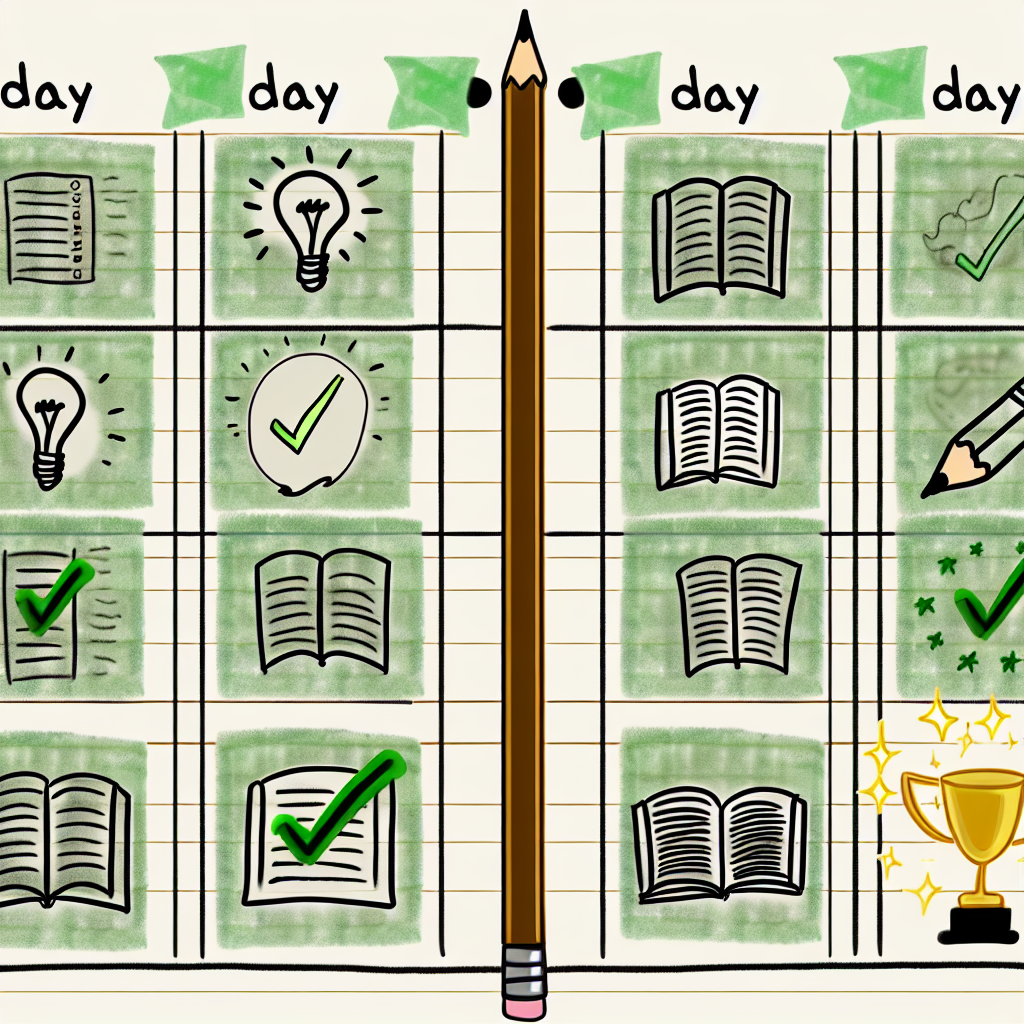
Day 1: Define scope and craft the research question
- Deliverable: 1–2 paragraph chapter scope, 1 polished research question, success criteria.
- Resources: Use the 7-Day AI-Assisted Thesis Proposal Plan (2025) to stress-test your thesis statement and capture quick literature leads.
- Checklist: Validate clarity, feasibility, and relevance with Checklist domanda di ricerca.
- Tesify tip: Ask Copilot to generate 3–5 alternative framings of your question; pick the one that best fits your evidence base.
Days 2–3: Literature mapping with AI; build the chapter skeleton
- Deliverable: A literature map (clusters, gaps, seminal sources) and a section-by-section outline with 1–2 sentence purpose per section.
- Workflow: Use Tesify’s bibliography research to compile sources; tag them by theme. Sketch your chapter skeleton: Introduction, Theoretical Background, Methods (if applicable), Results, Discussion, Conclusion.
- Quality check: Note 3–5 counterarguments you must address. This preempts reviewer critiques and sharpens your argument.
Days 4–10: Writing sprints with section milestones
- Deliverables: Draft one major section per day. Example cadence:
- Day 4: Introduction (problem, gap, contribution)
- Day 5: Background/Theory
- Day 6: Methods or Approach
- Day 7: Results (figures/tables placeholders ok)
- Day 8: Discussion (claims tethered to evidence)
- Day 9: Limitations and implications
- Day 10: Conclusion + abstract draft
- Process: Write first, refine later. Use brief “warm-up” prompts (e.g., “In one paragraph, what is this section’s single job?”) to push through inertia.
- Momentum: End each day by jotting three bullet “next moves.” Tomorrow-you will thank you.
Day 11: Citations and references
- Deliverable: Complete in-text citations and a clean reference list in your required style.
- Resource: Follow Come scrivere bibliografia tesi for style, tools (Zotero/Mendeley), and common pitfalls.
- Tesify tip: Run plagiarism validation and citation consistency checks to catch mismatches or missing metadata.
Days 12–13: Revision passes
- Deliverables: Two distinct passes—(a) structure and argument coherence, (b) sentence-level style and clarity.
- Workflow: Cut redundancy, tighten topic sentences, verify that each claim cites evidence. Ask Copilot for “reader questions” per section to surface gaps.
- Breaks: Insert short recovery blocks to avoid tunnel vision; fresh eyes see flaws faster.
Day 14: Final formatting and compliance
- Deliverable: Submission-ready chapter with correct formatting, figures/tables, captions, and accessibility basics (alt text, heading hierarchy).
- Compliance: Confirm institutional style guide. Re-run spell fix, references, and plagiarism validation for peace of mind.
Burnout-proofing tips
- Timebox ruthlessly. Three focused sprints beat eight unfocused hours.
- Use checklists at the start and end of each day to reduce decision fatigue.
- Reward micro-wins: a walk, a coffee, or a call with a friend after each milestone.
- Schedule one light day if your energy dips; protect momentum, don’t chase perfection.
Internal links to keep handy:
7-Day AI-Assisted Thesis Proposal Plan (2025),
Checklist domanda di ricerca,
Come scrivere bibliografia tesi.
Forecast: The Future of Thesis Chapter Writing
Expect writing sprints to become the default, not the exception. As programs measure throughput and well-being, we’ll see mandated sprint windows on departmental calendars, shared sprint dashboards, and clearer rubrics for chapter readiness. The 14-day thesis chapter kickstart fits this future: it’s measurable, humane, and repeatable.
AI will continue to shift from generic chat to domain-specific copilots embedded in academic workflows. That means better source triage, higher quality citation suggestions, and automated checks for logic, bias, and compliance. Completion rates should rise as bottlenecks shrink; stress should drop as uncertainty is replaced by visible progress; and chapter quality will benefit from earlier feedback loops and cleaner scholarly apparatus.
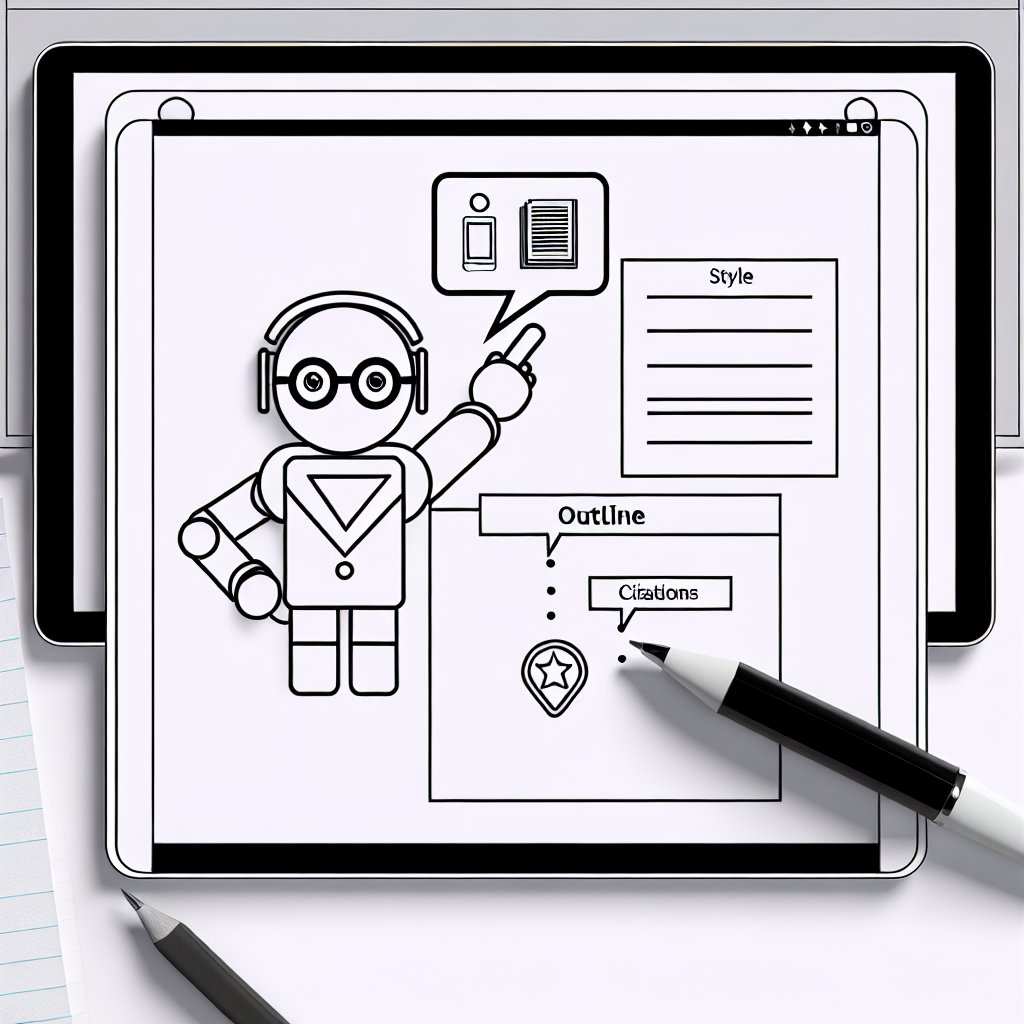
Tesify is already pointing in this direction. By unifying Copilot prompts with bibliography research, plagiarism validation, and formatting helpers, it shortens the distance between intention and submission. Imagine uploading your outline on Day 3 and receiving a structured “evidence map” with suggested citations, counterarguments to address, and a checklist for your specific style guide. That’s where this is going—and it keeps authorship firmly in your hands while helping you work faster and more ethically.
The upshot: in five years, “write a chapter” will mean “run a sprint with built-in scaffolds.” The method scales across disciplines, languages, and institutional policies—precisely because it respects how humans think, write, and recover.
Call to Action: Start Your 14-Day Thesis Chapter Kickstart
Ready to move from stuck to submitted? Block two weeks on your calendar and commit to the first sprint. Use this page as your playbook—and let Tesify handle the friction so you can focus on your argument.
Get your toolkit
- AI prompt pack: Start with the 7-Day AI-Assisted Thesis Proposal Plan (2025) to supercharge Day 1–3.
- Research question checklist: Checklist domanda di ricerca (ideal if you’re writing in Italian or need a crisp problem statement).
- Citation accuracy guide: Come scrivere bibliografia tesi to nail Day 11 and Day 14 compliance.
Run your first sprint on Tesify
- Create your project at tesify.io.
- Open Copilot to refine your research question and outline.
- Use bibliography research to populate key sources and export citations cleanly.
- Draft in focused blocks; run plagiarism validation and spell fix before final polish.
Share your experience: What did your Day 1–14 look like? Which sprint was hardest—scope, skeleton, or citations? Post your wins and lessons in the Tesify community via blog.tesify.io and help the next researcher succeed. Your future self—and your readers—will thank you.
Start today. Two weeks from now, you could be holding a complete, well-argued, fully cited chapter—proof that a focused 14-day thesis chapter kickstart turns intention into submission.




Leave a Reply