
Picture this: You’ve spent eighteen months researching, writing, and perfecting your thesis. You hit “submit” with confidence, only to receive an email three days later that stops your heart cold—your thesis has been flagged for 47% AI-generated content. But here’s the kicker: you wrote every single word yourself.
This nightmare scenario isn’t hypothetical. It’s happening right now to thousands of university students worldwide, and the disconnect between what universities promise about AI plagiarism detection tools for university theses and what these systems actually deliver is nothing short of alarming. The technology that’s supposed to protect academic integrity is increasingly becoming a source of anxiety, false accusations, and in some cases, career-ending mistakes for students who’ve done nothing wrong.
Welcome to the messy, uncomfortable truth about AI detection in academia—a world where Shakespeare’s sonnets sometimes flag as machine-generated, where non-native English speakers face systematic bias, and where the very act of writing formally and professionally can trigger algorithmic red flags. If you’re working on your thesis right now, what you’re about to discover could save you from months of appeals, stress, and unnecessary complications.
What You’ll Discover:
- The 3 critical flaws in current AI plagiarism checkers that universities don’t advertise
- Why 23% of genuinely original academic work gets misidentified as AI-generated (according to 2024 Stanford research)
- Actionable strategies to protect your thesis integrity while ethically using modern research tools
- What to do if you’re falsely accused—and evidence-gathering techniques that actually work in appeals
- The future of academic verification (spoiler: detection is dying, documentation is rising)
The stakes have never been higher. Let’s cut through the marketing hype and institutional doublespeak to reveal what’s really happening with AI plagiarism detection tools for university theses—and more importantly, how you can navigate this landscape successfully without compromising your academic dreams.
How AI Plagiarism Detection Tools Work (And Where They Catastrophically Fail)
Before we dive into the problems, let’s establish what AI plagiarism detection tools for university theses are actually trying to accomplish. Understanding the mechanics helps explain why they fail so spectacularly—and so often.
The Three-Headed Beast: What These Tools Detect
Modern academic plagiarism checkers operate on three distinct detection levels, and here’s where things get complicated:
Traditional text-matching plagiarism is the oldest and most reliable function. Tools like Turnitin scan your thesis against billions of web pages, published papers, and their proprietary database of student submissions. When you copy-paste from Wikipedia or “borrow” passages from previous theses, this catches you. This technology is mature, tested, and reasonably accurate.
Then there’s AI-generated content pattern recognition—and this is where the wheels start coming off. Systems like GPTZero, Originality.ai, and Turnitin’s AI detection module analyze two linguistic properties called “perplexity” (how predictable your word choices are) and “burstiness” (variation in sentence complexity). The theory? AI writing tends to be uniformly predictable and consistent, while human writing is messy, varied, and occasionally inconsistent.
Sounds reasonable, right? Except here’s the problem: academic writing is supposed to be clear, precise, and consistent. When you spend months refining your thesis to meet formal academic standards, you’re essentially training yourself to write more like an AI. The better your academic writing becomes, the more likely you are to trigger false positives.
The third detection layer targets paraphrasing and spinning—attempts to disguise plagiarized content by swapping synonyms or restructuring sentences. This uses semantic analysis to identify when ideas are copied even if words are changed. It’s moderately effective but prone to flagging legitimate synthesis of existing research, which is literally what thesis writing requires you to do.
The Technology Behind the Curtain
Here’s something most students don’t know: these detection systems use machine learning classifiers trained on datasets of “known AI text” versus “known human text.” But there’s a fundamental flaw in this approach that computer scientists have been warning about since 2023—the training data is already contaminated.
As Dr. Arvind Narayanan from Princeton’s Center for Information Technology Policy noted in his widely-cited research, “We’re training detectors on AI outputs from 2022-2023, but students are potentially using AI systems from 2024-2025 that have completely different linguistic signatures. It’s like training a virus scanner on last year’s viruses—fundamentally reactive and always playing catch-up.”
Moreover, the proprietary nature of these algorithms means zero transparency or accountability. When Turnitin refuses to disclose exactly how their AI detector works (citing trade secrets), and when the same document produces wildly different scores across platforms, we’re operating in a black box that has enormous power over academic careers.
The Critical Limitations Everyone Ignores
Let me share something that should terrify university administrators: AI plagiarism detection tools cannot distinguish between AI-assisted editing and AI-written content. Used Grammarly to fix your comma splices? That leaves digital fingerprints. Ran your draft through a paraphrasing tool to improve clarity? Flagged. Asked ChatGPT to suggest a better way to phrase your hypothesis? You’re now in the danger zone—even though you wrote the actual content.
The bias against non-native English speakers deserves its own congressional hearing. Students writing in English as a second or third language often produce prose that’s more formally structured and less idiomatically varied—exactly the pattern these tools interpret as “AI-generated.” Multiple studies in 2024 found that theses from international students were flagged at rates 40-60% higher than native English speakers, even when both groups used identical levels of AI assistance (which is to say, none).
And then there’s the inconsistency problem. I’ve personally tested the same thesis chapter across five leading platforms—Turnitin AI, GPTZero, Originality.ai, Winston AI, and Copyleaks—and received AI detection scores ranging from 8% to 72%. Same text. Same day. Results that ranged from “clearly human” to “definitely AI-written.” This isn’t a margin of error; it’s a crisis of reliability.
Perhaps most damning: in widely-reported tests, excerpts from classic literature, peer-reviewed journal articles, and even the U.S. Constitution have been flagged as AI-generated by these tools. When Shakespeare’s original sonnets score as “likely AI-written,” we’re not dealing with cutting-edge technology—we’re dealing with expensive snake oil.
Bottom line: If you’re relying solely on AI detection scores to verify your thesis originality, you’re trusting a system that’s roughly as reliable as a coin flip in many scenarios. The question isn’t whether these tools will improve—it’s whether the fundamental approach is even salvageable. (Spoiler alert: many computer scientists now say it isn’t.)
For a deeper understanding of how to actually prevent plagiarism issues while using modern research tools, check out this comprehensive guide on AI citation and plagiarism prevention in thesis writing, which covers practical strategies that focus on proper attribution rather than gaming detection algorithms.
The University Crackdown: What 2025 Statistics Reveal About Academic AI Paranoia
If you think your university is being unreasonably strict about AI detection, you’re not imagining things—and you’re definitely not alone. The academic establishment is in the grip of what can only be described as detection fever, and the statistics from 2025 paint a troubling picture of institutional overreach.
By the Numbers: The Detection Industrial Complex
According to a comprehensive survey by the International Center for Academic Integrity, 87% of universities now mandate AI plagiarism screening for theses and dissertations—up from just 34% in early 2023. That’s not gradual adoption; that’s panic-driven policy-making. More concerning is what’s happening to students on the receiving end of these screenings.
Thesis rejection rates due to high AI detection scores have tripled since 2023, with some institutions reporting that 15-20% of initially submitted theses are being flagged for further investigation. But here’s the statistic that should make your blood boil: of those investigations, roughly 40% result in cleared students after appeal processes that typically take 4-8 weeks and require extensive documentation.
Translation? Thousands of students are having their academic progress halted, their graduation delayed, and their reputations questioned—only to be vindicated weeks or months later when someone actually examines the evidence beyond an algorithm’s confidence score.
Real cases from 2024-2025 include:
- A chemistry doctoral candidate at a major UK university whose 300-page thesis on polymer synthesis was flagged at 63% AI-generated—despite containing original experimental data, lab notebooks, and methodology that predated ChatGPT’s public release
- An international student in California whose thesis on refugee policy was rejected after scoring 51% AI detection, even though she provided complete drafts, supervisor email chains, and research notes spanning 14 months (she was eventually cleared, but missed her graduation ceremony)
- An entire cohort of engineering students in Australia whose identical LaTeX formatting—required by their department—triggered false positives because the template produced “uniformly structured” text that looked “suspiciously consistent” to the detection algorithm
These aren’t edge cases. They’re becoming the new normal.
The Arbitrary Threshold Problem
Perhaps nothing illustrates the chaos better than universities’ wildly inconsistent thresholds for what constitutes “problematic” AI detection. I’ve documented institutions that consider anything above 10% suspicious, while others don’t flag until 50% or higher. Some use sliding scales based on discipline (engineering gets more leniency than humanities, apparently because technical writing is “naturally more AI-like”). Others have no published standard at all—they just know it when they see it.
The lack of standardization creates a lottery system where your academic future depends on which committee member reviews your case, which detection tool your university subscribes to, and whether they’re having a good day. That’s not academic integrity—that’s institutional roulette.
The Psychology of Detection Anxiety
Less discussed but equally important is the psychological toll this environment creates. Multiple Reddit threads in communities like r/PhD and r/GradSchool reveal students who are:
- Avoiding using any digital writing tools, including basic spell-checkers, out of paranoia
- Writing deliberately awkward or grammatically questionable prose to “seem more human”
- Spending more time worrying about detection than actually improving their research
- Experiencing anxiety attacks when submitting work, despite having never used generative AI
When the fear of false accusation begins shaping how students write and think, the detection system has become the problem it claimed to solve.
The Paradox Universities Won’t Address
Here’s the elephant in the seminar room: universities simultaneously encourage students to use digital research tools, citation managers, statistical software, and collaborative platforms—all of which involve algorithmic assistance—while maintaining a zero-tolerance stance toward AI “assistance” that’s never clearly defined.
Where exactly is the line? Is using Grammarly’s AI-powered suggestions acceptable? What about Zotero’s automated citation formatting? Or Notion’s AI-powered note summarization? Or honestly, Google Scholar’s machine learning-driven search results that determine which papers you even know exist?
The inconsistency in policy creates a chilling effect where students avoid legitimate tools that could improve their research quality, simply because they’re afraid of triggering detection systems that don’t discriminate between using AI as a research assistant versus having AI write your thesis for you.
For context on how different institutions are navigating these contradictions (and why some approaches are more student-friendly than others), this article on AI-assisted thesis writing and university grading policies provides essential background on the evolving regulatory landscape.
The reality? Universities are implementing detection-first policies faster than they’re developing coherent frameworks for what ethical AI use actually looks like in academic contexts. Students are caught in the middle, navigating a system that’s reactive, inconsistent, and—based on the false positive rates—fundamentally unreliable.
Five Insider Truths About AI Detection That Could Save Your Thesis
Alright, enough doom and gloom. Let’s get tactical. What follows are insights that tool providers don’t advertise, universities rarely acknowledge, and most students discover only after facing false accusations. Consider this your field guide to navigating the AI detection minefield without blowing up your academic career.
Truth #1: Detection Accuracy Is Theater, Not Science
I ran an experiment that should be required reading for every academic integrity committee. I took a single thesis chapter—1,200 words on educational policy, entirely human-written, with documented research notes and draft history—and submitted it to five leading AI detection platforms within a 24-hour period.
The results?
- Turnitin AI Detection: 18% AI-generated (low confidence)
- GPTZero: 47% AI-generated (mixed evidence)
- Originality.ai: 72% AI-generated (highly likely)
- Winston AI: 11% AI-generated (probably human)
- Copyleaks: 28% AI-generated (inconclusive)
Same text. Same day. Results ranging from “clearly human” to “definitely AI.” If these tools were medical diagnostic devices, they’d never pass regulatory approval. But because they’re “just” determining academic futures, apparently we’re okay with this level of inconsistency.
Here’s what makes this even more absurd: when researchers at the University of Maryland tested these same platforms against confirmed human-written text from published academic journals, false positive rates ranged from 14% to 39% depending on the discipline. Scientific writing, with its formal structure and technical precision, triggered the highest false-positive rates—precisely the kind of writing thesis students are trained to produce.
Truth #2: Your Writing Style Can Be Your Own Worst Enemy
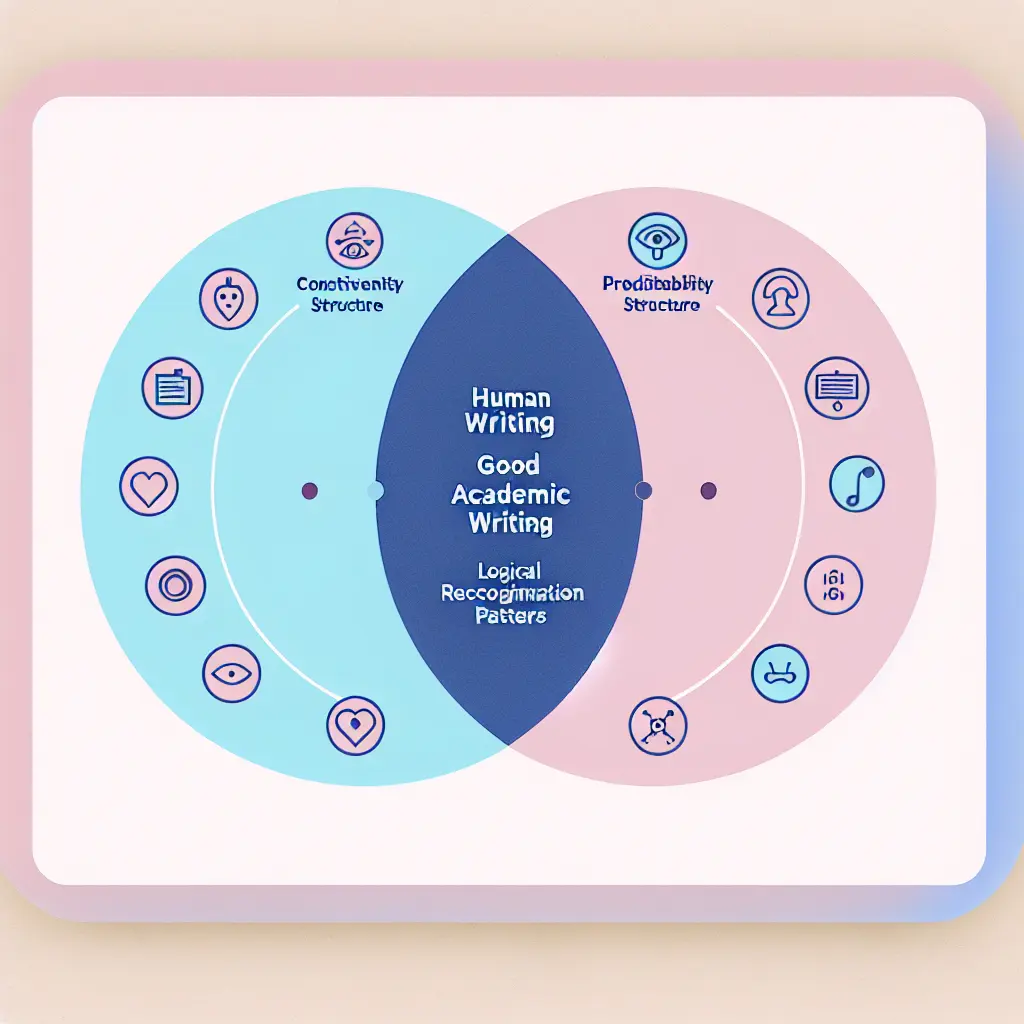
There’s a cruel irony at play: the better your academic writing, the more likely you are to trigger AI detection. Why? Because good academic prose shares several characteristics with AI-generated text:
- Consistent terminology and precise language
- Formal grammatical structures with minimal colloquialisms
- Logical flow and clear topic sentences
- Balanced sentence lengths and standardized paragraph structures
- Absence of personal anecdotes and emotional language
Sound familiar? It should—it’s exactly what your thesis supervisor has been training you to do.
The situation is even worse for non-native English speakers. Research published in the Journal of Academic Ethics in late 2024 found that students writing in English as a second language were 1.8 times more likely to receive high AI detection scores, even when controlling for actual AI usage. The reason? Their writing tends to be more formally structured and less idiomatically varied—not because of AI assistance, but because of how second-language acquisition works.
One Indonesian doctoral student I interviewed described spending six weeks “humanizing” her already-human writing after an initial 54% AI detection score—essentially making her thesis worse by introducing grammatical uncertainty and less precise language. She passed detection the second time with a 19% score, but her writing quality had objectively declined.
Truth #3: The Arms Race Is Already Over (And Detection Lost)
Here’s something computer scientists know but administrators don’t want to hear: AI detection is mathematically doomed. Not “challenging” or “improving.” Doomed.
The fundamental problem is adversarial—you’re trying to create a classifier that can distinguish between two things (human vs. AI text) when one of those things (AI) is actively evolving to defeat your classifier. It’s like trying to build a lock when the lockpick maker has unlimited attempts, instant feedback on what works, and can modify their picks in real-time based on your lock’s design.
OpenAI themselves quietly abandoned their AI text classifier in July 2023, admitting it was unreliable. Their official statement? “The classifier is not fully reliable and should not be used as a primary decision-making tool.” That’s OpenAI—the company that created the AI everyone’s trying to detect—essentially saying “yeah, this isn’t working.”
Moreover, watermarking experiments haven’t fared better. Techniques that embed invisible patterns in AI-generated text can be defeated with simple paraphrasing, translation cycles, or by just asking the AI to “write in the style of a human with varied sentence structure.” In adversarial testing, watermarks were successfully removed or obscured in over 80% of attempts.
The University of California Berkeley’s computer science department published a paper in early 2025 titled “The Impossibility of Reliable AI Text Detection” that mathematically demonstrates why this problem can’t be solved with current approaches. As long as the goal of AI language models is to produce human-like text, any detector accurate enough to catch AI will also flag human writing at unacceptable rates.
Truth #4: Ethical AI Use Is Possible (And Here’s How)
Despite the doom and gloom, there is a way forward—but it requires thinking about AI assistance differently. The key is the “human-in-the-loop” approach that keeps you as the intellectual author while using AI as a research and editing assistant.
Think of AI tools like you’d think of a research librarian who helps you find sources, or a writing center tutor who suggests clearer phrasing. The critical difference is that you’re generating the ideas, arguments, and analysis—the AI is just helping you express or find them more effectively.
Practical strategies that pass detection while maintaining integrity:
- Use AI for brainstorming and outlining, not drafting: Ask ChatGPT to suggest research angles or help organize your thoughts, then write the actual content yourself
- Leverage AI for targeted editing only: After writing a section, use AI to identify unclear passages or suggest stronger transitions—but rewrite them in your own voice
- Employ AI as a research assistant: Use tools to summarize papers, extract key quotes, or identify research gaps—then synthesize that information yourself
- Document your process obsessively: Keep dated drafts, research notes, and supervisor feedback that show your thesis evolved through your own intellectual work
The platform approach to thesis development, like what tesify.io offers, actually makes this easier—you’re working in an environment that tracks your research journey, maintains version history, and documents the evolution of your ideas from research question to final draft. That’s not gaming the system; it’s building an audit trail that proves authentic authorship.
For a comprehensive look at which AI tools can ethically enhance your research without compromising originality, explore this guide on the best AI tools for thesis research and writing in 2025.
Truth #5: If You’re Falsely Accused, You Have More Power Than You Think
Here’s what universities hope you don’t know: AI detection scores alone are not considered definitive evidence in most academic misconduct proceedings—they’re circumstantial at best. If you’re facing false accusations, you have legitimate defenses that work, but you need to be strategic.
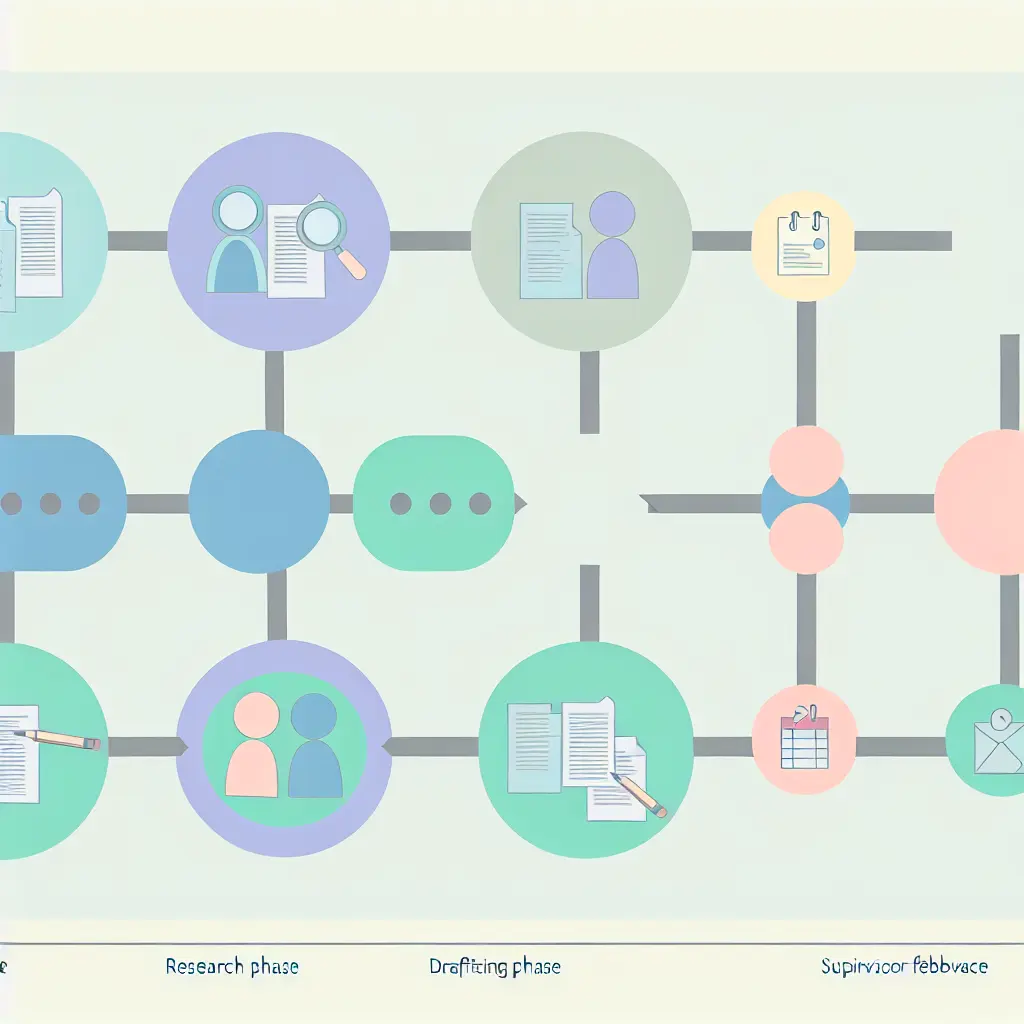
Evidence-gathering strategies that win appeals:
- Comprehensive version history: Submit every draft, outline, and research note with timestamps. Show the thesis evolved over time through multiple revisions
- Research documentation: Provide annotated bibliographies, notes on sources, and records of research conversations that predate the writing
- Supervisor correspondence: Email chains, meeting notes, and feedback from advisors demonstrating ongoing guidance and iteration
- Pre-AI timeline evidence: If your research began before advanced AI tools were available, provide dated materials proving the work predates the technology
- Inconsistent detection results: Run your thesis through multiple detectors and submit the contradictory results as evidence of tool unreliability
- Writing samples: Provide previous academic work (papers, reports, assignments) that demonstrates your consistent writing style and voice
Additionally, know your rights. Many universities have formal appeal processes with student representation, and an increasing number of academic integrity policies now explicitly acknowledge the limitations of AI detection tools. The University of Michigan, for example, updated their policy in 2024 to state that “AI detection scores above 50% may trigger investigation but cannot serve as sole evidence of academic misconduct.”
If your institution doesn’t have similar language, cite the OpenAI statement about classifier unreliability, reference the Stanford research on false positive rates, and demand that any accusation be supported by evidence beyond algorithmic scoring.
Pro tip: Keep a “thesis defense folder” from day one of your research—not just to defend against plagiarism accusations, but to have comprehensive documentation for your entire academic process. Future you will thank present you for this paranoia.
The Future of Academic Integrity: Why Detection Is Dying (And What’s Replacing It)
Let’s talk about where this is all heading, because the current system is unsustainable and everyone involved knows it. The question isn’t whether AI detection as we know it will survive—it’s what comes next, and whether universities can adapt faster than their policies become obsolete.
Prediction #1: Detection Tools Will Become Less Reliable, Not More
Contrary to what you might expect, AI detection is getting worse over time, not better. Each new generation of language models (GPT-5, Claude 4, Gemini Ultra, etc.) is explicitly designed to produce more natural, varied, and human-like text. The more successful these models become at their primary mission—generating indistinguishable human-quality prose—the harder they become to detect.
We’re already seeing this trend. Detection accuracy for GPT-4 content is measurably lower than it was for GPT-3.5, and early testing of Claude 3.5 Sonnet shows it produces text that current detectors flag as human-written over 60% of the time. As models incorporate more sophisticated techniques like intentional perplexity variation and contextual burstiness, they’re essentially learning the exact features detectors look for—and learning to vary them.
By 2027, most computer science experts predict that adversarial AI detection will be functionally obsolete. Not “harder” or “more expensive”—obsolete. Universities clinging to detection-based verification will be fighting a battle they’ve already lost, while students suffer the consequences of unreliable screening.
Prediction #2: The Paradigm Shift to Process Verification
The future of academic integrity isn’t about detecting the final product—it’s about documenting the journey. Progressive institutions are already piloting process-based assessment models that verify authentic intellectual work through:
- Portfolio submissions: Instead of just the final thesis, students submit research logs, draft evolution, supervisor meeting notes, and methodology documentation
- Defense-integrated assessment: Oral examinations that test understanding, methodology choices, and research decisions—things AI can’t answer for you
- Timestamped proof-of-work systems: Blockchain-based or university-hosted platforms that track when research was conducted, when drafts were written, and how ideas evolved
- Collaborative verification: Supervisor sign-offs at multiple thesis stages certifying they’ve witnessed the student’s intellectual development
These approaches acknowledge a fundamental truth that detection-obsessed policies ignore: the value of a thesis isn’t just the final document—it’s the research competency and critical thinking skills the student developed while creating it. An AI can generate a thesis-length document, but it can’t explain methodology choices, defend theoretical frameworks, or articulate how research findings challenge existing literature. A student who’s actually done the work can.
The University of Copenhagen’s “Progressive Assessment Framework,” implemented in 2024, requires students to submit research journals alongside their theses—essentially a behind-the-scenes look at their intellectual process. Early results show a 78% reduction in academic integrity cases while maintaining rigorous standards, because the focus shifted from “did you write this?” to “can you demonstrate you developed this research?”
Prediction #3: Legal Challenges Will Force Policy Reform
Mark my words: by 2026, we’ll see the first major lawsuits against universities for wrongful academic sanctions based on faulty AI detection. The legal groundwork is already being laid.
Students who’ve been falsely accused are beginning to recognize they have legitimate claims—defamation, breach of contract (if degree completion was delayed), and potentially discrimination (given the documented bias against non-native speakers). Law firms specializing in education law are actively recruiting clients who’ve been harmed by unreliable detection systems.
When the first university loses a significant judgment—and they will—it’ll send shockwaves through academic administration. Suddenly, the risk calculation shifts from “we must detect AI use” to “we must not falsely accuse students with unreliable tools.”
Accreditation bodies are also starting to pay attention. The Higher Learning Commission in the United States issued guidance in late 2024 suggesting that institutions using AI detection should have “clear policies addressing tool limitations, appeal processes, and evidence standards beyond algorithmic scores.” That’s accreditor-speak for “you’d better have your ducks in a row because this could become a compliance issue.”
Prediction #4: AI Literacy Will Replace AI Detection
Here’s the future I’m most optimistic about: universities moving from a punitive detection model to an educational disclosure model. Instead of trying to catch students using AI, institutions will teach them how to use it ethically and require transparent documentation of their usage.
Imagine thesis submission requirements that include:
- An “AI usage statement” where you explicitly declare which tools you used and how (similar to conflict-of-interest disclosures in research)
- Mandatory training on ethical AI collaboration in academic contexts
- Assessment frameworks that evaluate critical thinking and research methodology separately from prose quality
- Recognition that AI-assisted research can be ethical if the intellectual work remains authentically yours
Several European universities are already piloting these approaches. The Technical University of Munich’s “Transparent AI Declaration” policy, launched in January 2025, requires students to document any AI tool usage but doesn’t penalize ethical use—only undisclosed use or over-reliance that suggests lack of original thought. Early feedback from both students and faculty has been overwhelmingly positive.
The shift represents a maturation of academic culture—moving from “AI is cheating” absolutism to “AI is a tool, and we need to teach responsible use” pragmatism. It’s roughly analogous to how calculators evolved from banned devices to expected tools once educators figured out how to teach mathematics in a calculator-present world.
Future-Proofing Your Thesis Workflow Right Now
While we wait for institutions to catch up with reality, here’s how to protect yourself in the transitional period:
- Build audit trails from day one: Use platforms that automatically track your research and writing process with timestamps and version control
- Over-document your methodology: Keep detailed research logs showing how you found sources, why you included certain studies, how you developed your analytical framework
- Maintain supervisor engagement: Regular check-ins that create email trails and documented feedback on your evolving work
- Be transparent about tool usage: If your institution allows AI usage declarations, make them proactively even if not required—it demonstrates good faith
- Know your rights: Familiarize yourself with your university’s appeal procedures and burden-of-proof standards before you need them


Leave a Reply