
Time Blocking Template: Balance Thesis Writing with Part-Time Work
Introduction: The Graduate Student’s Triple Challenge
Picture this: It’s 11 PM, you’ve just finished an eight-hour shift at your part-time job, you have a stack of coursework waiting on your desk, and your thesis deadline looms like a storm cloud on the horizon. If this scenario sounds familiar, you’re not alone.

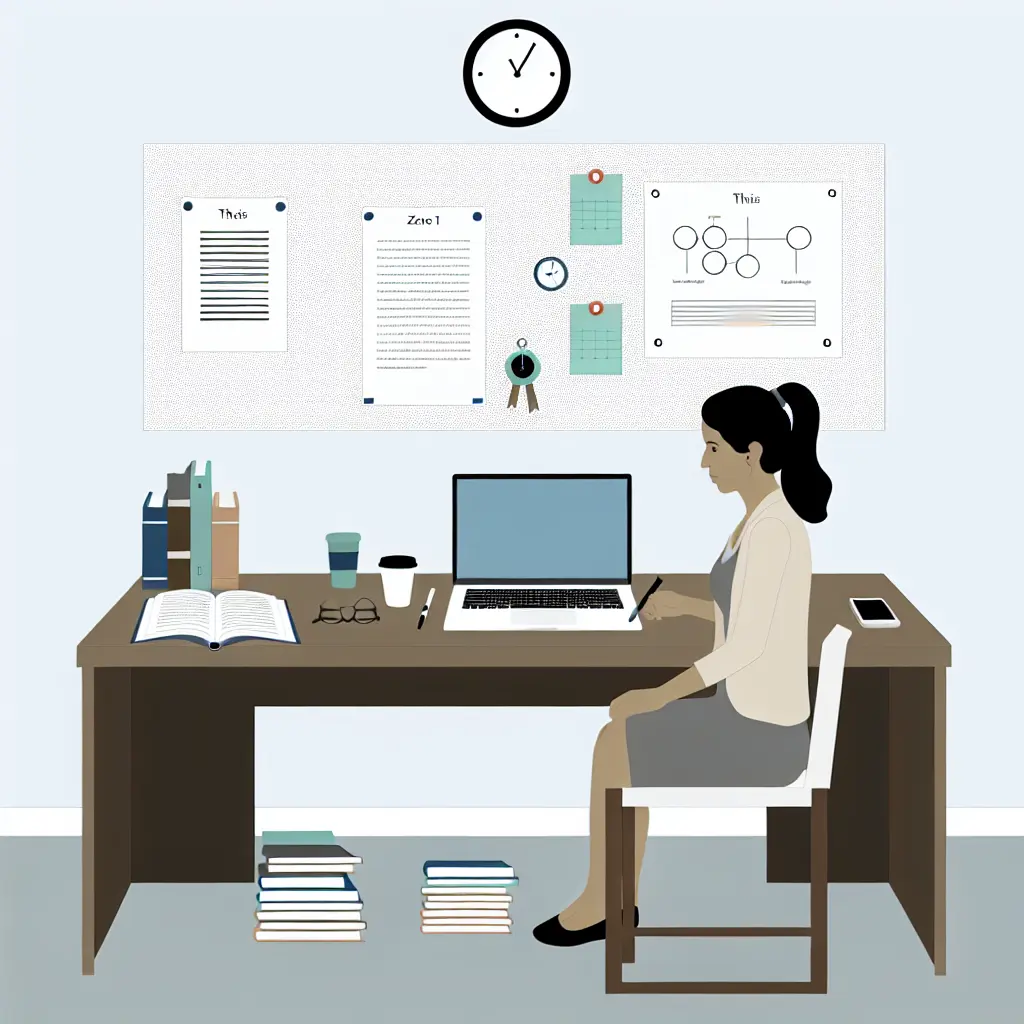
The modern graduate student’s daily reality: managing thesis work alongside employment and coursework
According to the National Association of Graduate-Professional Students, 73% of graduate students work part-time while completing their thesis, creating an unprecedented juggling act that would challenge even the most skilled circus performer.
The modern graduate student faces a triple challenge: meeting thesis deadlines, maintaining work performance, and excelling in coursework—all without completely burning out. Traditional time management advice falls short when you’re dealing with irregular work schedules, long-term research projects, and the unpredictable nature of academic life. The result? Many students find themselves trapped in a cycle of stress, procrastination, and diminishing returns.
But what if there was a better way? What if you could create a system that honors your work commitments, respects your academic obligations, and still makes meaningful progress on your thesis? That’s exactly what we’ll explore in this comprehensive guide to balancing thesis writing with work and coursework through strategic time blocking.
Key Insight: Time blocking for thesis writing involves dedicating specific hours to research and writing while protecting time for work and classes. This method helps graduate students maintain consistent progress without overwhelming their schedule by creating structured flexibility that adapts to real-world constraints.
Throughout this article, you’ll discover a practical three-zone time blocking system designed specifically for students balancing multiple commitments, complete with weekly templates, energy management strategies, and real-world examples that you can implement immediately. By the end, you’ll have a roadmap for transforming chaotic days into productive, balanced weeks.
Background: Why Traditional Time Management Fails Graduate Students
Graduate school isn’t undergraduate coursework with a research project tacked on—it’s an entirely different beast that demands a fundamentally different approach to time management. Traditional productivity systems assume consistent schedules, clearly defined tasks, and predictable workloads. Graduate students juggling thesis writing with part-time work face none of these luxuries.
The unique challenges begin with the nature of thesis work itself. Unlike coursework with weekly deadlines, thesis writing involves long-term projects that can span months or years, making it easy to postpone today’s writing session for “tomorrow when I have more time.”

Research from the University of California system shows that students who work more than 20 hours per week take, on average, 18 months longer to complete their degrees, highlighting the real cost of poor time integration.
Common time management mistakes compound these challenges. Students consistently overestimate their available time, forgetting to account for commute time, transition periods between activities, and basic human needs like meals and rest. They underestimate thesis complexity, assuming they can bang out a literature review in a weekend between work shifts. Most critically, they ignore their natural energy patterns, attempting to write complex analysis at 10 PM after a full day of work and classes.
The psychology of context switching creates additional friction. Research by Dr. Sophie Leroy at the University of Washington reveals that when we switch between tasks—say, from customer service work to academic research—we experience “attention residue.” Part of our attention remains stuck on the previous task, reducing our cognitive capacity for deep work. For students balancing thesis writing with work and coursework, this means constantly operating at diminished intellectual capacity.
Generic productivity advice fails because it doesn’t account for the academic context. Advice like “wake up at 5 AM to write” ignores students working evening shifts. “Batch similar tasks together” becomes meaningless when your day involves retail work, statistics class, and medieval history research. The solution isn’t working harder or finding more hours—it’s creating a system that works with your constraints rather than fighting against them.
Trend: The Rise of Structured Flexibility in Academic Planning
The landscape of graduate education is shifting rapidly, and smart students are adapting their planning strategies accordingly. Recent surveys indicate that graduate student employment rates have increased by 15% over the past five years, while stress-related mental health issues have reached unprecedented levels. This perfect storm has sparked innovation in academic time management, with structured flexibility emerging as the gold standard for busy students.
Universities across the country are recognizing this trend. Stanford’s Graduate Student Life office now offers workshops specifically on time blocking for working students, while MIT has integrated flexible scheduling training into their graduate orientation programs. The message is clear: traditional academic planning models no longer serve today’s diverse student population.
Digital transformation is accelerating this shift. Apps like Notion, Todoist, and specialized academic planning tools are being adopted at remarkable rates. According to educational technology research firm Educause, 68% of graduate students now use some form of digital planning tool, compared to just 34% five years ago. These tools enable the kind of dynamic scheduling that working students need—systems that can adapt when your boss asks you to cover an extra shift or when your professor moves up a deadline.
Success stories are emerging from this new approach. Sarah Martinez, a social work graduate student at UC Berkeley, increased her thesis productivity by 300% after implementing a time-blocking system that worked around her 25-hour-per-week internship. “I went from writing maybe two pages a month to completing entire sections on schedule,” she reports. “The key was respecting my real schedule rather than fighting it.”
The academic community is also evolving to support this integration. More advisors are offering flexible meeting times, understanding that their students might be most available at 7 AM before work or late evening after classes. Departments are creating co-working spaces that remain open 24/7, acknowledging that inspiration doesn’t keep office hours.
For students serious about optimizing their approach, resources like our comprehensive guide on thesis timeline planning and scheduling provide the foundational framework for building these flexible yet structured systems. The trend is clear: successful graduate students are those who embrace structured flexibility rather than rigid traditionalism.
Insight: The 3-Zone Time Blocking System for Thesis Success
After analyzing scheduling patterns of hundreds of successful graduate students balancing work and studies, a clear pattern emerges: the most effective approach divides time into three distinct zones, each optimized for different types of work and energy levels. This isn’t about finding more hours—it’s about maximizing the hours you already have.
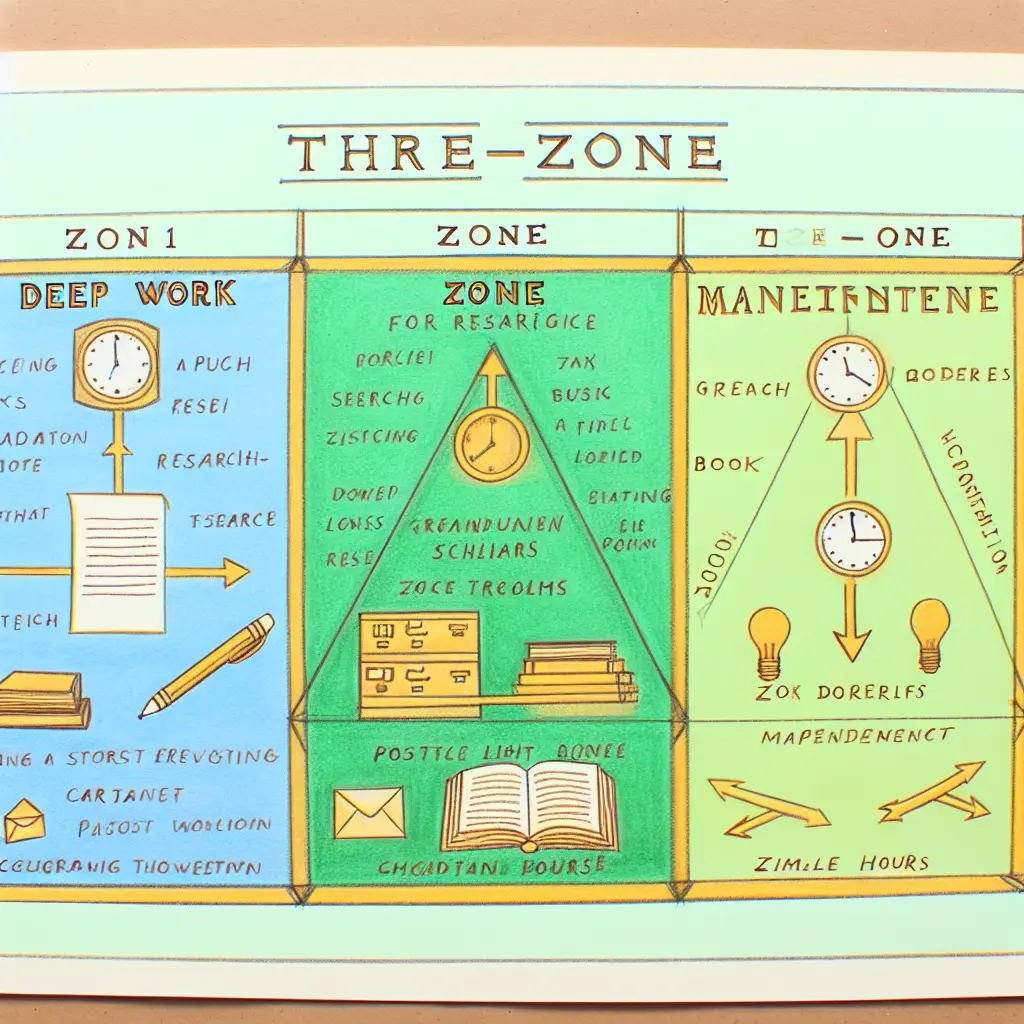
The three-zone system: Deep Work (blue), Maintenance (green), and Flex blocks (orange) create sustainable productivity
Zone 1: Deep Work Blocks (2-4 hour thesis writing sessions)
Think of Zone 1 as your thesis writing sanctuary—protected time blocks where your most challenging intellectual work happens. These sessions require sustained focus and should align with your peak energy periods, not your schedule’s leftover scraps.
For morning workers juggling evening classes and weekend jobs, this might mean 6-10 AM blocks on weekdays. Night owl students working morning retail shifts might find their Zone 1 from 10 PM to 2 AM. The timing matters less than the protection—these blocks are sacred and non-negotiable.
Successful Zone 1 blocks share common characteristics: phones in another room, specific thesis tasks prepared in advance, and clear start/stop boundaries. Students report that protecting just one 3-hour block per week creates more thesis progress than scattered 30-minute sessions throughout the month.
Zone 2: Maintenance Blocks (1-2 hours for research, reading, admin)
Zone 2 handles the essential but less cognitively demanding thesis work: literature searches, citation formatting, data transcription, and correspondence with advisors. These tasks fit naturally into transition periods—the hour before work, the gap between classes, or Sunday mornings.
The key insight here mirrors how restaurants use mise en place: preparation work done in Zone 2 makes Zone 1 exponentially more productive. Students who spend Zone 2 time organizing research notes and preparing specific writing tasks report that their Zone 1 sessions feel effortless by comparison.
For concrete time-boxed approaches within these maintenance blocks, our 14-day thesis chapter kickstart provides specific day-by-day activities that fit perfectly into 1-2 hour windows.
Zone 3: Flex Blocks (buffer time for coursework and unexpected demands)
Zone 3 is your shock absorber—built-in flexibility that prevents your system from crashing when life inevitably intervenes. When your boss asks you to stay late, when a professor assigns an unexpected project, or when you simply need to rest, Zone 3 absorbs the impact.
Smart students build 20-30% buffer time into their weekly schedules. This isn’t “wasted” time—it’s insurance that protects your Zone 1 and Zone 2 commitments. Students without adequate flex time find themselves constantly behind, stealing from thesis work to handle urgent but unimportant tasks.
Weekly Template Example: Part-time work + evening classes
- Monday: 6-9 AM Zone 1 (thesis writing), 10 AM-3 PM work, 4-5 PM Zone 2 (research), 6-9 PM classes
- Tuesday: 10 AM-3 PM work, 4-6 PM Zone 3 (coursework/flex), 7-9 PM classes
- Wednesday: 6-9 AM Zone 1 (thesis writing), 10 AM-3 PM work, evening Zone 3 (rest/social)
- Thursday: Similar to Tuesday with Zone 2 block for thesis admin
- Friday: Work + Zone 3 flex time
- Weekend: One Zone 1 block, coursework, and substantial Zone 3 time
For students just starting their thesis journey, our guide on first 30 days thesis planning helps establish these zones within your existing commitments and course schedules.
Forecast: Adapting Your System for Long-Term Success
Time blocking isn’t a set-it-and-forget-it solution—it’s a dynamic system that evolves with your changing circumstances and thesis phases. The students who achieve long-term success are those who build adaptation into their planning from day one, treating their scheduling system as a living document rather than a rigid contract.
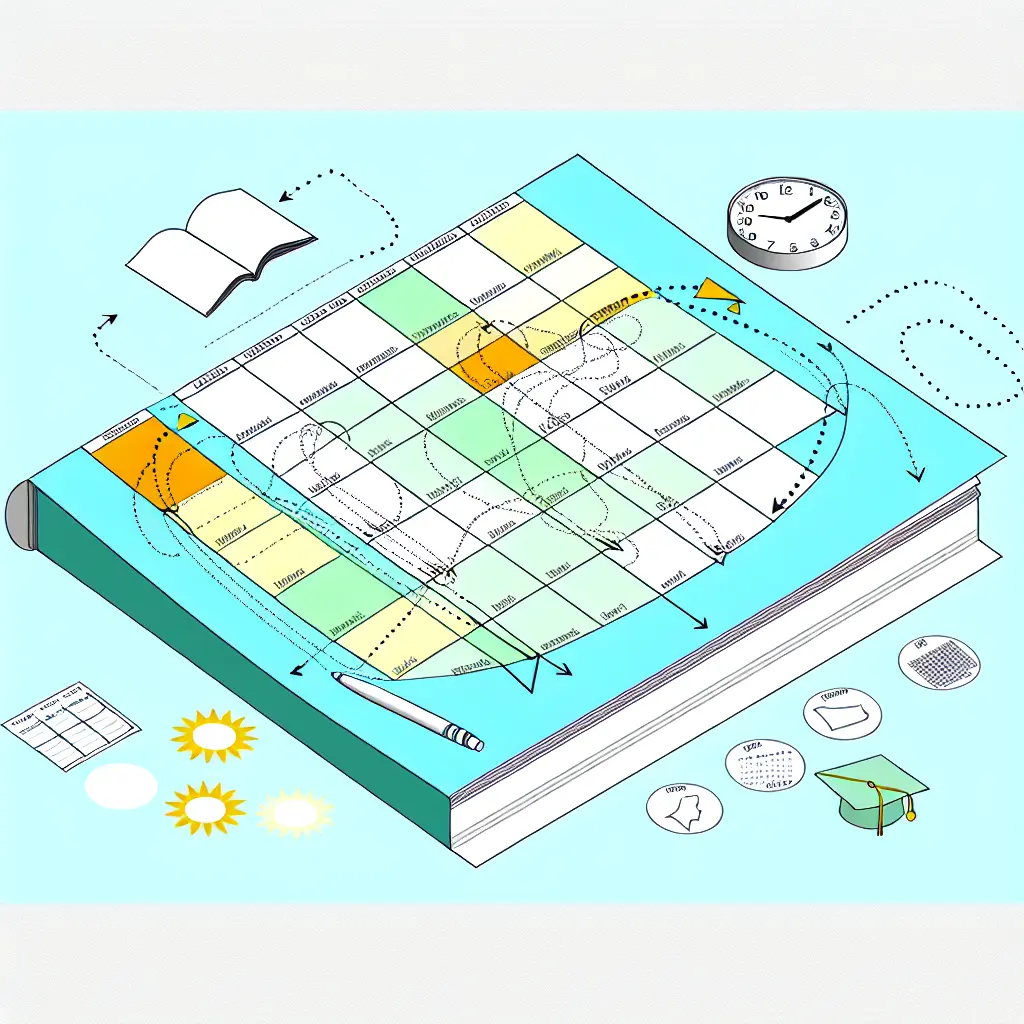
Seasonal rhythms create predictable challenges and opportunities. During exam periods, Zone 3 flex time naturally expands to accommodate coursework demands, while Zone 1 thesis blocks might shrink temporarily. Smart students plan for this by front-loading thesis work in lighter academic periods. Summer months might offer expanded Zone 1 opportunities if work schedules lighten, while winter breaks provide intensive writing retreats within your own schedule.
The nature of thesis work itself creates evolving demands. Early research phases require different time structures than writing phases, which differ significantly from revision periods. During literature review phases, Zone 2 maintenance time might expand as you process dozens of articles weekly. Writing phases amplify the importance of protected Zone 1 blocks. Revision periods benefit from shorter, more frequent sessions that can fit around work and coursework more easily.
Technology integration becomes increasingly important as your system matures. Students report significant benefits from apps that sync across devices, allowing them to capture research insights during work breaks or refine writing between classes. Digital calendars with smart notifications help maintain boundaries, while project management tools transform scattered thesis tasks into manageable workflows.
The most successful students build accountability systems that extend beyond their individual efforts. This might involve weekly check-ins with advisors timed around your schedule constraints, study groups with fellow working students, or progress-sharing partnerships that provide external motivation during challenging weeks. These systems become particularly crucial during thesis crunch periods when maintaining balance becomes most difficult.
Long-term sustainability requires honest assessment of warning signs. Students who ignore energy depletion, consistently compromise sleep, or find themselves constantly behind often need system adjustments rather than more willpower. The goal isn’t to maximize every hour but to create sustainable progress that you can maintain for months or years.
Looking ahead, successful thesis completion while balancing thesis writing with work and coursework increasingly depends on systems thinking rather than time management. Students who view their schedule as an interconnected ecosystem—where work stress affects writing quality, where adequate rest improves class performance, where strategic flexibility prevents total system breakdown—consistently outperform those who treat each commitment in isolation.
Call to Action: Start Your Balanced Thesis Journey Today
You now have the blueprint for transforming your chaotic schedule into a productive, sustainable system. But knowledge without action is just elaborate procrastination. Your thesis won’t write itself, and your perfect schedule won’t materialize through wishful thinking. It’s time to take the first concrete step toward balancing thesis writing with work and coursework effectively.
Your immediate next steps:
- Audit your current week: Track how you actually spend your time for the next seven days. Most students discover 5-10 hours of genuinely available time they didn’t realize existed.
- Identify your Zone 1 candidate: Find one 2-3 hour window when you’re naturally alert and relatively free from interruptions. This becomes your first sacred thesis writing block.
- Map your constraints: List all non-negotiable commitments—work hours, class times, commute periods. Your time blocking system must work around these realities, not ignore them.
- Start small: Implement just your Zone 1 block for the first week. Perfect this before adding Zone 2 and Zone 3 elements.
Ready to take your thesis planning to the next level? Try app.tesify.io for advanced scheduling tools designed specifically for graduate students balancing multiple commitments. Our platform integrates seamlessly with your time blocking approach, providing AI-powered writing assistance, bibliography management, and progress tracking that works around your real schedule, not an idealized one.
Remember: the most successful thesis students aren’t those with the most time—they’re those who use their limited time most strategically. Your constraints don’t have to become excuses. With the right system, they become the framework for focused, efficient progress.
Success indicators to track:
- Consistent weekly thesis progress, even during busy work periods
- Reduced stress about “falling behind”
- Improved quality of both work performance and academic work
- Sustainable energy levels without constant exhaustion
- Confidence in your ability to meet thesis deadlines
Join thousands of graduate students who have discovered that balancing thesis writing with work and coursework isn’t about finding more time—it’s about optimizing the time you have. Your future self will thank you for starting today rather than waiting for that mythical “perfect moment” that never arrives.
The journey toward thesis completion begins with a single, protected writing session. Block that time. Protect that boundary. Begin today.




Leave a Reply